Despite significant advances in air quality monitoring and scientific understanding, PM₂.₅ and surface ozone continue to pose major environmental, health, and economic challenges across East Asia. The EANET Medium-Term Plan (2026–2030) identifies PM₂.₅, ozone, NOₓ, NH₃ and related pollutants as priority areas for monitoring, assessment, and policy-relevant analysis. It also emphasizes strengthening the science-policy interface and supporting decision-makers with evidence-based information.
Addressing air pollution effectively requires more than monitoring alone. Robust monitoring systems generate critical evidence on pollution levels and trends; emission inventories and modelling help identify sources and assess mitigation options; policymakers translate this information into strategies and action plans; and legal and regulatory frameworks provide the mechanisms for implementation, compliance and accountability.
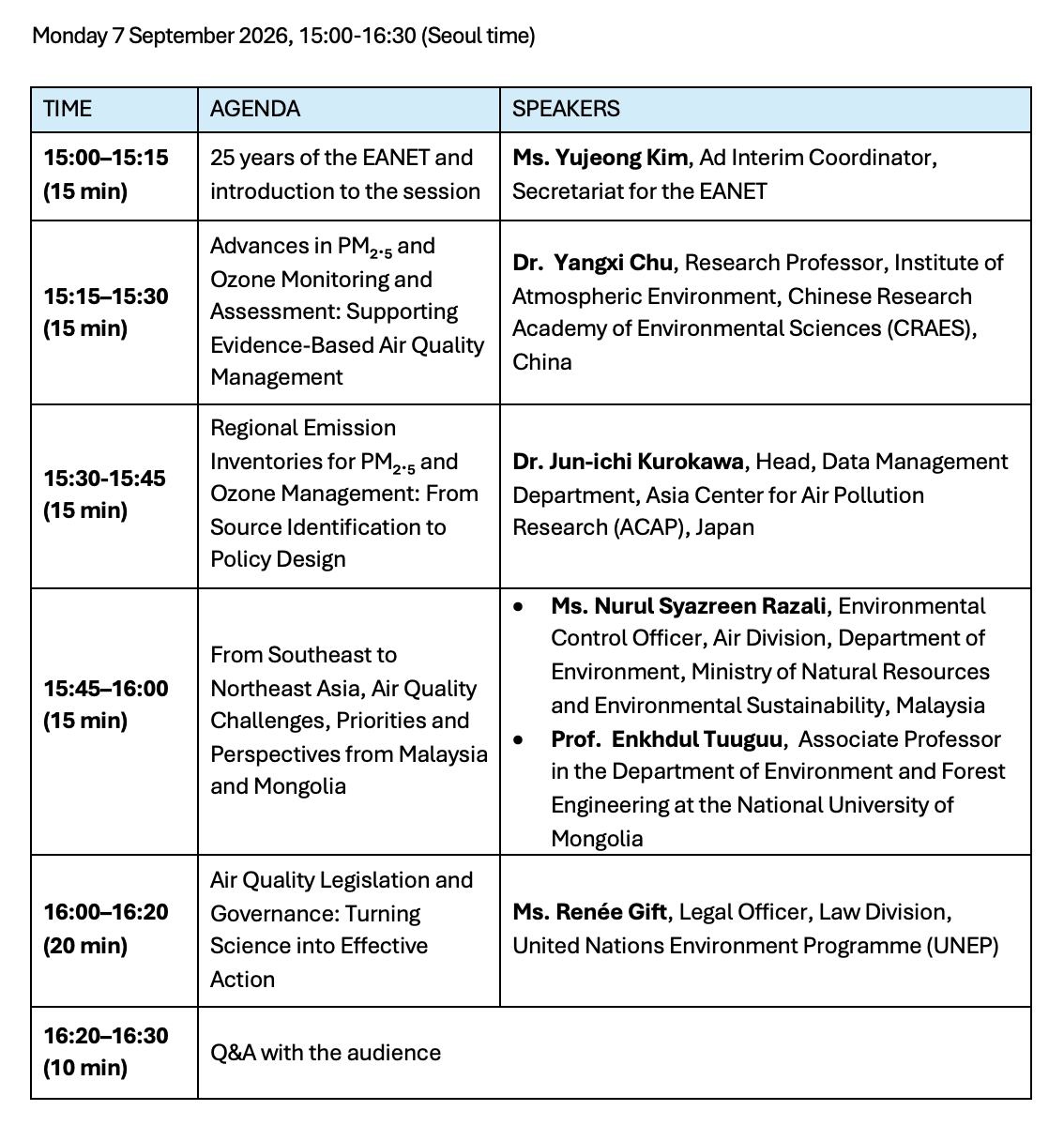
In this respect, the EANET Session: “From Science to Governance: Building Effective Policy Responses to PM2.5 and Ozone ” will take place on Monday 7 September 2026 in Seoul , Republic of Korea, as part of the 2026 Blue Sky Symposium, co-organized by the National Air Emission Inventory and Research Center (NAIR) of the Republic of Korea, the Economic and Social Commission for Asia and the Pacific (ESCAP), the North-East Asia Clean Air Partnership (NEACAP), the United Nations Environment Programme (UNEP) and the Secretariat for the Acid Deposition Monitoring Network (EANET). This session will serve as EANET’s Regional Awareness Workshop and will be part of the 2026 International Blue Sky Conference to be held in Seoul, Republic of Korea, from 7 to 11 September 2026.
.
Date and Venue:
Monday 7 September 2026, Seoul Dragon City Hotel, Seoul, Republic of Korea
.
Format:
Hybrid workshop. By invitation only for in-person participants, and online for other participants. Please note the workshop will be conducted in English.
.
Target Participants:
Expected in-person and online participants will include the EANET National Focal Points, Scientific Advisory Committee members, and other EANET members and partners, including policymakers, national researchers, and scientists. The workshop will also welcome representatives of partner organizations working on related issues, as well as participants joining the 2026 International Blue Sky Conference.
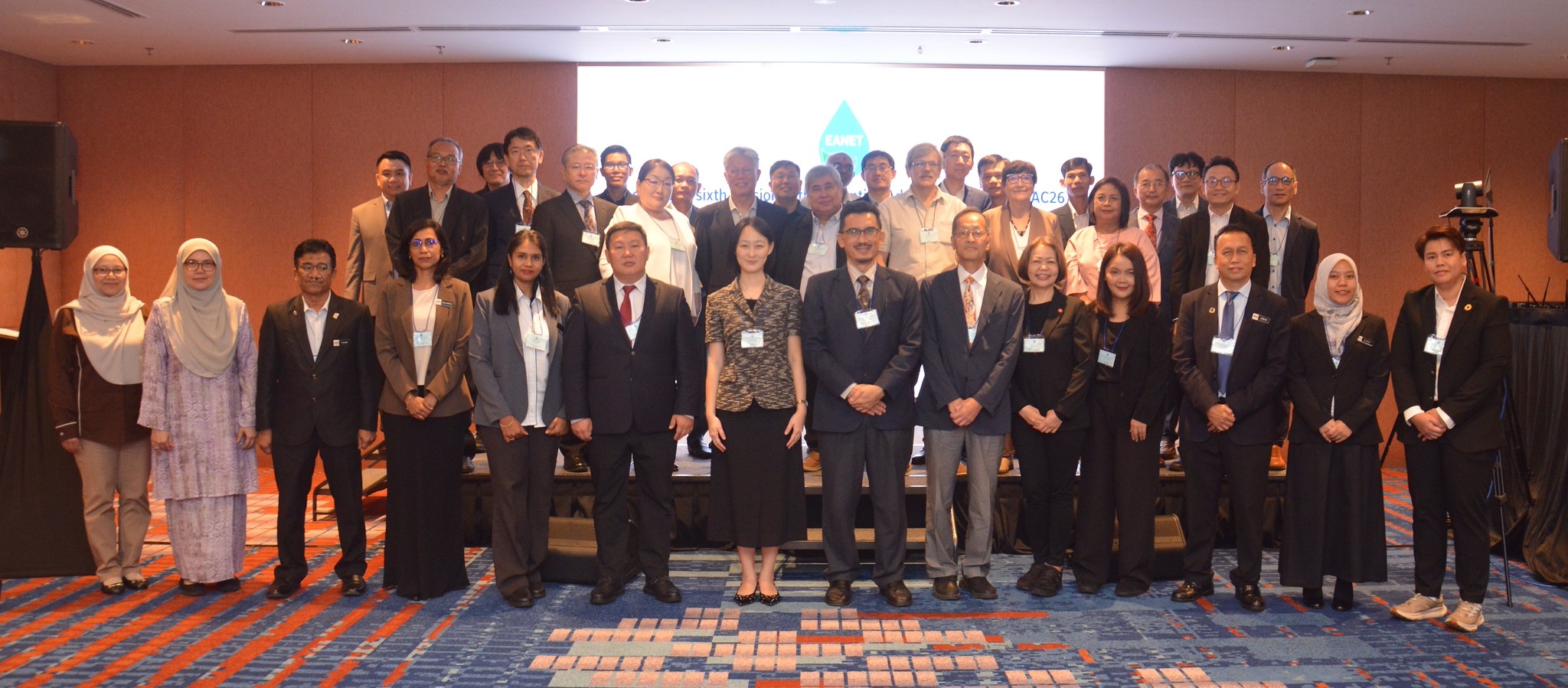
The Twenty-sixth Session of the Scientific Advisory Committee (SAC26) on the EANET was held in Kuala Lumpur, Malaysia, from 20 to 22 October 2026, bringing together representatives from EANET Participating Countries, the Secretariat and the Network Center. The Session reviewed the progress of EANET’s scientific and technical activities, considered key regional research and monitoring initiatives, and provided scientific recommendations on the proposed 2027 Work Programme and Budget and Project Plans for further consideration by the upcoming Twenty-eighth Session of the Intergovernmental Meeting (IG28).
.
Adoption of the Fifth Periodic Report on the State of Atmospheric Environment in East Asia
A major highlight of SAC26 was the consideration and adoption of the Fifth Periodic Report on the State of Atmospheric Environment in East Asia (PRSAE5), EANET’s flagship report published every five years. Prepared through the work of the PRSAE5 Drafting Committee, this fifth edition is the first to address the atmospheric environment in alignment with the Medium-Term Plan (MTP) 2026–2030, reflecting EANET’s evolving priorities and broader approach to regional atmospheric environmental issues. The SAC26 reviewed the report’s findings and discussed how scientific evidence could be translated into clear, policy-relevant messages for decision-makers.
The PRSAE5 will be further submitted to the 28th Intergovernmental Meeting (IG28) on the EANET, to be held from 22 to 24 November in Niigata, Japan, following revisions to address comments from SAC members.
.
Strengthening Technical Guidance for VOC Monitoring
The SAC26 also adopted the Technical Training Guidance for Ambient VOCs Monitoring under EANET marking an important step towards strengthening regional capacity and harmonizing technical practices for volatile organic compounds (VOCs) monitoring. The guidance was developed through a Drafting Committee Meeting held in August 2026 in Niigata, Japan, bringing together experts from seven EANET Participating Countries. Once endorsed by IG28, it will aim to support in applying consistent VOC monitoring methodologies and strengthening the quality and reliability of monitoring data across the region.
.
Reviewing EANET Monitoring Reports and Task Force Strategies
SAC26 adopted the Data Report 2025 and the Report of the Inter-laboratory Comparison Projects 2025, as well as two strategy papers developed by EANET Task Forces. These included the Strategy Paper on the Future Direction of Monitoring and Data Evaluation for Air Pollutants and Atmospheric Deposition in East Asia (2027–2032), developed by the Task Force on Monitoring and Assessment of Atmospheric Environment (TFAE), and the Strategy Paper for Future Direction of EANET on Monitoring of Effects on Agricultural Crops, Forest and Inland Water by Acidifying Species and Related Chemical Substances, updated by the Task Force on Monitoring and Assessment of Environmental Effects (TFEE) for the Medium-Term Plan 2026–2030.
The SAC also acknowledged the activities of the Task Forces and the ongoing development of a new strategy paper by the Task Force on Atmospheric Environment Quality Management (TFAEM), which will address the integrated management of atmospheric environmental quality in East Asia, including the links between air pollution and climate change in a co-benefit approach.
.
Advancing EANET’s Scientific and Technical Activities
The SAC reviewed the Draft Work Programme and Budget for EANET Core Activities in 2027, which is aligned with the MTP 2026–2030. The proposed activities are organized around three key outcomes: strengthening monitoring to improve understanding of air pollution and atmospheric deposition; increasing decision-makers’ access to evidence-based, policy-relevant information; and enhancing regional cooperation on priority air pollution issues.
The SAC also reviewed ten proposed EANET Project Plans for 2027, covering a range of priority areas, including ammonia monitoring and sustainable nitrogen management, satellite observation, urban ozone and ambient VOCs, capacity building and technical training, artificial intelligence applications, and innovative financing for air pollution prevention and control. The continued project on PM₂.₅ source identification and capacity enhancement, with an emphasis on Southeast Asia, was also presented.
The SAC highlighted the importance of maintaining a balanced portfolio of projects that responds to the needs of Participating Countries and supports the implementation of EANET’s three Task Forces. The proposed Work Programme and Budget and Project Plans will be submitted to IG28 for consideration and adoption.
.
Next Steps
The SAC26 reaffirmed the importance of sustained regional monitoring, scientific collaboration and capacity building to address atmospheric environmental challenges in East Asia. Its adopted reports, technical guidance and strategy papers, together with the proposed activities for 2027, will be presented at the Twenty-eighth Session of the Intergovernmental Meeting (IG28) for consideration by EANET Participating Countries.
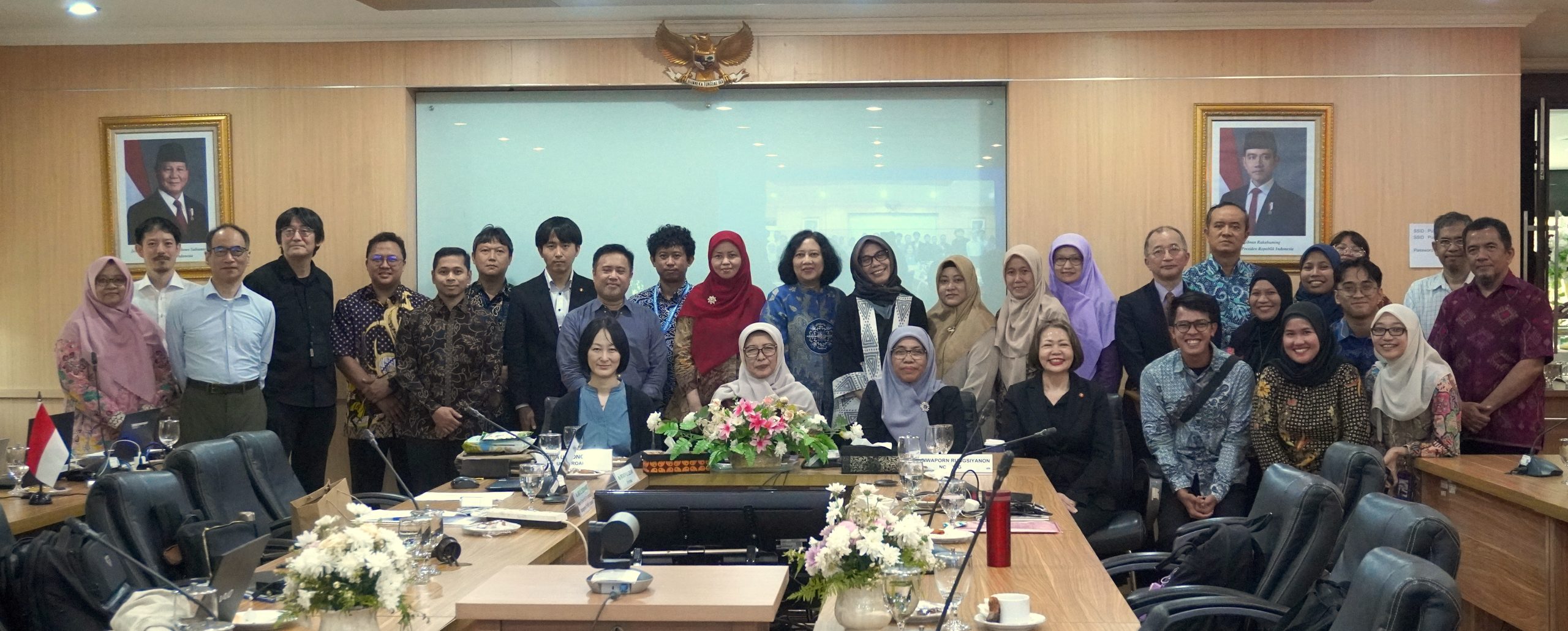
Held on 4th September 2026 at the Ministry of Environment, Indonesia, in Jakarta, the workshop brought together 81 participants, with 36 attending in person and around 45 joining online. The event was organized by the EANET Secretariat in partnership with Indonesia’s Ministry of Environment and the Network Center for the EANET.
.
Introducing EANET’s Medium-Term Plan and opportunities for collaboration
The EANET Secretariat and Network Center introduced the EANET’s objectives and achievements over the past 25 years.
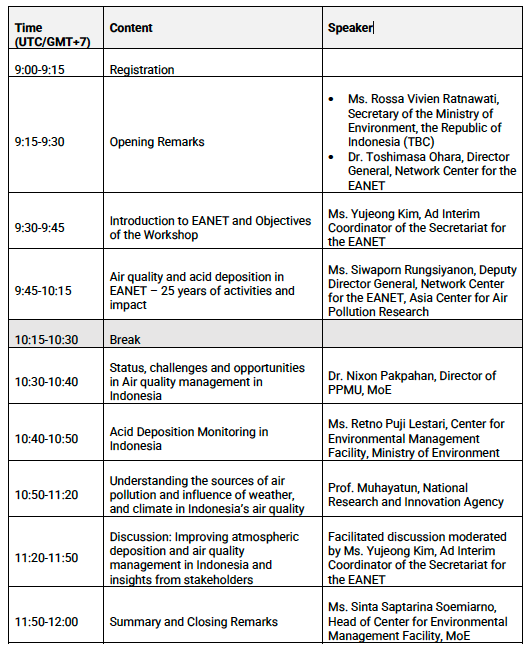
Ms. Yujeong Kim, Ad interim Coordinator, Secretariat for the EANET, presented EANET’s Medium-Term Plan (MTP) (2026–2030), highlighting the activities being implemented to strengthen monitoring, provide evidence-based information for decision-makers and increase regional cooperation on air pollution and atmospheric deposition. The presentation also highlighted the EANET Project Fund, introduced in 2021 to provide flexibility to pilot new activities within EANET’s scope and guided by the MTP. More than 40 projects were implemented between 2022 and 2026, with approximately USD 1.8 million mobilized, including in-kind contributions.
Ms. Siwaporn Rungsiyanon, Deputy Director General of the Asia Center for Air Pollution Research (ACAP), reflected on 25 years of regional cooperation on acid deposition and air quality monitoring. She highlighted ACAP’s role in quality assurance, technical standardization, and collaboration with partners including UNEP, World Meteorological Organization (WMO), and the ASEAN Secretariat to address transboundary air pollution challenges.
.
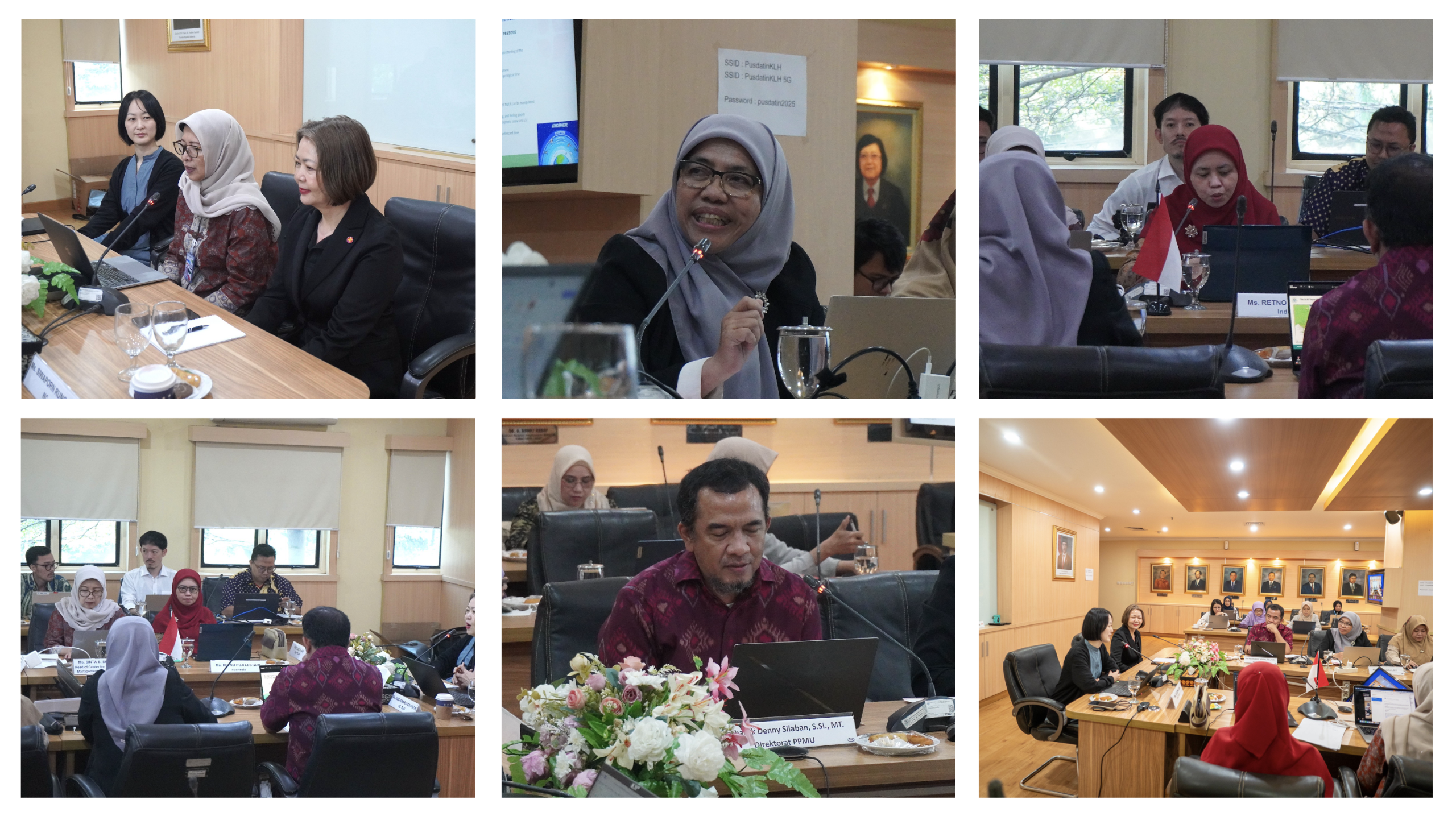
Photos from the Workshop speakers on 4 September, in Jakarta.
.
Linking monitoring, research and policy
Presentations from Indonesian experts highlighted current approaches to understanding and managing air pollution. Mr. Marhasak Denny Tarluga Silaban, Directorate of Air Pollution Control, Ministry of Environment, presented Indonesia’s air quality management framework, including the shift towards science-based Clean Air Action Plans supported by emissions inventories, carrying-capacity assessments and chemical transport modelling.
Ms. Retno Puji Lestari, Pusarpedal/Ministry of Environment, presented Indonesia’s acid deposition monitoring activities. Pusarpedal, the EANET National Center, coordinates monitoring across nine national stations in cooperation with BMKG and BRIN. Her presentation highlighted long-term monitoring data, including persistent rainwater acidity and the low buffering capacity of some freshwater bodies.
Prof. Dr. Muhayatun Santoso, National Research and Innovation Agency (BRIN), focused on understanding the sources of air pollution and the influence of weather and climate on Indonesia’s air quality. She highlighted source apportionment as a basis for identifying the sources of pollution and their respective contributions, using examples from cities including Bandung, Jakarta and Surabaya. Her presentation also examined how geographical and meteorological factors—including topography, wind, planetary boundary layer height, temperature, humidity and seasonal variations—affect the distribution and accumulation of air pollutants. Examples of transboundary and episodic pollution, including forest fires, dust events and volcanic eruptions, further illustrated the importance of understanding local and regional factors when developing effective air quality management strategies.
.
Priorities for integrated air quality management
During the panel discussion, experts highlighted opportunities to strengthen monitoring, modelling and data integration. Recommendations included combining reference monitoring stations with low-cost sensors and satellite observations, improving forecasting and early warning systems, and applying atmospheric modelling to high-population and higher-pollution areas such as Jakarta.
The panel also emphasized the importance of standardized long-term monitoring, greater data sharing and stronger cooperation among government agencies, research institutions, universities and local governments. Public access to atmospheric data was highlighted to raise awareness and build support for clean air policies.
.
Group photo of the participants at the Workshop in Jakarta on 4th September 2026.
.
Looking ahead
The workshop concluded with Closing Remarks by Ms. Sinta Saptarina Soemiarno, Head of Center for Environmental Management Facility, Ministry of Environment. She thanked all participants and emphasized the importance of continuing to integrate EANET’s scientific framework into national policies, expanding cross-agency data sharing and strengthening regional monitoring networks. The importance of multi-stakeholder collaboration and regional knowledge exchange through EANET was also reaffirmed.
EANET was established in 2001 as an intergovernmental initiative focusing on creating a common understanding on the state of acid deposition and air pollution in East Asia, providing useful inputs for decision making at various levels, and promoting cooperation among 13 EANET Participating Countries in Northeast Asia and Southeast Asia, including Indonesia.
In 2021, EANET expanded its scope to cover broader air pollution issues and established the EANET Project Fund mechanism to promote cooperation with other organizations outside of EANET.
EANET’s activities are guided by its five-year Medium-Term Plans and a Work Programme and Budget approved by the Participating Countries every year. In 2026, the Secretariat is organizing national stakeholder awareness workshops to promote EANET, better understand specific country needs, support the implementation of projects, and develop more projects and activities to support the Participating Countries’ efforts to address atmospheric deposition and air pollution. As such the Secretariat, in partnership with the Ministry of Environment, Indonesia is organizing the EANET National Awareness Stakeholder Workshop in Indonesia: “Understanding Air Pollution and its Sources, Weather, Climate, and Topography in Indonesia” on 4th September in Jakarta, Indonesia.
.
Date and Venue:
Friday 4th September 2026, 9:00-12:00 (UTC/GMT+7), at the Ministry of Environment, Indonesia, Environmental Control Agency, Kebon Nanas Office, Jakarta and online.
.
Format:
Hybrid workshop via Zoom. By invitation only for in-person participants, and online for other participants. Please note the workshop will be conducted in English.
.
Target Participants:
Policymakers, practitioners, technical officers, private sector, NGOs and academia in Indonesia working on Air Quality management; representatives from the different Indonesian organizations involved in the EANET activities. Any other participants interested in learning about air quality management in Indonesia. .
The Secretariat for the EANET participated in the ninth session of the Committee on Environment and Development (CED9), organized by the United Nations Economic and Social Commission for Asia and the Pacific (ESCAP) in Bangkok, Thailand, from 1 to 3 July 2026. The ministerial-level meeting brought together governments, United Nations organizations, regional bodies, youth representatives and other stakeholders to discuss how integrated policies and partnerships can accelerate progress towards the Sustainable Development Goals (SDGs) while addressing climate change, biodiversity loss and pollution, collectively known as the “triple planetary crisis.”
.
Key Outcomes of CED9: Adoption of New Regional Frameworks
Throughout the meeting, delegates emphasized the importance of integrated approaches to tackling climate change, biodiversity loss and pollution, while strengthening sustainable water management, disaster resilience and environmental governance. Participants highlighted the need for greater data sharing, environmental monitoring, technical cooperation and capacity-building to support evidence-based decision-making and accelerate implementation of regional and global environmental commitments.
.
EANET Emphasizes the Value of Scientific Cooperation
In its statement to CED9, EANET welcomed the meeting’s focus on promoting synergistic policymaking and integrated implementation to advance the SDGs and address the triple planetary crisis. On behalf of its 13 Participating Countries, EANET highlighted its more than two decades of experience in fostering regional cooperation through standardized monitoring, scientific exchange and capacity-building. The network emphasized the importance of open air quality data, strengthened monitoring systems and technical cooperation as practical tools for addressing air pollution and supporting the implementation of the Regional Action Programme on Air Pollution (RAPAP). EANET also reaffirmed its commitment to working closely with ESCAP, UNEP and other partners to strengthen collaboration, share expertise and contribute to sustainable development across Asia and the Pacific.
EANET Ad Interim Coordinator Ms. Yujeong Kim delivering EANET’s Statement at the CED9 on 1 July 2026.
.
Strong Regional Commitment to Sustainable Development
The outcomes of CED9 reaffirmed the importance of regional cooperation, integrated policymaking and science-based solutions in addressing the interconnected challenges of climate change, biodiversity loss and pollution. As countries in Asia and the Pacific work to implement the newly adopted Ministerial Declaration and Regional Programme of Action, partnerships among governments, international organizations and regional networks will be essential to translating commitments into tangible results. In this context, EANET remains committed to supporting the region through monitoring, scientific cooperation, capacity-building and knowledge sharing, contributing to cleaner air and sustainable development for present and future generations.
.
Learn more about EANET’s work on regional air quality monitoring, scientific cooperation and capacity-building, and explore EANET’s open-access data and publications.
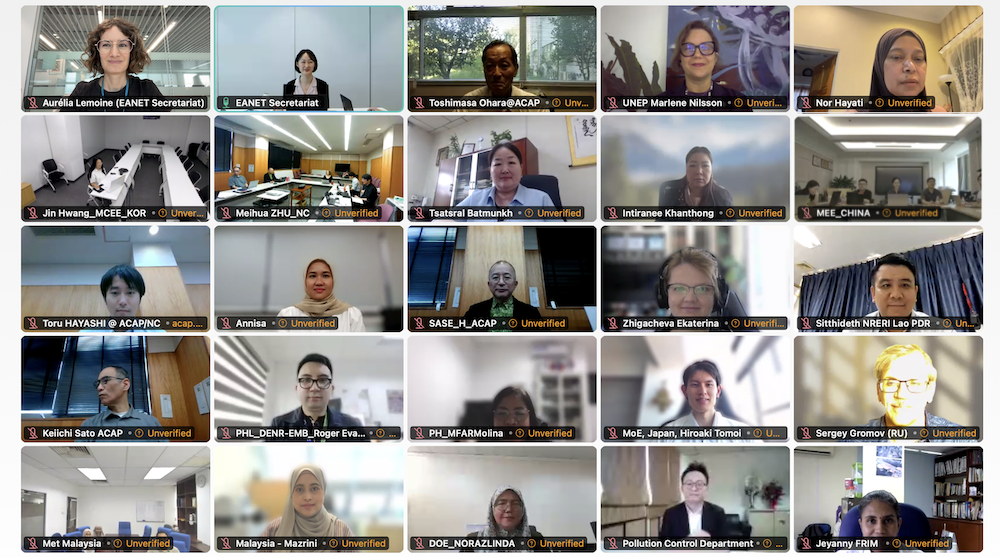
The Working Group Meeting in 2026 (WG2026) on the EANET was held virtually on 4–5 August 2026, bringing together over 60 representatives from the 13 EANET Participating Countries, the United Nations Environment Programme (UNEP), the Secretariat for the EANET and the Network Center for the EANET at the Asia Center for Air Pollution Research (ACAP).
The meeting was the first major EANET meeting following the adoption of the Medium-Term Plan (MTP) 2026–2030 by the Twenty-seventh Intergovernmental Meeting (IG27) on the EANET in November 2025. Discussions focused on translating the MTP’s objectives into practical actions, reviewing progress in EANET’s Core and Project Activities, and considering proposed Project Plans for 2027.
.
Opening Remarks
Ms. Marlene Nilsson, Deputy Regional Director of UNEP’s Regional Office for Asia and the Pacific, highlighted the importance of turning the MTP’s objectives into practical action. She emphasized the continuing challenges posed by air pollution and the vital role of regional cooperation, science-based decision-making and capacity building.
Dr. Toshimasa Ohara, Director General of ACAP, highlighted EANET’s focus under the new MTP on ozone, PM2.5 and nitrogen, as well as improving understanding of the impacts of changing meteorological conditions. He encouraged participants to contribute to evidence-based and data-driven policymaking.
The Network Center presented progress on the 11 EANET Project Plans funded by the EANET Project Fund and approved for 2026, covering mainly areas such as nitrogen deposition, capacity building and technical training, climate and air quality, satellite observations, PM2.5 source identification, financing strategies, integrated PM2.5 monitoring, international training, sustainable agriculture and air quality legislation. Participants welcomed the progress and emphasized the importance of continued capacity building and knowledge sharing.
.
Screenshot of some participants during the WG2026
.
Proposed Project Activities for 2027
The Network Center presented five proposed Project Plans for 2027, focusing on ammonia monitoring for sustainable nitrogen management, satellite observations, the EANET Fellowship, technical training and capacity building, and integrated capacity building for urban ozone and VOCs. The continued implementation of the PM2.5 source identification project was also proposed. Participating Countries emphasized that projects should remain within the scope of EANET, in line with the Annex to the Instrument.
Celebrating 25 Years of EANET
Following WG2026, EANET will continue its work through the Twenty-seventh Senior Technical Managers Meeting (STM27) in Jakarta, Indonesia, on 2–3 September; the Twenty-sixth Scientific Advisory Committee Meeting (SAC26) on the EANET in Kuala Lumpur, Malaysia, on 20–22 October; and the Twenty-eighth Intergovermental Meeting (IG28) on the EANET in Niigata, Japan, on 24–26 November 2026. These meetings will further advance implementation of the MTP 2026–2030 and consideration of the proposed Project Plans for 2027.
WG2026 also looked ahead to a major milestone: EANET’s 25th anniversary. The Network Center provided an update on preparations for the anniversary celebrations, which will take place alongside IG28 in Niigata, Japan, in November 2026.
Four government officials and researchers from Southeast Asia completed an intensive, capacity-building program on acid deposition and air quality management. Co-organized by EANET and the National Institute of Environmental Research (NIER), Republic of Korea, the Technical and Training (TNT) and Capacity Building Program aimed to strengthen technical expertise among the EANET Participating Countries.
.
Immersive Training in Japan
The first part of the program began in Japan from May 11 to 15, 2026. At the DKK-TOA Corporation in Sayama, trainees were introduced to advanced research facilities, including the On-site Ambient Air Pollution Station, and Automatic Measuring Instruments for Ozone and PM2.5.
“The visit to DKK-TOA was one of the most valuable parts of the program for me. Since I have been involved in several AQMS procurement processes, it was very useful to see the instruments firsthand and learn how they operate. This experience gave me a better understanding of air quality monitoring equipment and will help me make more informed decisions when developing specifications that meet Indonesia’s needs while considering both quality and budget.” — A comment from a trainee
.
The training at Asia Center for Air Pollution Research (ACAP) focused on developing technical capacity in ambient air quality monitoring, laboratory analysis, data quality assurance, and air quality assessment, with particular emphasis on PM2.5 and ozone (O3). The program included lectures on the atmospheric environment and the characteristics of PM2.5 and O3 pollution, as well as an overview of monitoring methodologies and quality management procedures. Participants received hands-on training in the operation, routine maintenance, and quality control of PM2.5 and O3 monitoring instruments, including FRM sampling and filter handling procedures. Laboratory sessions covered gravimetric analysis of PM2.5 samples, sample extraction and filtration techniques, and the principles and operation of ion chromatography (IC) for chemical composition analysis. The training also addressed data processing, validation, and interpretation of monitoring results to ensure data reliability and comparability. In addition, participants were introduced about emission inventory development, ozone simulation techniques, and environmental impact assessment approaches, providing an integrated understanding of how air quality monitoring data can be applied to pollution source analysis, air quality modeling, and environmental management. The program concluded with group discussions that facilitated technical exchange and the sharing of experiences among participants.
.
“The session of PM2.5 Manual method provided essential knowledge on standard reference methods, specifically focusing on the transition from mass determination (gravimetric measurements) to detailed component analysis. It clearly demonstrated how a single filter can be systematically processed for downstream analysis of ions, trace metals, and carbon fractions, which is highly applicable to our laboratory’s analytical framework.” — A comment from a trainee
“The practical training was very valuable because I learned routine and periodic maintenance procedures, including flow rate checks, filter tape replacement, instrument inspection, and troubleshooting. These skills will help improve the reliability of PM2.5 monitoring data collected by our monitoring stations.” — A comment from a trainee
“Regarding the two-day PM 2.5 training at SNU, I would like to share some constructive feedback. The session was mostly observational, focusing on sampling management and a brief introduction to the equipment (XRF, EC/OC, aethalometer, GC-MS). For future sessions, it would be far more impactful if it included direct hands-on practice. Additionally, adding a practical guide on how to process the collected chemical data to identify pollution sources (source apportionment) would make the training truly complete and meaningful.” — A comment from a trainee
At SNU, trainees gained hands-on experience with PM2.5 and received a brief introduction to other instruments such as XRF, GC-MS, OC/EC analyzers, and Aethalometers. At NAIR, they learned about the facility’s role as the National Air Quality Reference Laboratory in Korea, serving as a QA/QC hub. They also explored advanced methods for emission source tracking. At KOTITI, trainees were introduced to the rigorous chamber testing protocols required for commercial sensors to achieve Grade 1 Certification. They observed how low-cost, localized sensor technologies are verified against strict reference standards before being deployed in the public market.
“The visit to the Metropolitan Air Quality Research Center under the NIER Air Quality Department was highly eye opening. It was very beneficial to see how the department’s high-level air quality policies and research guidelines are practically applied at the metropolitan level to monitor urban pollution. — A comment from a trainee
Sharing Knowledge Across the Region
Feedback after the training indicated that all participants found the program in both Japan and the Republic of Korea to be extremely valuable. It is anticipated that the knowledge and experiences gained will be shared with colleagues through seminars, lectures, or study meetings in their home countries. This sharing is expected to contribute to the development of skills in air quality management throughout the EANET region.
“I would like to sincerely thank all organizers, trainers, and host institutions for this valuable two-week training program in Niigata and Seoul. The training provided many useful lessons on air quality management, emission inventory, and environmental monitoring, as well as the opportunity to learn from the experiences of Japan and South Korea. I also appreciate the well-organized program, the interesting site visits, and the opportunity to meet and exchange ideas with participants and experts. The knowledge and experience gained during this training will be very useful in supporting my work and contributing to environmental management efforts in my country. Thank you for this great learning opportunity.” — A comment from a trainee
“I plan to share the knowledge and experience gained from this training through internal presentations, technical discussions, and knowledge-sharing sessions with colleagues at the Pollution Control Department within one to two months after returning. In addition, I will incorporate relevant lessons learned into training materials and technical guidance documents for air quality monitoring and management activities.”— A comment from a trainee
.
Supporting Regional Cooperation
The 2026 TNT and EANET Capacity Building Program was approved as a Project Activity at the Twenty-seventh Session of the Intergovernmental Meeting on the EANET in November 2025. It was co-funded by the EANET Project Fund and the Republic of Korea, representing a continued commitment to regional cooperation in environmental protection.
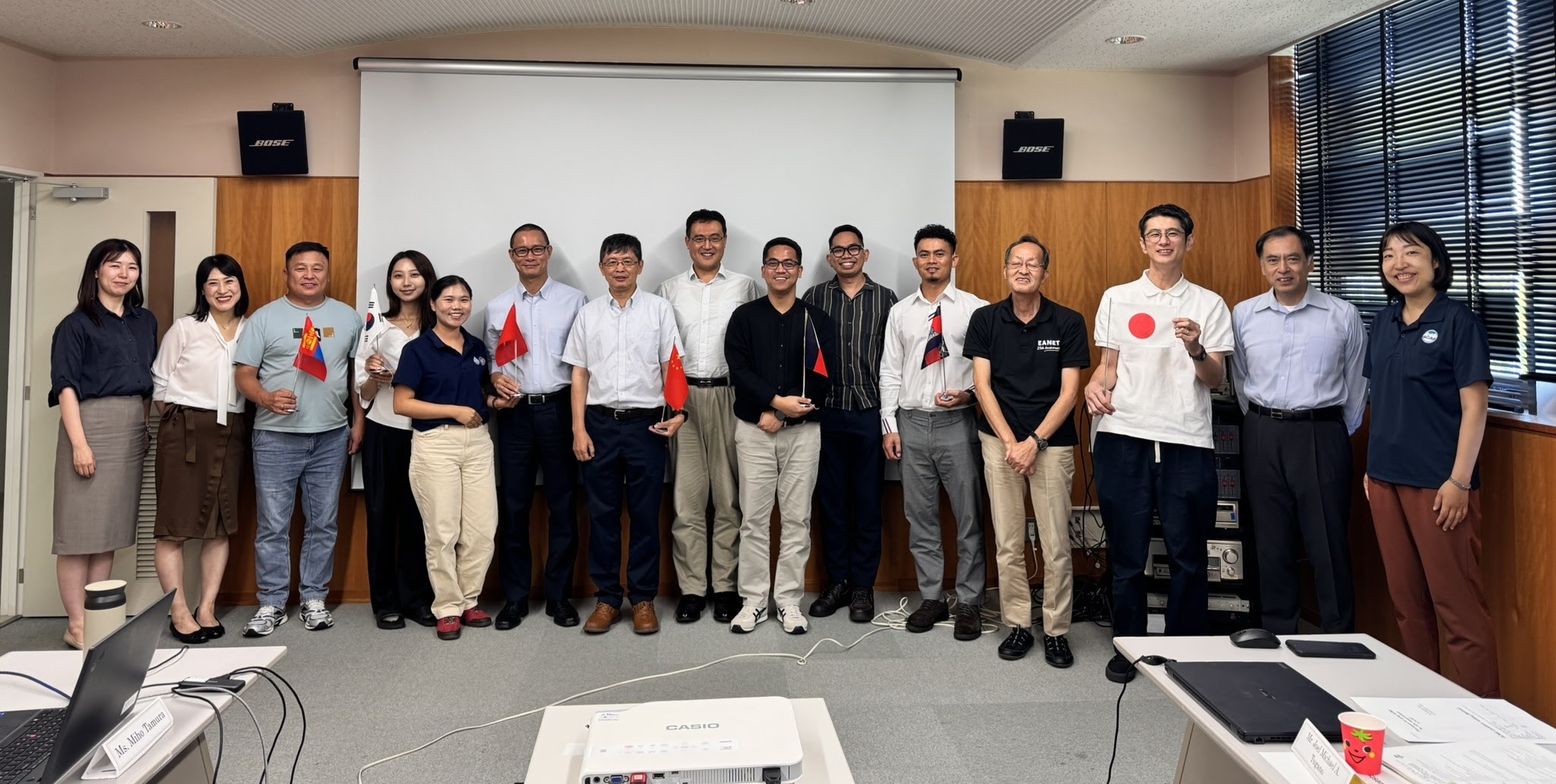
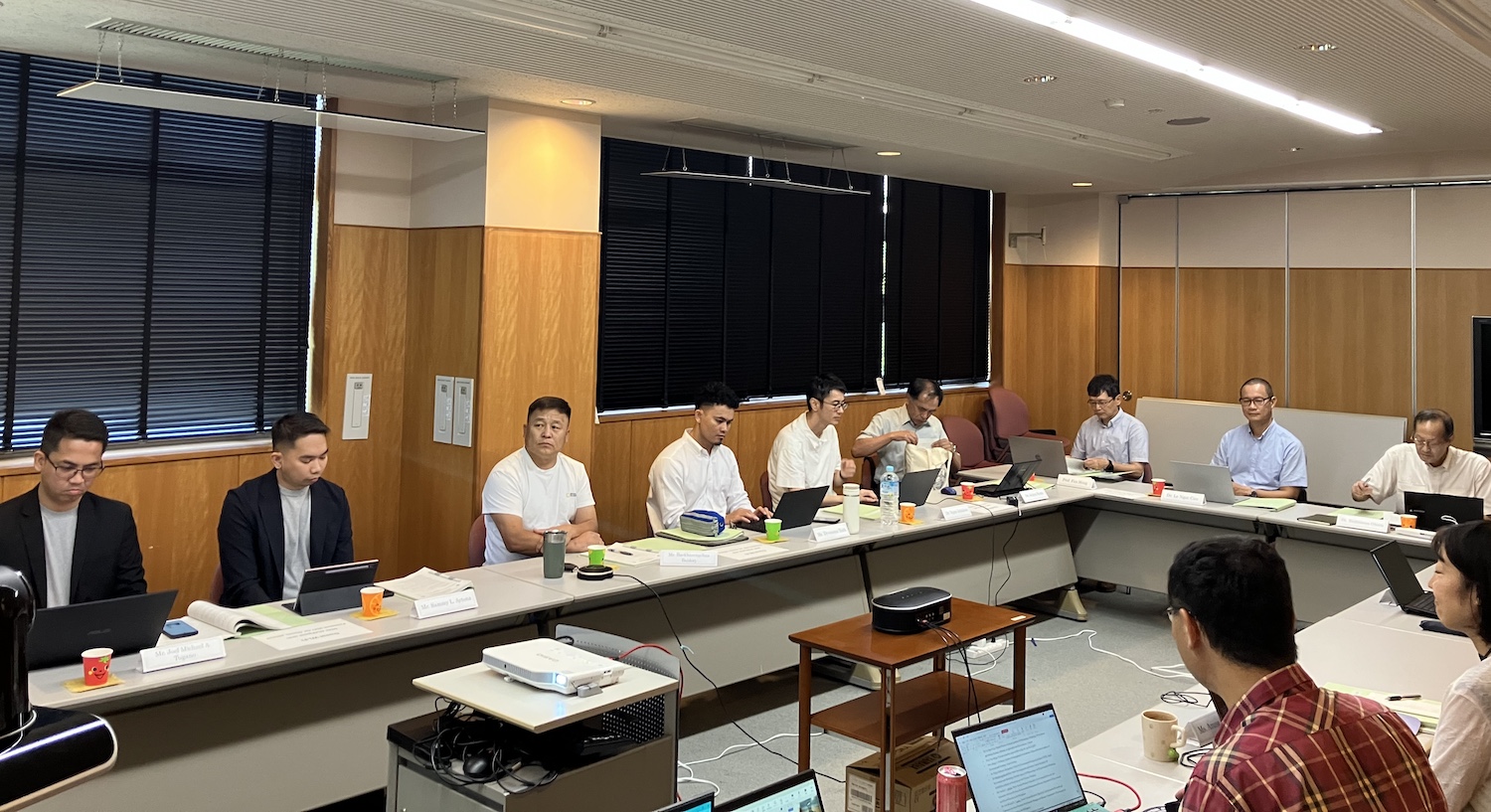
The Drafting Committee Meeting on the Technical Training Guidance for VOC Sampling under EANET was held on 4–7 August 2026 at the Asia Center for Air Pollution Research (ACAP) in Niigata, Japan, bringing together experts from seven EANET Participating Countries including Cambodia, China, Japan, Mongolia, the Philippines, the Republic of Korea, and Viet Nam, and partner institutions. The meeting focused on developing practical guidance for ambient VOC monitoring through technical discussions, hands-on demonstrations, and scientific exchange on VOCs, ozone, and secondary organic aerosols (SOA).
.
Developing the Technical Training Guidance for VOC Monitoring
On 4–5 August, experts from EANET Participating Countries taking part in the project Capacity Building in Promoting VOCs in the EANET worked together to develop the Technical Training Guidance for Ambient VOC Monitoring.
Through technical discussions and peer review sessions, participants examined a range of monitoring approaches, including canister sampling, sorbent tube sampling, charcoal tube sampling, passive samplers, and online monitoring technologies. The discussions placed strong emphasis on practical sampling experience gained under diverse national and environmental conditions, such as high-altitude, large day-time temperature difference and high-humidity conditions. Participants shared lessons learned on sampling procedures, instrument operation, calibration, quality assurance/quality control, detection limits, sample storage, data interpretation, and field operation challenges. These exchanges helped identify common technical needs and good practices that can support more harmonized VOC monitoring across the region, while also providing useful references for countries seeking to develop or strengthen their national ambient VOC guidelines, standards, and monitoring protocols.
Technical discussions on ambient VOC monitoring methodologies
.
Practical Demonstrations and Technical Exchange
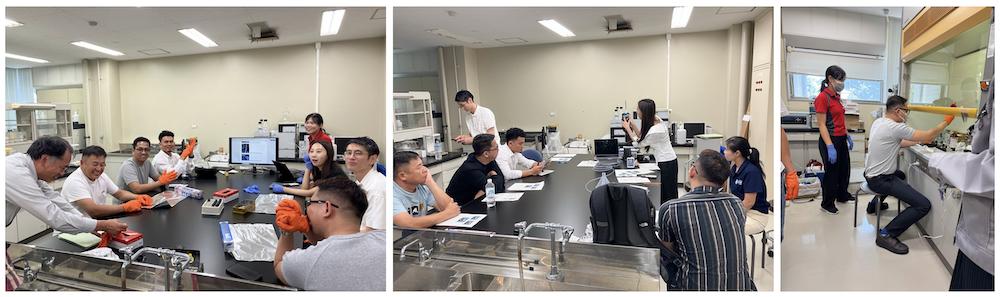
In addition to document review, participants took part in on-site demonstrations of VOC monitoring technologies, including charcoal tube sampling, passive samplers, GC/MS analysis, and interpretation of monitoring results. These hands-on activities complemented the technical discussions by allowing participants to compare practical approaches, clarify operational issues, and consider how different sampling methods can be applied under varied field conditions in each country.
Hands-on demonstration of VOC monitoring techniques
.
Learning from Practical VOC Monitoring at prefectural level in Japan
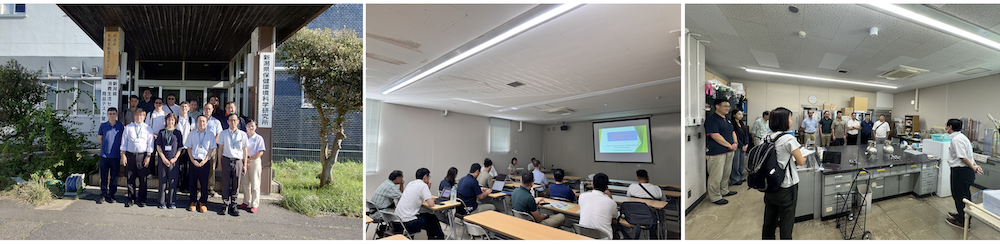
On 6 August, participants visited the Niigata Prefectural Institute of Public Health and Environmental Sciences (NIPHES) to learn how VOC monitoring is planned and implemented at the prefectural level in Japan. Through demonstrations of canister sampling, GC/MS analysis, quality assurance procedures, and field monitoring systems, participants gained practical insights into monitoring operations. The visit also provided a valuable opportunity for experts from Cambodia, the Philippines, Viet Nam, and other EANET countries to exchange experiences with NIPHES researchers and discuss how Japanese monitoring practices could support the development and strengthening of VOC monitoring programs in their own countries.
Study visit to NIPHES
.
Open Seminar Highlights Recent VOC Research
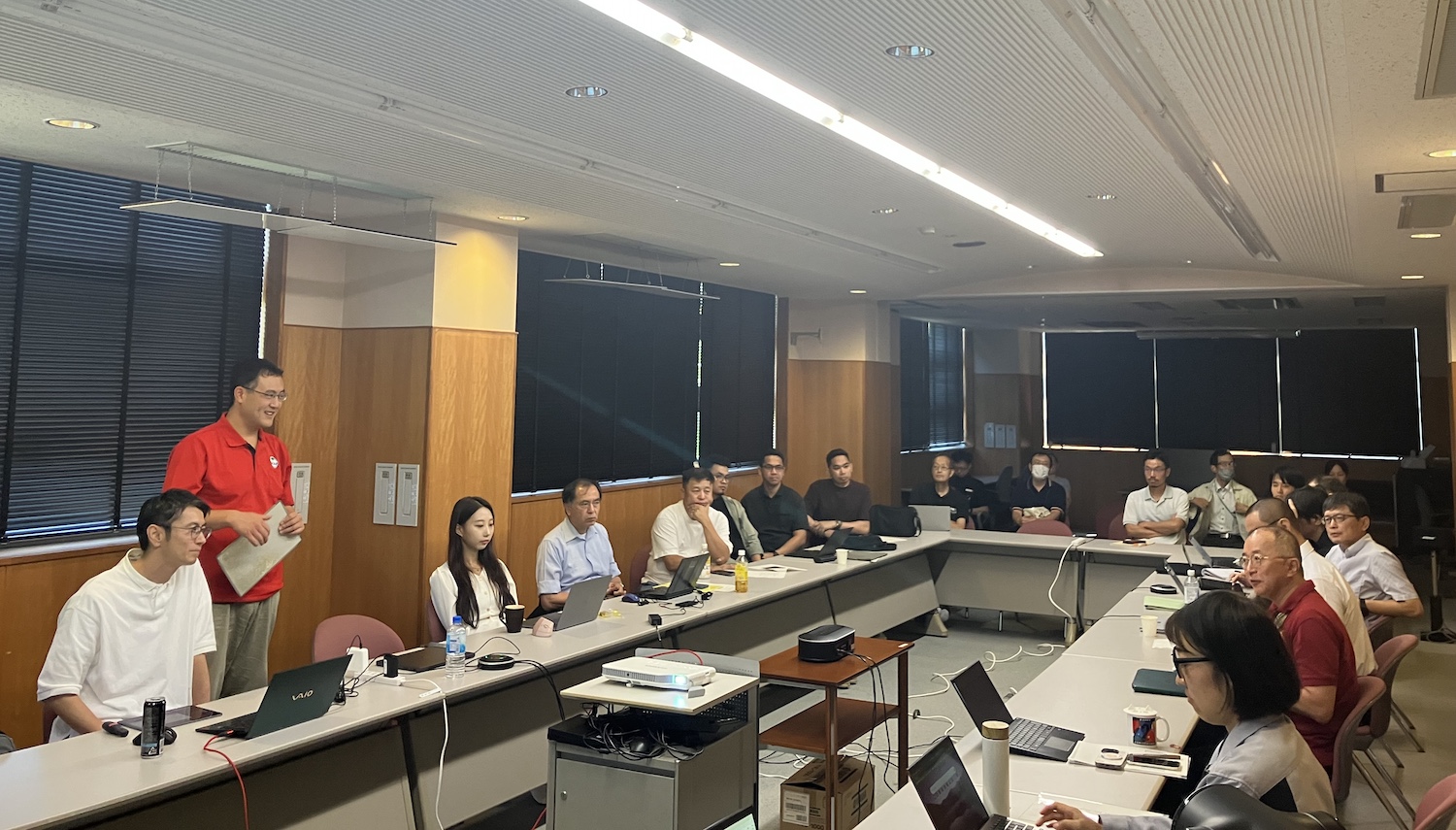
On the final day, an open seminar was organized to share recent scientific advances related to VOCs, ozone formation, and secondary organic aerosols. Four invited speakers presented studies covering field observations, airborne monitoring, data interpretation, and assessment methodologies.
Dr. Yujiro Ichikawa, a researcher from Center for Environmental Science in Saitama (CESS), Japan, presented research on biogenic VOC (BVOC) emissions in a suburban forest near Tokyo. Using tower observations and drone-based measurements, the study examined vertical and horizontal variability of isoprene emissions and compared observation results with model estimates. The research demonstrated the value of combining advanced monitoring techniques with atmospheric modeling to better understand BVOC emissions and their role in ozone and SOA formation.
Ms. Jimin Lee, a Ph.D. student at Korea University, Republic of Korea, shared results from the Asia-AQ Campaign, which used aircraft observations to investigate the distribution and transport of VOCs over Korea and the Yellow Sea. The study highlighted the influence of both local emissions and transboundary transport on air quality, demonstrating how airborne observations can provide valuable information on the three-dimensional distribution of pollutants.
Dr. Junya Hoshi, an expert from Tokyo Metropolitan Research Institute for Environment Protection, Japan, introduced research on background VOC concentrations in Japan and their implications for air quality assessment. By comparing urban and background monitoring sites, the study demonstrated the importance of considering regional and long-range transport when evaluating emission control measures and improving air quality simulations.
Prof. Hong Li, a professor from Chinese Research Academy of Environmental Sciences (CRAES), China, presented methodologies for assessing the contribution of VOCs to secondary organic aerosol formation. The presentation reviewed current approaches for estimating SOA formation potential and concentrations, highlighting the importance of combining observations, laboratory studies, and modeling to support effective air pollution management
Open seminar on VOCs, ozone, and secondary organic aerosols
.
Looking Ahead
The meeting concluded with appreciation for the contributions of all committee members and presenters. Participants agreed that the combination of technical discussions, practical demonstrations, and scientific exchange had significantly strengthened the development of the guidance document and enhanced regional cooperation on VOC monitoring.
Once completed, reviewed, and endorsed by the Twenty-sixth Scientific Advisory Committee (SAC26) in Malaysia on 20th – 22nd October, 2026 the technical training guidance is expected to support not only EANET Participating Countries but also other countries in improving ambient VOC monitoring capabilities, strengthening scientific understanding of ozone and particulate matter formation, and promoting more consistent monitoring practices across the region. By compiling practical experiences from countries with different monitoring environments, the guidance will also serve as an important technical reference for countries developing or strengthening national ambient VOC guidelines, standards, and monitoring protocols.
Three Researchers Selected for Fellowship Program 2026
Following a competitive selection process, three researchers were selected from 13 applicants from seven EANET Participating Countries.
The selected research topics were:
Mongolia: Integrating Air Quality Co-benefits into Mongolia’s NDC 3.0 Planning and Reporting: A PM₂.₅-Centered MRV Roadmap for Ulaanbaatar Clean Heating and Building Insulation
Republic of Korea: Spatial Distribution and Source Characterization of Ambient VOCs in East Asian Urban Areas Using Passive Samplers: Observations in Ulaanbaatar and Saitama for Ozone and PM Formation Assessment
Russian Federation: Adaptation and Preliminary Testing of the Active Ozone Collection Method in Russian Climate Conditions
.
Research Activities at Fudan University
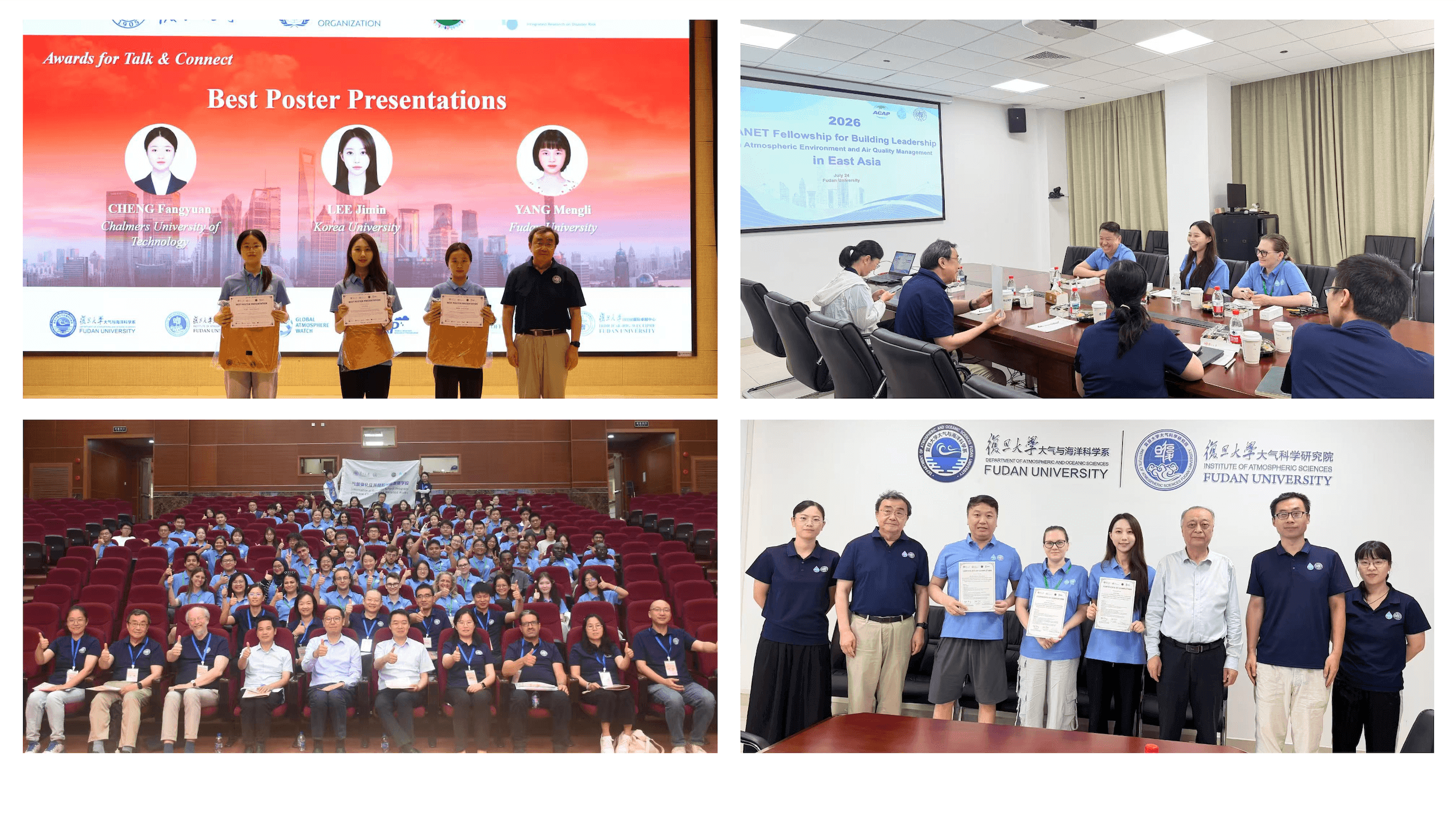
From 6 to 24 July 2026, the fellows participated in a three-week intensive research programme at Fudan University in Shanghai, China. During their stay, they joined the 2026 International Summer School Program on Climate Change and Related Risks: Climate Change, Cities and Anthropogenic Impacts, which brought together experts and young researchers to examine emerging challenges and solutions related to climate change.
The programme covered a broad range of topics, including climate change and urban climate effects, extreme weather events and their impacts, atmospheric environment and eco-health impacts, and AI-enabled sustainable development and climate resilience.
In addition to attending lectures and academic sessions, the fellows worked closely with supervisors from Fudan University to refine their research projects and strengthen international research networks. Site visits were also organized, providing practical insights into environmental research and management practices.
.
Research Activities at the Network Center for the EANET
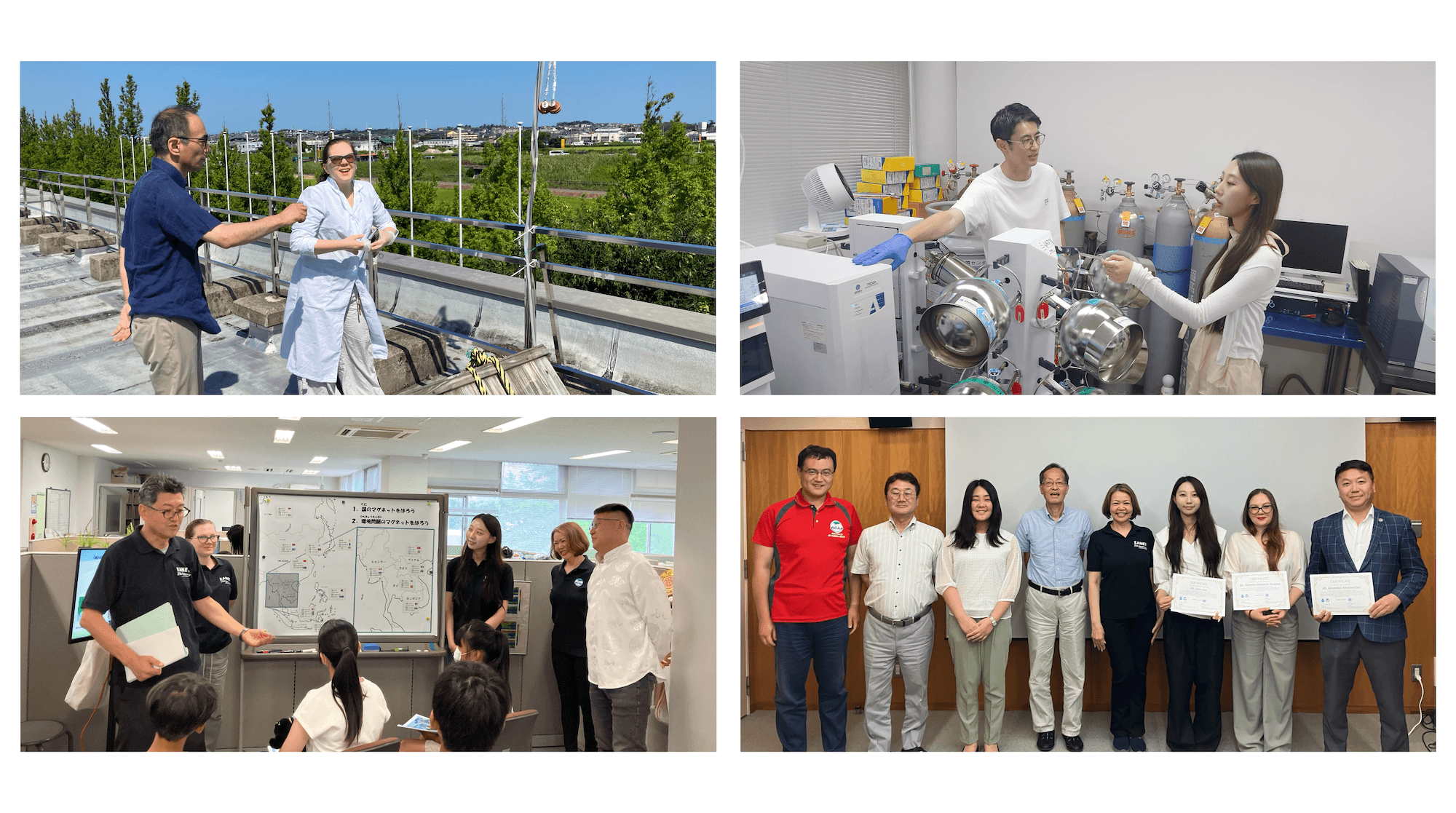
Following the programme in Shanghai, the fellows continued their fellowship at the Network Center for the EANET (NC) in Niigata, Japan, from 27 July to 21 August 2026. During this four-week period, they conducted intensive research under the guidance of experts from the Asia Center for Air Pollution Research (ACAP) and collaborated closely with their supervisors. The programme also provided opportunities to engage with environmental research institutions and practitioners working in the fields of atmospheric environment and air quality management.
On 30 July 2026, the three fellows presented their research plans and preliminary findings at ACAP, followed by an interactive discussion with supervisors and experts from the NC.
.
Site Visits in Japan
As part of the fellowship programme, all fellows participated in a study visit to the Japan Environmental Sanitation Center (JESC) and Shimadzu Tokyo Innovation Plaza on 3 August 2026. The visit included research presentations by the fellows, discussions with experts, laboratory tours, and exchanges of knowledge on environmental monitoring and analytical technologies.
In addition, the Mongolian fellow visited the Overseas Environmental Cooperation Center (OECC) and the Institute for Global Environmental Strategies (IGES) on 6 and 7 August 2026. Through discussions with experts from both organizations, the fellow gained insights into climate policy development, air pollution co-benefits, international environmental cooperation, and sustainable development initiatives that may support future implementation of research outcomes in Mongolia.
The fellow from the Republic of Korea visited the Center for Environmental Science in Saitama (CESS) on 18 August 2026. The visit provided an opportunity to learn about local air quality monitoring activities, research facilities, and analytical approaches related to atmospheric pollutants, further supporting research on volatile organic compounds (VOCs).
.
Looking Ahead
On 21 August 2026, the Fellowship Program concluded with a special discussion session on the future development of EANET and the potential contributions of young researchers to regional environmental cooperation. The session provided an opportunity for participants to exchange views on emerging environmental challenges and explore ways to enhance the scientific and policy relevance of EANET.
The programme concluded with closing remarks delivered by Ms. Siwaporn Rungsiyanon, Deputy Director General of ACAP.
The Fellowship Program aims to develop the next generation of leaders in atmospheric environment and air quality management in East Asia through a combination of academic research, international collaboration, practical training, and engagement with environmental organizations. Through the partnership between the EANET and Fudan University, the programme strengthens individual research capacity while promoting long-term regional cooperation to address atmospheric environment and air quality challenges across Asia.
.
This project 2026-02 Fellowship for building leadership in Atmospheric Environment and Air Quality Management in East Asia received support from the EANET Project Fund.
A joint technical mission under the Japanese Science and Technology Research Partnership for Sustainable Development (SATREPS) research project Establishment of a Risk Management Platform for Air Pollution in Cambodia (Air-SATREPS) and the EANET was conducted in Cambodia from 8 to 12 June 2026. The mission combined technical training and a regional workshop to strengthen air quality monitoring capacity and support the use of scientific evidence in air quality management and policymaking.
The activities were jointly organized by Air-SATREPS and the Asia Center for Air Pollution Reseach (ACAP) hosting the Network Center for the EANET, with participation from the Institute of Technology of Cambodia (ITC), the Ministry of Environment of Cambodia, and Kanazawa University, Japan.
.
Enhancing Monitoring and Analytical Capacity
Since 2021, the Air-SATREPS project has supported Cambodia’s efforts to address air pollution through PM2.5 monitoring and chemical analysis. Building on earlier training conducted in Japan, the programme expanded its scope to include gaseous pollutants, ozone monitoring, data management, and quality assurance.
The mission focused on strengthening practical skills in monitoring, laboratory analysis, and quality assurance while promoting cooperation among participating institutions. Dr. Chanmoly OR of ITC and Mr. Raksmey YIM of the Ministry of Environment of Cambodia provided support in facilitating training activities and EANET monitoring implementation in Cambodia.
.
.
Technical Training and Knowledge Exchange
At ITC, participants attended lectures and practical sessions on wet and dry deposition monitoring, filter pack sampling, and ion chromatography analysis. Laboratory exercises provided opportunities to improve sample extraction techniques, calibration practices, and quality assurance and quality control (QA/QC) procedures.
Technical discussions between Cambodian and Japanese experts focused on analytical methods, operational challenges, and approaches to improving data quality and reliability. The exchanges also helped identify practical measures to strengthen laboratory operations and monitoring practices.
.
.
Ozone Monitoring and Calibration
Ozone monitoring was another key component of the mission. Participants conducted calibration of automatic ozone monitors at the Ministry of Environment of Cambodia and ITC facilities and reviewed maintenance procedures, including consumable replacement and calibration adjustments. Parallel monitoring using reference instruments was initiated to improve data consistency and comparability.
Presentations highlighted the use of satellite observations, monitoring networks, modelling approaches, and source apportionment tools to better understand pollution sources and support policy development. Participants emphasized the importance of strengthening technical capacity, improving data availability, and enhancing collaboration between researchers and policymakers.
.
Next Steps
The mission concluded with discussions on continued technical support for monitoring activities in Phnom Penh, further analysis of ozone monitoring data, enhanced data sharing between ITC and the Ministry of Environment of Cambodia, and future collaboration under EANET and SATREPS. The initiative contributes to strengthening sustainable air quality monitoring systems and evidence-based environmental policymaking in Cambodia and the wider East Asian region.