EANET Online Workshop on the Utilization of Low-Cost Sensors for Air Quality Monitoring: Recommendations and Strategies

15 November 2024 – Niigata, Japan

The EANET Online Workshop on the Utilization of Low-Cost Sensors for Air Quality Monitoring: Recommendations and Strategies took place on 6 November 2024. Organized by the Network Center for the EANET, it gathered 152 participants, from the EANET Participating Countries and beyond, to discuss the utilization of Low-Cost Sensors (LCS) in Asia.

Opening Remarks

Dr. Fan Meng, Deputy Director General, the Asia Center for Air Pollution Research, ACAP (the Network Center for the EANET), delivered Opening Remarks. He highlighted the significance of the hybrid method which consists of using both conventional air quality sensors and LCS in addressing monitoring resource constraints. However, he emphasized that accuracy and reliability issues persist, requiring calibration, validation, and quality control to integrate LCS data effectively. He underlinied the workshop’s objectives to share LCS application insights, technical knowledge, data visualization, and discuss sustainable network opportunities within the EANET region.

Air quality monitoring by using a LCS network in the Asian region

Dr. Tomoki Nakayama, from Nagasaki University, shared a presentation on air pollution monitoring using Low-Cost Sensors, focusing on projects in India, and in the ASEAN and African regions. In collaboration with Nagoya University and others, his team measures pollutants such as PM2.5 and CO. These sensors, co-developed with Panasonic Corp., detect particles via light scattering and are effective even under diverse environmental conditions.

Dr. Justin Sentian, Universiti Malaysia Sabah, presented the deployment of LCS air quality sensors in schools, an initiative funded by UNICEF, in partnership with Malaysia’s Environmental Protection Department. These sensors, part of the Air Quality Monitoring in Schools (AQUAMS) program, aim to monitor air quality and promote environmental awareness among students. In the first phase, sensors were installed in five schools, and data on pollutants and weather conditions have been gathered.

Dr. Nguyen Viet Hoai, Vietnam National University presented the “Building Equality Monitoring Capacity in Southeast Asia” project which aims to enhance air quality monitoring in Thailand, Laos, and Viet Nam. Key goals include deploying low-cost PM2.5 sensors, raising public awareness, providing real-time data, and identifying pollution hotspots. Nearly 100 sensors have been installed across the region, supporting data analysis and empowering local authorities and communities.

Dr. Maria Obiminda Cambaliza, Ateneo de Manila University, presented IGAC-MANGO, a research initiative addressing air pollution in Southeast Asia. The project uses Low-Cost Sensors to measure PM2.5 exposure and its health impacts, particularly in high-risk groups. She also highlighted the Health Investigation and Air Sensing for Asian Pollution (Hi-ASAP) project, which started in 2019, aiming to gather data on pollution levels and health effects.

.

Report on the EANET project “Methodology Study for Development of LCS Hybrid Air Quality Monitoring Network (HAQMN)”

Dr. Akie Yuba, a Senior Researcher from ACAP, provided a report on LCS technical studies in Viet Nam and Myanmar, which were carried out as part of EANET Project Activities. In Hoa Binh, Viet Nam, five LCS units were installed, with a specific focus on PM2.5 and other parameters. In Yangon, Myanmar, LCS units, specifically GBiot and Haz Scanner, were utilized for monitoring PM2.5, O3, NO2, and meteorological data during both monsoon and non-monsoon seasons. A good correlation was observed in the data, though different values were displayed in the slopes, emphasizing the need for blackout preparedness to prevent electricity voltage fluctuations. Dr. Yuba also explained the draft contents of the guidelines for establishing HAQMN and the manual for low-cost sensor system operation.

.

Discussions on scopes and challenges for establishing a sustainable LCS monitoring network in East Asia

The panel discussion covered the various challenges and approaches to air quality management across different countries, highlighting the role of LCS in both developed and developing countries. Key questions explored during the discussion included: what are the key local air quality issues in your country? How will citizens and communities be kept informed about air quality data? Is there adequate infrastructure, such as internet and power supply, to support an LCS network?, and How do governments and local authorities intend to use data from this network for policymaking? Additionally, What funding and support will be required to ensure the sustainability of the LCS network?

The panel discussion highlighted several common challenges in air quality management. These included infrastructure and connectivity issues, particularly in developing countries where limited access to power and the internet can undermine the reliability of LCS networks. Funding and sustainability were also major concerns, as many countries depend on international financial support and technical assistance for LCS implementation. Additionally, the importance of public awareness and communication was emphasized, with some countries planning to automate alerts about high pollution levels through platforms like social media. Lastly, the panel underscored the need for regular calibration and maintenance of LCS networks to ensure data accuracy, especially in resource-constrained settings.

The panel concluded that while LCS offers affordable and scalable options for air quality monitoring, its effectiveness depends on sustained funding, accurate data calibration, and enhanced public awareness. Building regional and international collaborations remains essential for addressing air pollution in the Southeast and East Asian regions.

.

Find out more on EANET Project Fund and EANET Projects.

.

Useful Resources:

.

Photo credits: rice field at daytime by Hikarinoshita Hikari (2019).

Shaping Future Leaders: The Fellowship for Building Leadership in Atmospheric Environment and Air Quality Management in East Asia

21 August 2024, Bangkok, Thailand

On August 9, 2024, the EANET successfully concluded its Fellowship Program with a closing session held both in-person at Fudan University, in Shanghai, and online. The event marked the culmination of months of dedicated research and collaboration aimed at advancing air quality management and atmospheric science across the East Asian region.

.

About the Fellowship

The Fellowship for Building Leadership in Atmospheric Environment and Air Quality Management in East Asia is a program organized by the Network Center for the EANET, hosted by the  Asia Center for Air Pollution Research (ACAP), in collaboration with Fudan University (FDU), in Shanghai, China, and Clean Air Asia (CAA). It aims to strengthen the research capacity of young government officers and researchers in the Participating Countries, particularly in developing countries. It seeks to promote research and scientific policy-making while developing leadership skills among EANET participants. The program encourages interdisciplinary research and enhances cooperation between academia and government to address complex challenges in the atmospheric environment in the EANET region. Additionally, it provides a platform for the next generation of researchers and government officials to engage in integrated discussions and reflections, preparing them to manage EANET in the future.

Open to participants from the 13 EANET Participating Countries, the program was held for six months in 2024 including two alternate on-site research sessions at Fudan University in Shanghai, China, and the Network Center for the EANET in Niigata, Japan, from July 15 to August 9, 2024. Five participants were selected, engaging in monthly online meetings and intensive on-site training from July 15 to August 9, 2024, with progress reporting and discussions with designated supervisors in both China and Japan.

.

On-site Sessions in Japan and China

The on-site session started in Japan from July 15 to July 27, 2024, followed by China from July 28 to August 10, 2024.

In Japan, the first day started with the fellows’ introduction to the Research Plan & Progress Report, conducted both in-person at the Asia Center for Air Pollution Research (ACAP) headquarters in Niigata, Japan, and online. The Opening Session was moderated by Dr. Ken Yamashita, Head of the Planning and Training Department, and the Opening Remarks were delivered by Dr. Toshimasa Ohara, Director General of ACAP, Mr. Bert Fabian, Coordinator, Secretariat for the EANET, Prof. Xu Tang, Executive Director of IRDR International Center of Excellence on Risk Interconnectivity and Governance on Weather/Climate Extremes Impact and Public Health at Fudan University (FDU-IRDR ICoE-RIG-WECEIPHE), and Dr. FU Lu, the China Director of Clean Air Asia. The speakers expressed their hopes that the fellows’ research would contribute to creating cleaner air across East Asia and that this program would serve as a strong foundation for international collaborative research. Supervisors from the Network Center for the EANET (NC) and research fellows discussed their research studies intensively at the NC for 2 weeks. During the program, Dr. Hajime Akimoto, Emeritus Research Fellow of the National Institute for Environmental Studies (NIES) and Science Advisor of ACAP, delivered a lecture titled “Past and Present Challenges to Atmospheric Environmental Chemistry,” sharing scientific insights related to the expansion of EANET’s scope. Additionally, discussions were held with supervisors and researchers from ACAP about EANET’s future development & fellows’ contributions.

Fellows in ACAP, Niigata, Japan

.

In China, the on-site session was organized by the IRDR ICoE-RIG-WECEIPHE and MAP-AQ Aisan Office Shanghai, Fudan University. The fellows participated in the International Summer School Program on Climate Change and Related Risks held at Fudan University’s Jiangwan campus and joined discussions, under the supervision of FDU. The program featured lectures by several internationally acclaimed scholars and leaders in their respective fields. Additionally, the fellows visited the greenhouse gas lab and atmospheric chemistry lab of the Department of Atmospheric and Oceanic Sciences, FDU, the Shanghai Environmental Monitoring Center, and the relevant facilities related to air quality management. Fudan University also gifted souvenirs and cultural shirts with the logo of this year’s training course to the fellows and organizers.

Fellows at Fudan University, China

.

Highlights of Fellows’ Presentations

The session featured five fellows, each presenting their research projects, which covered a broad spectrum of atmospheric and environmental studies.

  • Indonesia: The fellow, from the National Research and Innovation Agency (BRIN), presented his study on the impact of anabatic and katabatic winds on the dispersion and concentration of PM2.5 in Bandung Basin, utilizing the WRF-Chem Model.
  • Malaysia: The fellow, from the Malaysian Meteorological Department (MMD), focused on the long-term trends of acid deposition in Malaysia and the corresponding impacts of forest fires.
  • Myanmar: The fellow, a Staff Officer at Myanmar’s Department of Meteorology and Hydrology (DMH), provided an overview of air quality in Yangon, highlighting significant challenges and potential solutions.
  • The Philippines: The fellow, from the Environmental Management Bureau (EMB), Department of Environment and Natural Resources, discussed her research on determining potential EANET monitoring sites based on sulfur dioxide emissions in the northern region – Northeastern Pangasinan.
  • Russia: The fellow, from the Yu.A. Izrael Institute of Global Climate and Ecology (IGCE), shared her findings on acidifying compounds runoff discharge and its variations at the Pereemnaya River, Baikal Lake Region.

Following the presentations, participants provided feedback and comments that underscored the importance of such collaborative research efforts. Supervisors from FDU and ACAP, along with other participants, offered their insights, fostering a rich exchange of knowledge and ideas.

The fellows with their completion certificates

.

Closing Remarks and Future Prospects

The event, moderated by Prof. Xu Tang, concluded with remarks from Prof. Meng Fan, the Deputy Director General, Asia Center for Air Pollution Research, from Mr. Bert Fabian, Coordinator, the Secretariat for the EANET, from Prof. Renhe Zhang, Former Vice President of Fudan University, and Dr. Wei Wan, China Program Director, Clean Air Asia. In their remarks, the speakers commended the fellows for their exceptional work and encouraged continued collaboration. The session highlighted the significant strides made through the program in building leadership in air quality management in East Asia, setting a strong foundation for future initiatives.

The Closing Session concluded with Professor Renhe Zhang, Former Vice President of Fudan University, Dean, the Institute of Atmospheric Science (IAS), FDU Director, FDU/IRDR International Center of Excellence, and WMO/IGAC MAP-AQ Asian Office in Fudan University, presenting the completion certificates to the fellows on behalf of the program organizers.

.

The Fellowship for Building Leadership in Atmospheric Environment and Air Quality Management in East Asia program has been approved at the Twenty-fifth Session of the Intergovernmental Meeting (IG25) on the EANET, as a Project Activity, co-funded by the EANET Project Fund, Fudan University, and Clean Air Asia.

.

View the photos on Flickr.

.

Photo credits: all rights reserved to EANET.

Considering Volatile Organic Compounds Emission Inventories and Their Policy Implications: Insights from the EANET Workshop in 2024

20 March 2025 – Bangkok, Thailand

The Network Center for the EANET organized a virtual workshop on the Emission Inventory of Volatile Organic Compounds (VOCs) and its Application for Policy Consideration on December 4, 2024. The workshop consisted of two sessions: expert lectures and participant presentations. The first session covered key topics such as the importance of developing an emission inventory for atmospheric environmental management, methodologies to estimate VOCs’ emissions from stationary sources, the transportation sector, and biogenic sources. It also included air quality modeling of VOCs and control measures for VOCs. Participants shared the status of VOCs management in their respective countries and discussed ideas for EANET’s involvement in addressing VOCs’ issues. Approximately 60 participants attended the workshop.

.

Exploring Emission Inventory Methodologies and Applications: Insights from Experts

Dr. Jun-ichi Kurokawa, from the Asia Center for Air Pollution Research serving as the Network Center for the EANET, delivered a lecture on the introduction of emission inventories, focusing on their roles in managing atmospheric environmental issues and the basic methodology to develop an emission inventory, particularly for Volatile Organic Compounds (VOCs) emissions from stationary sources. The presentation began by highlighting the necessity and framework of air quality management, emphasizing the importance of VOCs and emission inventories. For methodologies, general procedures to develop emission inventories were explained, following the process flow of the development from defining the scope and structure to create emission tables and gridded data. Next, the methodology for estimating VOCs emissions from stationary sources was presented. This included details of sector categories, examples of fugitive emissions characteristics of VOCs sources, collecting and setting activity data, emission factors, removal efficiencies, speciation to components, and calculating emissions to create final products. References for methodologies to develop emission inventories were also introduced.

Dr. Tazuko Morikawa from the Japan Automobile Research Institute delivered a lecture on the methodology for estimating emissions from road transport. The lecture began with an overview of global changes in passenger cars and heavy duty vehicles, including electrification targets for passenger cars aimed at mitigating both climate change and air pollution. Next, the necessary information for developing emission inventories for the road transport sector was detailed. This included characteristics of gasoline and diesel vehicles, methods for calculating tail pipe emissions, the definition and estimation of evaporative emission from gasoline vehicles (which are particularly important for VOCs), and component species of VOCs in emissions from the road transport sector. Finally, bioethanol-blended fuels originally introduced to mitigate climate change were discussed due to their impact on air pollutants emissions.

.

Screenshot of some participants during the Workshop

.

Dr. Justin Sentian, from Universiti Malaysia Sabah, Malaysia, delivered a lecture on VOCs emissions from biogenic sources. Biogenic VOCs (BVOCs) are organic compounds emitted by plants and other biological sources. Although these are natural sources, the importance of BVOCs was highlighted due to their strong impact on the formation of ozone and secondary PM2.5. Understanding the contribution of BVOCs is essential for developing effective policies to control anthropogenic VOCs emissions. The lecture also covered the recent status of BVOCs emissions and case studies for Southeast Asia, including future simulations under different climate scenarios. Since BVOCs emissions are significantly influenced by temperature, climate change impacts BVOCs emissions, which in turn affects ozone and PM2.5 concentrations.

Dr. Satoru Chatani from the National Institute for Environmental Studies presented a lecture on the air quality modeling of anthropogenic VOCs. The lecture began by introducing the necessities and roles of air quality simulations for VOCs, which help understand complex physical and chemical processes, including non-linear relationships among NOx, VOCs, and ozone. Next, the treatment of VOCs and their photochemical reactions was explained, including popular chemical modules and VOCs speciation used in air quality models. Application methodologies of air quality models to analyze VOCs issues were then introduced, covering validations and evaluations of simulated results based on monitoring data. This highlighted the importance of monitoring of VOCs and their components. It was emphasized that air quality modeling is essential for developing effective strategies to suppress ambient concentrations of secondary pollutants.

Dr. Shinichi Yonemochi from the Center for Environmental Science in Saitama delivered a lecture on control measures of VOCs using the case of Saitama Prefecture of Japan. The lecture began with an overview of the current and historical backgrounds of Saitama Prefecture focusing on the status of ozone pollution. Regulations of VOCs in Saitama Prefecture, including legal measures and voluntary actions by companies to reduce VOCs were explained.

Next, trends in VOCs emissions from major sources in Saitama Prefecture were presented to demonstrate the effects of these regulations. Examples of actual control measures were introduced, includingVOCs’ emission control techniques, VOC measuring instruments, and experiences using them in various applications such as for outdoor painting and the cleaning process for printing machines.

 .

Addressing the Status and Issues of VOCs: Perspectives from Participants

During the second session, participants exchanged information on VOCs related issues in their countries, including the general status of air quality, specific topics such as the management of the petrochemical industry, and the progress and challenges in developing VOCs emission inventories. As in previous workshops, many countries identified the continuous enhancement of national emission inventories as a challenge and expressed the desire for additional EANET projects focusing on capacity-building activities. Suggestions included not only webinars but also on-site training courses for major source categories of the emission inventory. The Network Center for the EANET, as the workshop organizer, will assess potential future activities through the EANET Project Fund.

.

Find out more about the EANET Project Fund.

.

Useful Resources

.

Photo credits: aerial photography of interlocking freeways with travelling cars by Ed 259 free of copyrights (2017); other pictures: all rights reserved to EANET.

Understanding Air Pollution and its Sources, Weather, Climate, and Topography in Malaysia: Insights from the EANET Awareness Workshop in 2024

6 March 2025 – Bangkok, Thailand

The EANET National Stakeholder Awareness Workshop “Understanding Air Pollution and Its Sources, Weather, Climate, and Topography in Malaysia,” took place on 26 November 2024 at the Universiti Kebangsaan, Malaysia. Over 65 participants (in-person and online) gathered to discuss air quality management in Malaysia. The audience included academics, researchers, professors, and representatives from various government agencies focused on environmental conservation and sustainable development.

 .

Promoting EANET Activities and Environmental Initiatives

Co-hosted by the Universiti Kebangsaan Malaysia, the workshop aimed to understand Malaysia’s specific air quality and environmental challenges, support the implementation of related projects in collaboration with the EANET, and foster the development of new initiatives to combat air pollution and acid deposition. These efforts align with EANET’s the broader goal of addressing acid deposition and air pollution more effectively.

 .

Opening Remarks: Malaysia’s Commitment to Air Quality

The workshop was inaugurated with Ms. Roslinda Binti Ulang, Undersecretary of the Ministry of Natural Resources and Environmental Sustainability (NRES) Malaysia, and Malaysia’s National Focal Point for EANET, delivering the Opening Remarks. She welcomed participants and reflected on Malaysia’s 28 years of active participation in EANET. She reaffirmed the Ministry’s commitment to tackling air pollution and acid deposition, underscoring its dedication to environmental sustainability.

Following this, Mr. Bert Fabian, Coordinator of the Secretariat for the EANET, introduced EANET’s expanded scope, which includes broader air quality monitoring activities. He provided insights into EANET’s organizational structure, data-sharing protocols, and funding mechanisms while setting the stage for the expert presentations.

.

Opening remarks by Ms. Roslinda Binti Ulang, Undersecretary of the Ministry of Natural Resources and Environmental Sustainability and Malaysia’s National Focal Point for EANET

.

Expert Presentations on Air Quality Management

The Awareness Workshop brought together experts who shared insights on air quality management in Malaysia and in the wider region.

Prof. Meng Fan, Deputy Director General of the Network Center for the EANET at the Asia Center for Air Pollution Research, provided a regional perspective on environmental challenges and collaborative solutions in his presentation on “Air Quality and Acid Deposition in EANET.” Ms. Norazlinda Ismail, Principal Assistant Director at the Department of Environment, Ministry of Natural Resources and Environmental Sustainability, Malaysia, highlighted national strategies and initiatives in air quality management. Prof. Dr. Mohd Talib Latif, Chairman of the Department of Earth Sciences and Environment at Universiti Kebangsaan Malaysia and the President of Malaysian Association for Aerosols and Air Quality Research (MAAQR), explored the complex interplay between pollution sources, weather, and climate in shaping Malaysia’s air quality. Dr. Ahmad Fairudz Jamaluddin, Director of the Atmospheric Science and Cloud Seeding Division at the Malaysian Meteorological Department, discussed key monitoring practices and trends related to acid deposition, global greenhouse gases, and the background aerosol monitoring network in Malaysia. Additionally, Dr. Noor Zaitun Yahaya, President of the Clean Air Forum Society of Malaysia (MyCAS) and Senior Lecturer at Universiti Malaysia Terengganu, introduced innovative AI-based methods for acid deposition analysis in Malaysia.

 .

Advancing Knowledge and Collaboration for Cleaner Air

The EANET National Stakeholder Awareness Workshop in Malaysia served as an important platform for knowledge sharing and collaboration. By bringing together experts and stakeholders, the event fostered discussions on actionable strategies to improve air quality management. The insights shared during the workshop contribute to ongoing efforts in environmental sustainability and air pollution mitigation in Malaysia and beyond.

.

Malaysia currently serves as the Chair of the Bureau of the Intergovernmental Meeting (IG) on the EANET since November 2024, until a new Chair is elected in November 2025. Find out more about the next EANET events in 2025.

 .

Useful Resources

Download the panelists’ presentations:


Photo credits: all rights reserved to EANET.

Assessing Emissions Inventories and Source Apportionment in Southeast Asia: Second Meeting of the EANET Project

21 June 2024, Bangkok, Thailand

On May 29, 2024, the Secretariat for the EANET organized the project meeting “Emissions Inventories and Source Apportionment of Air Pollution in Southeast Asia” at the United Nations Conference Center in Bangkok in collaboration with the Asian Institute of Technology Regional Resource Centre for Asia and the Pacific (AIT-RRC.AP), as a side event to the EANET Regional Workshop in 2024, bringing together 28 participants from various countries and organizations.

.

The Second Meeting of the EANET Project on Emissions Inventories and Source Apportionment of Air Pollution in Southeast Asia

Following a first kick-off meeting organized in  April 2024, this second meeting of this project aimed to share updates on emissions inventories (EI) and source apportionment (SA) studies across Southeast Asia, which are crucial for understanding and managing air pollution in the region.

Representatives from government agencies, academic institutions, and international organizations including the Ministry of Environment, Cambodia;  the Institute of Global Climate and Ecology (IGCE), Russia; the French Centre Interprofessionnel Technique d’Etudes de la Pollution Atmosphérique (CITEPA); Clean Air Asia (CAA); the Bandung Institute of Technology (ITB), Indonesia; the Universiti Kebangsaan Malaysia (UKM); King Mongkut’s University of Technology Thonburi (JGSEE-KMUTT); the Asia Center For Air Pollution Research (ACAP) and the Children and Youth Major Group to UNEP (CYMG) joined the meeting. Participants discussed the current state of EI and SA, identified challenges, and explored potential solutions for harmonizing data collection and methodology.

.

Assessing Emissions Inventories and Source Apportionment Capabilities and Data in Southeast Asia

Mr. Bert Fabian, EANET Coordinator, opened the session by emphasizing the project’s significance, which seeks to compile and assess EI and SA studies to support policy formulation in Southeast Asia. Dr. R. L. Verma from RRC.AP presented a survey-based assessment of institutional capabilities in the region. His findings revealed that while most countries have designated agencies for EI, there are significant gaps in specific regulations and resources. Dr. Truong Thi Huyen from AIT presented updates on the analytical framework for assessing EI and SA development in Southeast Asian countries, highlighting key findings, compilation strategies, and the next steps with an expected timeframe.

A key takeaway from the discussions was the necessity for a harmonized approach to developing and sharing EI and SA data. Participants highlighted the role of governments in overseeing data collection and ensuring its accessibility. They also noted the importance of local emission factors and the involvement of academic institutions in developing these factors.

.

Harmonizing the Emission Inventories and Source Apportionment methodologies and data collection

The meeting featured two panel discussions. The first panel focused on experiences from EANET Participating Countries, while the second addressed challenges in harmonizing EI and SA methodologies and data collection. Experts from various organizations shared insights on engaging government participation, ensuring data quality, and formulating effective policies. The project meeting underscored the critical need for regional cooperation and effective data management to tackle air pollution challenges in Southeast Asia.

In his closing remarks, Mr. Fabian thanked the participants for their active engagement and emphasized the next steps, including further collaboration and capacity building to address air pollution in Southeast Asia.

The project Stocktaking and Methodological Assessment of Emissions Inventories and Source Apportionment of Air Pollution in Southeast Asia is being conducted with the support of the EANET Project Fund.

.

View the meeting’s photos.

.

Photo credits: all rights reserved to EANET.

Kick-off Meeting – Stocktaking and Methodological Assessment of Emissions Inventories and Source Apportionment of Air Pollution in Southeast Asia

Bangkok, 18 April 2024

The Secretariat for the Acid Deposition Monitoring Network in East Asia (EANET) and the Asian Institute of Technology – Regional Resource Centre for Asia and the Pacific (AIT RRC.AP), organized the kick-off meeting of the project “Stocktaking and Methodological Assessment of Emissions Inventories and Source Apportionment of Air Pollution in Southeast Asia” on 26 March 2024 in Bangkok, Thailand. The objective of the meeting was to better understand the emissions inventories and source apportionment situation in the countries of Southeast Asia and discuss with project partners and experts the framework for metadata analysis and project ideas on emission inventories and source apportionment studies in the region.

.

Opening Session

Representatives from the National Air Emission Inventory and Research Center (NAIR) in Korea, the Environmental Management Bureau (EMB) of the Department of Environment and Natural Resources (DENR) in the Philippines, the International Institute for Applied Systems Analysis (IIASA), the Centre Interprofessionnel Technique d’Etudes de la Pollution Atmosphérique (CITEPA), the Stockholm Environment Institute (SEI), Clean Air Asia (CAA), the Bandung Institute of Technology in Indonesia, Universiti Kebangsaan Malaysia, the Asia Center For Air Pollution Research (ACAP), the Regional Resource Center For Asia and the Pacific (RRC.AP), the Asian Institute of Technology (AIT) in Thailand, the United Nations Environment Programme (UNEP), and the EANET Secretariat attended the meeting with a total of 28 participants.

Dr. Mushtaq Memon from UNEP opened the meeting, and, in his remarks, he stressed the importance of regional mechanisms like EANET for addressing air pollution. He highlighted the need for emission inventories, supportive policies, air quality standards, stakeholder engagement, and public awareness.

.

Expert Insights from the EANET Participating Countries and Non-governmental Organizations

Experts from the EANET region and Europe presented use cases on emission inventories and source apportionment in different settings.

Dr. Ekbordin Winijkul from AIT discussed Thailand’s emission inventory experience, emphasizing an integrated approach to air quality management, and outlining the plans for the Thailand National Emission Inventory project. Dr. Jongmin Joo from NAIR introduced the Clean Air Policy Support System (CAPSS) and the Republic of Korea’s National Emissions and Air Quality Assessment System (NEAS), detailing their methodologies and their integration into policymaking and governmental acknowledgment. Mr. Jundy del Socorro from EMB, Philippines, discussed emission inventory development, highlighting methodologies and regional contributions to air pollutants, as well as introducing the Philippines’ Integrated Information System (IIS) for data coordination.

Dr. Zbigniew Klimont from IIASA presented the Greenhouse Gas Air Pollution Interactions and Synergies (GAINS) model, emphasizing its use in assessing emission control strategies’ cost-effectiveness and showcasing case studies in Asia. Dr. Sophie Moukhtar from CITEPA discussed emissions inventories under the Convention on Long-Range Transboundary Air Pollution (CLRTAP), emphasizing their importance and reporting obligations. Dr. Chris Malley from SEI presented the Long-range Energy Alternatives Planning Integrated Benefits Calculator (LEAP-IBC) for integrated air pollution and climate change mitigation assessment, while Mr. Enrique Mikhael Cosep from CAA discussed emission inventories and source apportionment challenges in Asia.

Dr. Jun-ichi Kurokawa from ACAP presented the EANET’s activities related to emission inventories and source apportionment, highlighting ongoing projects.

.

Project Discussion

The project kick-off meeting continued with discussions among participants on how to develop a relevant framework for metadata analysis of the studies in Southeast Asia.

Dr. Ram Lal Verma from AIT RRC.AP provided an initial review of existing emission inventories in Southeast Asian countries, highlighting available research studies and developed inventories in several countries in the region. Dr. Nguyen Thi Kim Oanh from AIT discussed the meta-analysis of emission inventory and source apportionment databases in Southeast Asia, proposing a framework and sharing database templates.

Participants expressed insights on follow-up activities and projects of EANET, emphasizing the need to avoid duplication of work and standardize frameworks for emission inventories and source apportionment methodologies. It was agreed that government involvement is crucial for data collection and quality assurance when developing emission inventories. Participants stressed the necessity of regional mechanisms to harmonize emission inventories’ methodologies and processes.

Source apportionment studies were noted as important but lacking in ASEAN countries, requiring capacity building and resources. Volatile Organic Compound speciation and Greenhouse gas emissions’ emission inventories processes were suggested for inclusion in the meta-analysis. Finally, lessons from the European Union’s common frameworks for emission inventories were discussed as an important model to consider for the ASEAN region.

.

The next meeting of the project will be held on 29 May in Bangkok, Thailand, back to back with the EANET Regional Awareness Workshop.

.

The project Stocktaking and Methodological Assessment of Emissions Inventories and Source Apportionment of Air Pollution in Southeast Asia is being conducted with the support of the EANET Project Fund.

.

View the meeting’s photos.

.

Photo credits: all rights reserved to EANET.

EANET National Stakeholder Awareness Workshop in Malaysia

.

registration is now closed

.

1. Background and Objectives:

EANET was established in 2001 as an intergovernmental initiative focusing on creating a common understanding of the state of acid deposition problems in East Asia, providing useful inputs for decision-making at various levels, and promoting cooperation among 13 Participating Countries (PCs) countries in Northeast Asia and Southeast Asia, including Malaysia. In 2021, EANET expanded its scope to cover broader air pollution issues and established a Project Fund mechanism to promote cooperation with other organizations outside of EANET.

EANET’s activities are guided by its five-year Medium-Term Plans and a Work Programme and Budget approved by the Participating Countries every year. In 2024, the Secretariat for the EANET is organizing national stakeholder awareness workshops to promote EANET, better understand specific country needs, support the implementation of projects, and develop more projects and activities to support the Participating Countries’ efforts to address acid deposition and air pollution.

The EANET National Stakeholder Awareness Workshop in Malaysia – Understanding Air Pollution and its Sources, Weather, Climate, and Topography in Malaysia, will be held in Bangi, Selangor, Malaysia, on 26 November 2024, from 9:00 to 12:30 (GMT+8), co-hosted by the Universiti Kebangsaan Malaysia, in partnership with the Ministry of Natural Resources and Environmental Sustainability, Malaysia, and alongside with EANET’s 26th Session of the Intergovernmental Meeting on the EANET, to be held on 27-28 November 2024 in Kuala Lumpur, Malaysia.

.

2. Format:

The meeting will be held in a hybrid format: online via Zoom and at the Universiti Kebangsaan Malaysia, in Bangi, Malaysia.

 and.

3. Draft Program:


.

Contact the Secretariat for the EANET for more information.

The Twenty-sixth Session of the Intergovernmental Meeting on the EANET

11 December 2024 – Bangkok, Thailand

The Twenty-sixth Session of the Intergovernmental Meeting (IG26) on the Acid Deposition Monitoring Network in East Asia (EANET) was held in Kuala Lumpur, Malaysia, from 27 to 28 November 2024. All the 13 Participating Countries of the EANET were represented in-person in the Intergovernmental Meeting. Overall, there were about 80 participants from the EANET, engaged in key discussions related to the network’s 2025 activities and to air quality and acid deposition challenges in Northeast and Southeast Asia.

.

Regional Cooperation Addressing Acid Deposition and Air Pollution

Hosted and chaired by the government of Malaysia, the IG26 started with Welcome Remarks delivered by Datuk Nor Yahati binti Awang, Deputy Secretary General of Malaysia’s Environmental Sustainability at the Ministry of Natural Resources and Environmental Sustainability (NRES). Opening Remarks followed by Dr. Toshimasa Ohara, Director General of the Asia Center for Air Pollution Research (ACAP), and Mr. Bert Fabian, Coordinator of the Secretariat for the EANET.

Datuk Nor Yahati highlighted Malaysia’s commitment to tackling air pollution through initiatives such as the National Clean Air Action Plan (2025–2040). Dr. Ohara emphasized the expanded scope of EANET activities, and Mr. Fabian underscored the importance of the science-policy interface in EANET’s mission. The session elected Malaysia as Chairperson, Thailand and Mongolia as Vice-Chairpersons, and Japan as Rapporteur.

.

Over US$300,000 Allocated for Air Quality Projects in 2025

In addition to the Core Budget of the EANET for its ongoing activities focused mainly on monitoring, and supporting its meetings, the IG26 approved twelve EANET Projects under the EANET Project Fund.

The Projects focus on capacity building, public awareness, monitoring and research activities, applied to various issues such as Nitrogen management, Volatile Organic Compounds (VOCs), innovative monitoring technologies including low-cost sensors and satellite monitoring, and understanding the effects of acid deposition on ecosystems, among others. A total of US$300,000 mainly coming from Japan (MOEJ), and with co-financing from the Republic of Korea (NIER), the Philippines (EMB), and China (Fudan University), was allocated for these initiatives.

 .

Future Directions and Key Approvals

In addition to these key decisions, the IG25 approved several important documents, such as the Work Program and Budget of the EANET in 2025, including the organization of key meetings in 2025 such as the Working Group Meeting in 2025 (WG2025), the 24th Scientific Advisory Committee (SAC25) and the 27th Session of the Intergovernmental Meeting on the EANET (IG27). The IG26 also approved the process of development of the EANET’s next Medium-Term Plan (2026–2030) which will include several consultations and meetings among Participating Countries in 2025, emphasizing expanded collaboration and innovative approaches to air quality monitoring and policy support.

.

Read the Report of IG26

.

Photos credits: all rights reserved to EANET.

The 20th Anniversary of the EANET

9 December 2021 – Bangkok, Thailand

The EANET 20th Anniversary celebration was organized online, alongside the Science & Policy Dialogue, on Friday 26th of November 2021, gathering over one hundred participants from 30 countries, to discuss better air quality for all.

.

The EANET’s 20th Anniversary Opening Ceremony

Established in 2001 as an intergovernmental network to create a common understanding on the status of acid deposition in East Asia, the Acid Deposition Monitoring Network in East Asia (EANET) celebrated in 2021 its twenty years of successful inter-regional cooperation and activities.

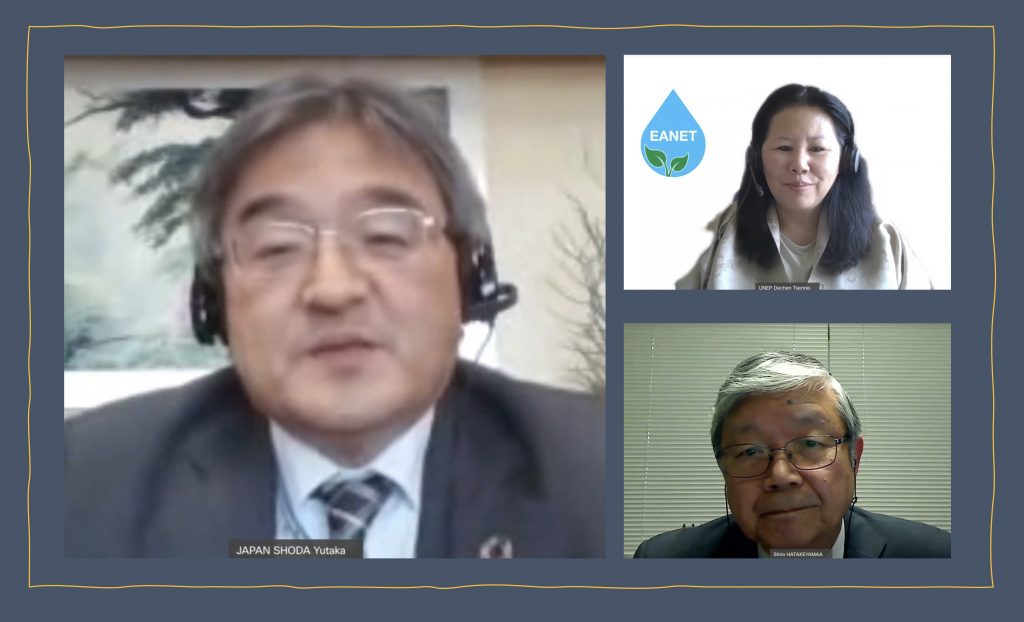
The EANET’s 20th Anniversary celebration was hosted by the Ministry of the Environment, Japan, and H.E. Mr. Yutaka Shoda, the Vice-Minister from the Ministry of the Environment, Japan, opened the celebrations by delivering the Opening Remarks.

.

.

Dr. Dechen Tsering, Regional Director and Representative, UN Environment Programme for Asia and the Pacific shared the event’s Welcome Remarks, followed by Congratulatory Remarks from the EANET National Focal Points from Malaysia, Thailand, and China. These were shared by Mr. Jamalulail bin Abu Bakar, Undersecretary, Environmental Management Division, Ministry of Environment and Water, Malaysia; Ms. Siwaporn Rungsiyanon, Director of the Transboundary Air Pollution Subdivision, Air Quality and Noise Management Division, Pollution Control Department, Ministry of Natural Resources and Environment, Thailand and by Mr. Zhou Jun, Director, Division of Asian, African and Latin American Affairs, Department of International Cooperation, Ministry of Ecology and Environment, China.

.

The Launch of the Summary of the Twentieth Anniversary of the EANET

To close the celebrations, Mr. Mohan Kumar Sammathuria, Principal Assistant Director of the Atmospheric Sciences, and Cloud Seeding Division, Malaysian Meteorological Department, Ministry of Environment and Water, Malaysia, and the Chairperson of the EANET Scientific Advisory Committee for 2021-2023, presented the newly launched publication “Summary of the Twentieth Anniversary of the EANET“.

The Summary of the Twentieth Anniversary of the EANET has been prepared based on the data accumulated in the past twenty years of activity of the EANET. It aims at providing a common understanding of the status of acid deposition in East Asia in an easily understandable manner. In addition, it may serve as a guidance document for policymakers, students, civil society, and various organizations that may become EANET partners soon.

.

Useful Resources

.

.


.

Photo credits: All rights reserved to EANET.

The Twenty-third Session of the Intergovernmental Meeting on the Acid Deposition Monitoring Network in East Asia

30 November 2021 – Bangkok, Thailand

The Twenty-third Session of the Intergovernmental Meeting on the Acid Deposition Monitoring Network in East Asia (IG23) took place from 24 to 25 November 2021, virtually, and gathered over 70 representatives of the EANET Participating Countries, Secretariat, and Network Center for the EANET, to make important decisions on the expansion of the scope of the EANET, among other topics.

.

The IG23 Meeting

Chaired by Japan and co-chaired by Malaysia and Viet Nam, the IG23 started with the Opening Remarks from H.E. Mr. Yutaka Shoda, Vice-Minister, Ministry of the Environment, Japan, followed by Opening Remarks by Dr. Dechen Tsering, Regional Director, United Nations Environment Programme for Asia & the Pacific, and by Dr. Shiro Hatakeyama, Director General, Asia Center for Air Pollution Research.

.

Welcome and Opening Remarks delivered during the IG23 meeting.

.

Historical Decisions on the Expansion of the Scope of the EANET

Following the decision of the Twenty-second  Session of the Intergovernmental Meeting (IG22), held in November 2020, the EANET Participating Countries’ representatives have been working relentlessly on the process to expand the scope of the EANET, from acid deposition to also include a wider scope of atmospheric environment-related substances.

This historical progress required the EANET to develop a text supplementary document to the EANET Instrument, to define the scope of expansion and the target substances to be included in the EANET activities. In a landmark decision, 20 years after the creation of the Network, the IG23 has adopted the text of the Supplementary Document (Annex) to the Instrument for Strengthening the Acid Deposition Monitoring Network in East Asia.

.

Discussions among participants during the virtual IG23 meeting.

.

The EANET Project Fund and Project Guideline, a new financial mechanism allowing EANET to build co-financed projects with partners in the region and beyond, has also been approved by the IG23.

.

Ways Forward

In addition to these major decisions, the IG23 has also approved several important documents, including the Work Program and Budget of the EANET in 2022, and the Summary of the Twentieth Anniversary of the EANET publication, a new outreach document detailing the EANET’s past achievements and future opportunities.

As an important way forward for 2022, the EANET Participating Countries and partner organizations will be invited to start preparing and submitting project proposals for the pilot implementation of new EANET projects, in line with the EANET Project Guideline.

.

Read the IG23’s Report of the Session (including the Decisions of IG23 in Annex 2), and discover the virtual meeting’s pictures on Flickr.

.

Photos credits: all rights reserved to EANET.