The Twenty-fifth Session of the Scientific Advisory Committee on the EANET

27 October 2025 – Vientiane, Lao PDR

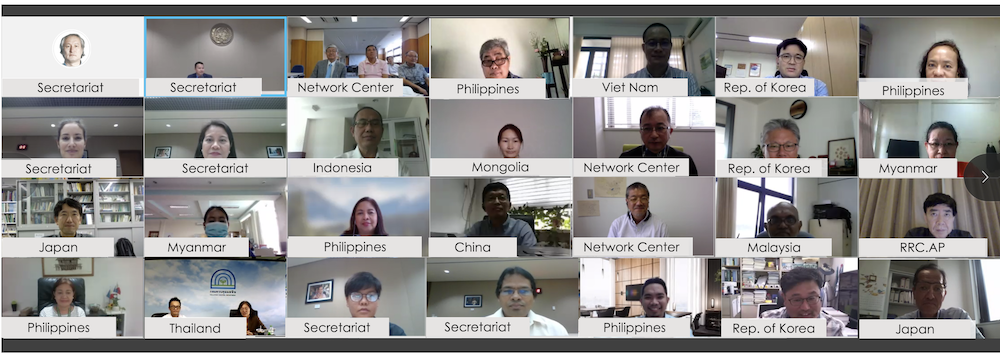
The Twenty-fifth Session of the Scientific Advisory Committee (SAC25) on the EANET was held from 20 to 22 October 2025, in Vientiane, Lao People’s Democratic Republic, and online. The Session gathered over 50 representatives from the EANET Participating Countries, along with the Secretariat and the Network Center for the EANET, and observers from institutions interested in partnering with the EANET. The SAC25 served as a milestone meeting to review progress, assess EANET’s monitoring and research activities, and propose scientific recommendations on the Draft Medium-Term Plan (2026-2030) to the upcoming Twenty-seventh Session of the Intergovernmental Meeting (IG27).

.

Opening Session

The SAC25 opened with welcoming remarks from Mr. Khamsene Ounekham, Director General of the Biotechnology and Ecology Institute, Ministry of Agriculture and Environment, Lao People’s Democratic Republic, who highlighted the importance of the SAC’s role in advancing atmospheric monitoring and regional collaboration. Dr. Toshimasa Ohara, Director General of the Asia Center for Air Pollution Research (ACAP), underscored the region’s persistent air pollution challenges and called for stronger science–policy links, innovative monitoring, and integration of climate and nitrogen management. Ms. Yujeong Kim, Ad Interim Coordinator for the Secretariat for the EANET, United Nations Environment Programme (UNEP), emphasized the region’s progress and continued urgency in tackling air pollution, reflecting on EANET’s 25 years of achievements and upcoming plans, including drafting the Fifth Periodic Report on the State of Acid Deposition in East Asia (PRSAD5), and the next Medium-Term Plan for 2026-2030 aligned with the 2030 Sustainable Development Goals.

. 

Progress of EANET in 2024–2025

EANET continued to strengthen its Core and Project Activities under the current Medium-Term Plan (MTP) 2021–2025, advancing both its scientific and collaborative agenda.

Key highlights in 2025 included the organization of National Awareness Workshops in Lao PDR, and Mongolia, conducted in partnership with ESCAP’s Clean Air for Sustainable ASEAN (CASA) Project and the Northeast Asia Clean Air Partnership (NEACAP), respectively. These workshops contributed to raising awareness and strengthening technical capacity for air pollution monitoring and management in the region.

Promotion of data sharing with regional and global partners was enhanced, including through engagement with ESCAP’s Regional Action Programme on Air Pollution (RAPAP), the Climate and Clean Air Coalition (CCAC) data sharing platforms, and the World Health Organization (WHO)’s publication Air Quality, Energy and Health: Science and Policy Summaries. Significant progress was made on the drafting of the Fifth Medium-Term Plan (2026–2030), which will guide EANET’s next phase of strategic actions.

The Network Center presented updates on dry and wet deposition monitoring, catchment-scale ecosystem studies, and nitrogen management.

 . 

Adoption of Key Scientific Reports

The SAC25 reviewed and adopted several key technical documents including:

  • The EANET Data Report 2024, featuring updated monitoring results on wet and dry deposition, ozone, and ecosystem impacts across 13 EANET Participating Countries.
  • The Report on the Inter-Laboratory Comparison (ILC) Projects 2024, confirming the analytical consistency and reliability of laboratory analyses across the network.
  • The Updated National Monitoring Plans (NMPs), underscoring Participating Countries’ continued commitment to harmonized methodologies and improved data quality.

.

Strengthening Scientific Collaboration and Innovation

The SAC25 highlighted the importance of maintaining strong quality assurance and quality control (QA/QC) systems, expanding data access, and fostering regional collaboration. The Committee endorsed the Guidelines for Establishing Hybrid Air Quality Monitoring Networks (HAQMN) and the Technical Manual for Hybrid Monitoring with Low-Cost Sensors, incorporating updates based on feedback from SAC24. These resources, developed with reference to standards from the U.S. Environmental Protection Agency (EPA), the World Meteorological Organization (WMO), and the European Commission (EC), will guide EANET countries in improving data reliability and calibration practices. EANET also continued projects on Volatile Organic Compounds (VOCs) monitoring, PM₂.₅ source identification, and nitrogen management.

 .

Looking Ahead

Twelve Project Plans for 2026 were also reviewed, including initiatives on nitrogen deposition assessment, satellite-based air quality monitoring, sustainable agriculture for clean air, and leadership training in atmospheric environment management. Project leads interested in collaborating with the EANET through the EANET Project Fund presented their project plans during the meeting. The Project leads included the Asian Institute of Technology (AIT), Clean Air Asia, the Institute for Environment and Development (LESTARI), Universiti Kebangsaan Malaysia (UKM), the Thailand Hub of Talents, and UNEP.

The SAC25 reviewed the Draft Medium-Term Plan (MTP) (2026–2030), which will guide EANET’s work for the next five years and reaffirmed EANET’s key role as a regional scientific network supporting cooperation and data-driven policymaking to improve air quality across East Asia.

Recommendations and outcomes from SAC25 will be presented at the Twenty-seventh Session of the Intergovernmental Meeting (IG27), to be held on 27-28 November in Bangkok, Thailand, back-to-back with UNEP’s Clean Air Week.

.

Read the SAC25 Report of the Session.

View the photos on Flickr.

.

Photo credits: all rights reserved to the Secretariat for the EANET.

The 23rd Scientific Advisory Committee Meeting on the EANET

19 October 2023 – Bangkok, Thailand

The Scientific Advisory Committee (SAC) of the Acid Deposition Monitoring Network in East Asia (EANET) held its Twenty-third Session of the SAC (SAC23) Meeting from 10-12 October 2023, to discuss the progress of acid deposition and air pollution monitoring activities since 2022.

.

Opening Session

Over 50 members of the SAC and/or their representatives from the Participating Countries, the Network Center, and the Secretariat for the EANET,  joined the virtual meeting.

The SAC23 started with Opening Remarks from Mr. Bert Fabian, Coordinator of the Secretariat for the EANET. He emphasized the significance of multilateralism in tackling environmental challenges and highlighted the upcoming 2024 UN Environment Assembly which will focus on climate change, biodiversity loss, and pollution. He welcomed the commitment of EANET countries to address acid deposition and air pollution through partnerships and initiatives.

Welcome Remarks were delivered by Dr. Shiro Hatakeyama, Director General of the Asia Center for Air Pollution Research (ACAP), the Network Center for the EANET.  Dr. Hatakeyama highlighted the importance of the activities conducted by researchers in the past year in the EANET, including the annual Data Report preparation, QA/QC activities, training, and joint research projects. He also emphasized the success of EANET’s capacity-building efforts and highlighted important agenda items for discussion during the session.

 .

Screenshot from some of the SAC23 meeting participants.

 .

Reporting on the Acid Deposition Monitoring data in 2022

Scientists from the Network Center for the EANET presented the results from activities of acid deposition monitoring, based on data provided by the EANET Participating Countries and retrieved from their national monitoring sites for 2022. These included wet, dry, soil and vegetation monitoring from all Participating Countries, as well as catchment-scale monitoring in Japan and the Philippines. The Draft EANET Data Report 2022 and the Draft Report on the Inter-laboratory Comparison Projects in 2022 were both presented and adopted at the Session.

The Network Center also presented an overview of the National Monitoring Plans of the Participating Countries for 2023, based on the submissions made during the recent Twenty-fourth Senior Technical Managers’ Meeting (STM24) on the EANET.

 .

Discussing administrative issues supporting EANET’s further development

Finally, the SAC23 members were also invited to comment, from the scientific viewpoint, on other important documents including,  the Draft EANET Progress and Financial Reports, the Work Programme and Budget for 2024, the Draft Mid-Term Review of the EANET MTP, the proposed revision of the EANET’s Administrative and Project Guidelines, and the EANET Project Plans submitted for 2024, before approval at the IG25 of EANET, to be held in Hanoi, Viet Nam, in November 2023.

.

Access EANET Data, read the Report of SAC23, and view the online meeting’s photos on Flickr.

.

Photo credits: featured image of Chuya River (2023) by Sergey Korolev; other images: all rights reserved to EANET.

The 13th International Workshop on Atmospheric Modeling Research in East Asia

1 February 2023 – Niigata, Japan

The Network Center for the EANET co-organized the 13th International Workshop on Atmospheric Modeling Research in East Asia with the community of MICS-Asia, on 22-23 December 2022. About 60 participants joined the virtual workshop.

.

Improving Air Quality Models: from Data to Policy

According to the United States Environment Protection Agency (EPA), air quality modeling is “a mathematical simulation of how air pollutants disperse and react in the atmosphere to affect ambient air quality.” Through these calculations, researchers and policymakers develop predicted scenarios and design strategies to reduce the adverse effects of air pollution.

Over the years, the EANET has maintained a close relationship with the community of Model Inter-Comparison Studies for Asia (MICS-Asia). The International Workshop on Atmospheric Modeling Research in East Asia is a regular workshop of MICS-Asia which has received support from the EANET throughout the previous Medium Term Plans and was part of the EANET Project Activities in 2022. Summaries of previous MICS-Asia workshops are available in the Reports of the Session of the Scientific Advisory Committee (SAC) on the EANET.

Four working groups were established as part of the MICS-Asia Phase IV: the Air Quality Model working group, the Air Quality and Climate Model working group, the Emission Inventory working group, and the Observation working group. MICS-Asia Phase IV working groups focus on specific issues including the intercomparison of air quality models, the study of the influence of climate change on the status of air quality, the development of reliable emission inventories for model working groups, and the survey and collection of data to establish trends of concentrations of air pollutants in East Asia.

Among other sources, MICS-Asia experts referred to the results of the EANET’s 4th Periodic Report on the State of Acid Deposition in East Asia (PRSAD4) and to the EANET monitoring data to conduct their research.

Screenshot from some participants during the virtual 13th International Workshop on Atmospheric Modeling Research in East Asia

.

Modeling and Impact Assessment Studies

During the workshop, international experts in modeling and impact assessment studies shared various presentations based on research activities in Asia and beyond.

Dr. Christian Hogrefe, from the U. S. Environmental Protection Agency, introduced the Air Quality Modelling Evaluation International Initiative Phase 4 (AQMEII4) which applies detailed dry deposition diagnostics to a range of air quality models and their deposition schemes. Dr. Baozhu Ge, from the Institute of Atmospheric Physics, Chinese Academy of Science, shared a presentation on the enhanced wet deposition of nitrogen induced by a landfalling typhoon over East Asia. Dr. Natsumi Kawano, from the Center for Environmental Science, in Saitama, Japan, gave a presentation on the impact of future climate change on tropospheric ozone in Japan using the WRF-CMAQ modeling system and the RCP8.5 scenario. Dr. Syuichi Itahashi, from the Central Research Institute of Electric Power Industry, Japan, shared a presentation on the changes in transboundary aerosol components due to the emission variations in East Asia. Dr. Xiao Tang, from the Institute of Atmospheric Physics, Chinese Academy of Science, gave a presentation on high-resolution aerosol data over China simulated by the NAQPMS modeling system and an inversed emission inventory. Dr. Naoyuki Yamashita, from the Forestry and Forest Products Research Institute, Japan, shared a presentation on the critical load of soil acidification and surface water eutrophication in the EANET Participating Countries, and Dr. Baiyao Xu, from Nanjing University, China, gave a presentation on the impacts of meteorological factors and ozone variation on crop yields in China related to the carbon neutrality objectives in 2060 and based on RegCM-Chem-YIBs.

Results from the MICS-Asia Phase IV working groups’ research activities and collaboration with international experts will allow to improve the scientific understanding of air quality issues in the region, but also provide informed knowledge for policy-making in Asia.

.

Useful Resources

.

Photo credits: featured photo of Dong Van, Viet Nam (2021) by Giles Freeman on Unsplash ; other photos: all rights reserved to EANET.

The Twenty-first Session of the Scientific Advisory Committee on the Acid Deposition Monitoring Network in East Asia

29 October 2021 – Bangkok, Thailand

The Scientific Advisory Committee (SAC) of the Acid Deposition Monitoring Network in East Asia (EANET) held its Twenty-first Session of the SAC (SAC21) Meeting from 26-28 October 2021, to discuss acid deposition monitoring data provided in 2020.

 .

Reporting on Acid Deposition Monitoring in 2020

The Session was organized virtually by the Secretariat and the Network Center (NC) for the EANET. Over 60 members of the SAC and/or their representatives from the Participating Countries of the EANET joined the meeting.

Scientists from the NC presented the results from activities of acid deposition monitoring, based on data provided by the EANET Participating Countries and retrieved from their national monitoring sites for 2020.

The Draft EANET Data Report 2020 was presented to the Session, showcasing different results and trends in the region since 2000. In addition, the Draft Report on the Inter-laboratory Comparison (ILC) Projects 2020 was also introduced, and it showed that most samples submitted by the participating laboratories met the Data Quality Objective (DQO) of EANET.

.

Scientists from the EANET Network Center presenting several acid deposition monitoring data reports

.

Discussing EANET’s Future Activities for 2021-2025

The NC presented an overview of the National Monitoring Plans of the Participating Countries for 2021, based on the submissions made during the recent Twenty-second Senior Technical Managers’ Meeting (STM22) on the EANET.

As part of the ongoing process of expansion of the scope of the EANET, as decided by the IG22, the SAC21 members were also invited to share their comments, from the scientific viewpoint, on the draft Annex to the EANET Instrument, for consideration and approval at the IG23 of EANET, in November 2021.

.

Some participants during the SAC21 virtual meeting

.

Other important administrative documents and publications such as the Summary of the 20th Anniversary of the EANET and the Draft Fourth Periodic Report on the State of Acid Deposition in East Asia (PRSAD4) were also discussed during the SAC21.

.

EANET Data Reports can be accessed on EANET’s website and 2020 data will be available soon.

.

Photo credits: All rights reserved to EANET.

The Twentieth Session of the Scientific Advisory Committee on the Acid Deposition Monitoring Network in East Asia

SAC20 virtual Participants

25 September 2020 – Bangkok, Thailand

The Scientific Advisory Committee (SAC) of the Acid Deposition Monitoring Network in East Asia (EANET) held its Twentieth Session of the SAC (SAC20) from 23-24 September 2020, virtually. The Session was organized by the Secretariat and the Network Center (NC) for the EANET.

Nearly 50 members of the SAC and/or their representatives from the Participating Countries of the EANET (from Cambodia, China, Indonesia, Japan, Lao PDR, Malaysia, Mongolia, Myanmar, Philippines, Republic of Korea, Russia, Thailand, Viet Nam) and from the Secretariat and the NC, participated in the two-day meeting.

.

Designing EANET’s Future Activities for 2021-2025

Main discussions, on day one, concerned the considerations by the SAC members of future activities from technical and scientific viewpoints. Outcomes of these discussions were recommendations to be presented to the 22nd Intergovernmental Meeting of EANET (IG22) and considered in finalizing the MTP for the EANET (2021-2025).

Currently, EANET’s main activities focus essentially on acid deposition monitoring and provision of data; promotion of quality assurance and quality control (QA/QC); implementation of technical support and capacity building; dispatch of technical missions; promotion of research and studies; and promotion of public awareness activities.

SAC20 members discussed the Draft MTP that includes new activities proposed by the Participating Countries. This will be further discussed next month during the Second Session of the Working Group Meeting.

.

Understanding Acid Deposition Monitoring and Data in 2019
Data Presentations from NC
Figure 1- Scientists from the EANET Network Center presented several acid deposition monitoring data reports from 2019, during the SAC20 virtual meeting, on September 24th, 2020.

.

Day two of the meeting focused essentially on the results from activities of acid deposition monitoring, compilation, evaluation, storage, and provision of data in 2019, based on data provided by the 13 EANET Participating Countries, retrieved from their national monitoring sites.

Scientists from the NC presented detailed results from the EANET Data Report 2019 data on wet deposition, dry deposition, soil and vegetation, inland aquatic environment, and catchment-scale, as well as and from the Report on the Inter-laboratory Comparison (ILC) Projects 2019, focusing on results of wet deposition, dry deposition (filter pack method), soil, and inland aquatic environment ILC Projects carried out in 2019.

An overview of the National Monitoring Plans from the EANET Participating Countries, Reports from the Chairpersons of the Task Forces of the Scientific Advisory Committee (SAC), Progress of Development of the Fourth Periodic Report on the State of Acid Deposition in East Asia (PRSAD4) and updates on other relevant scientific activities were also presented throughout the day.

EANET Data Reports can be accessed on EANET’s website and Reports for 2019 will soon be available.

.

Photo credits: All rights reserved to EANET.