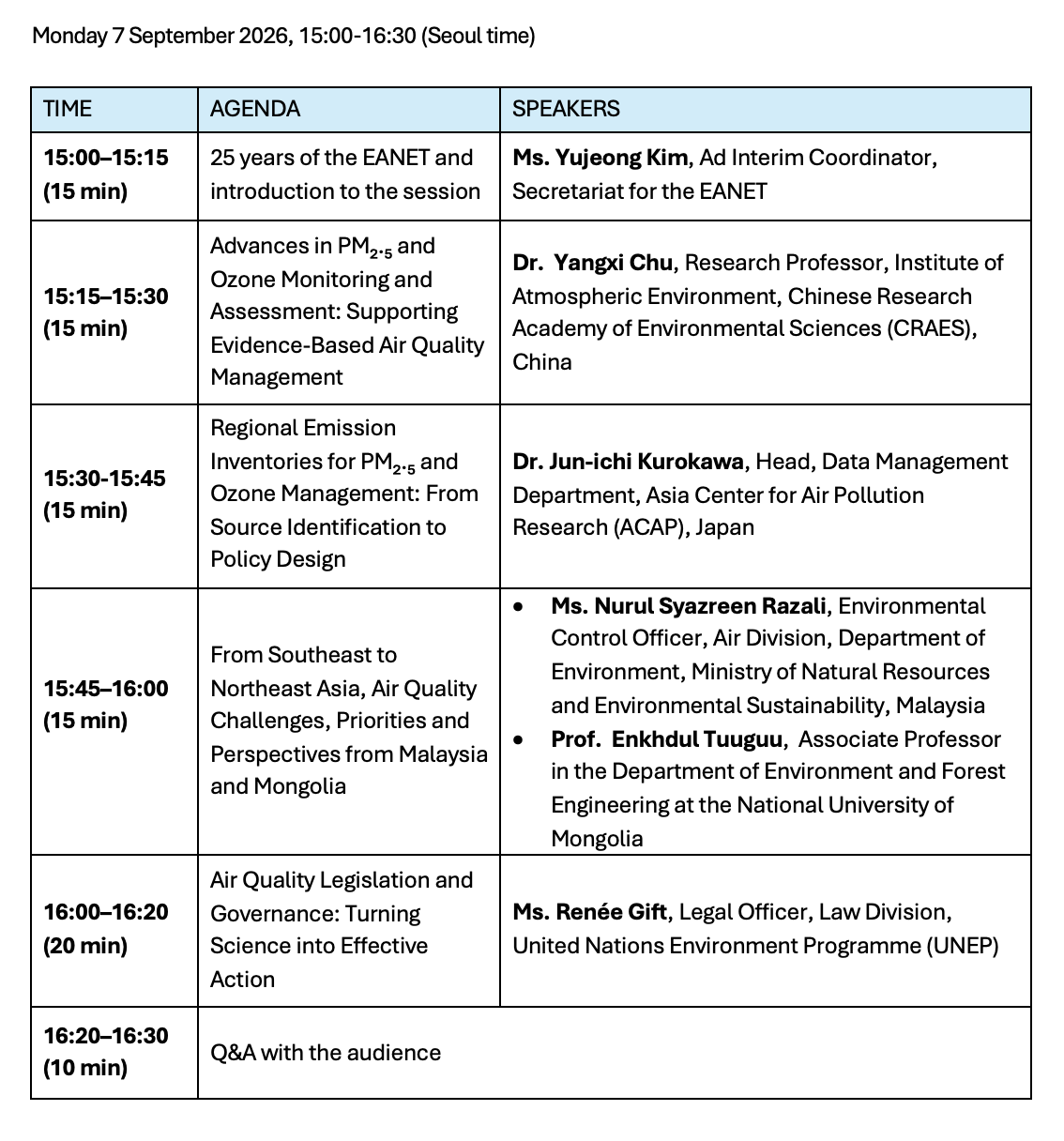
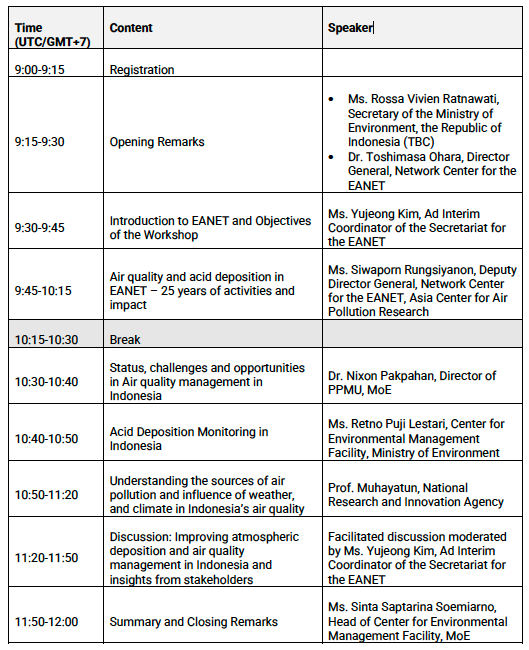
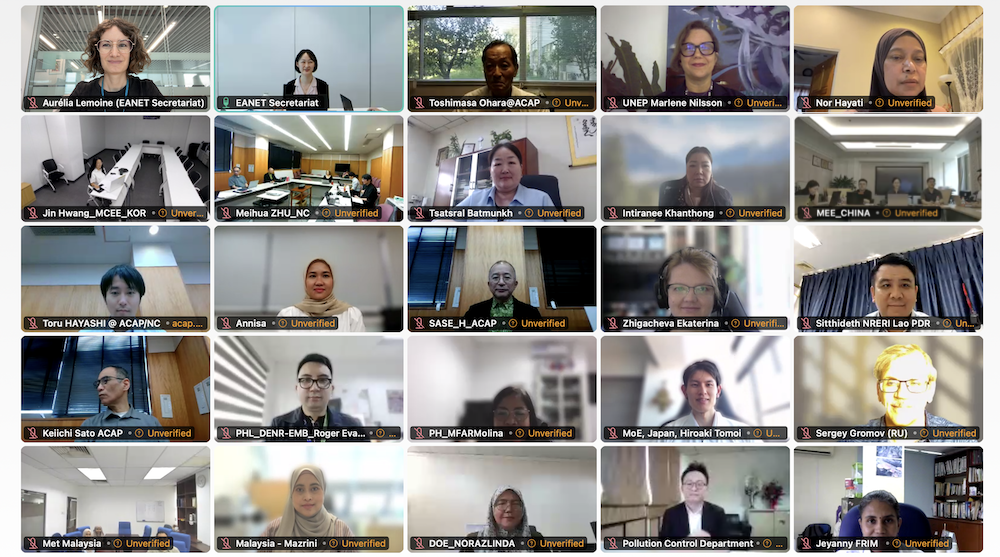
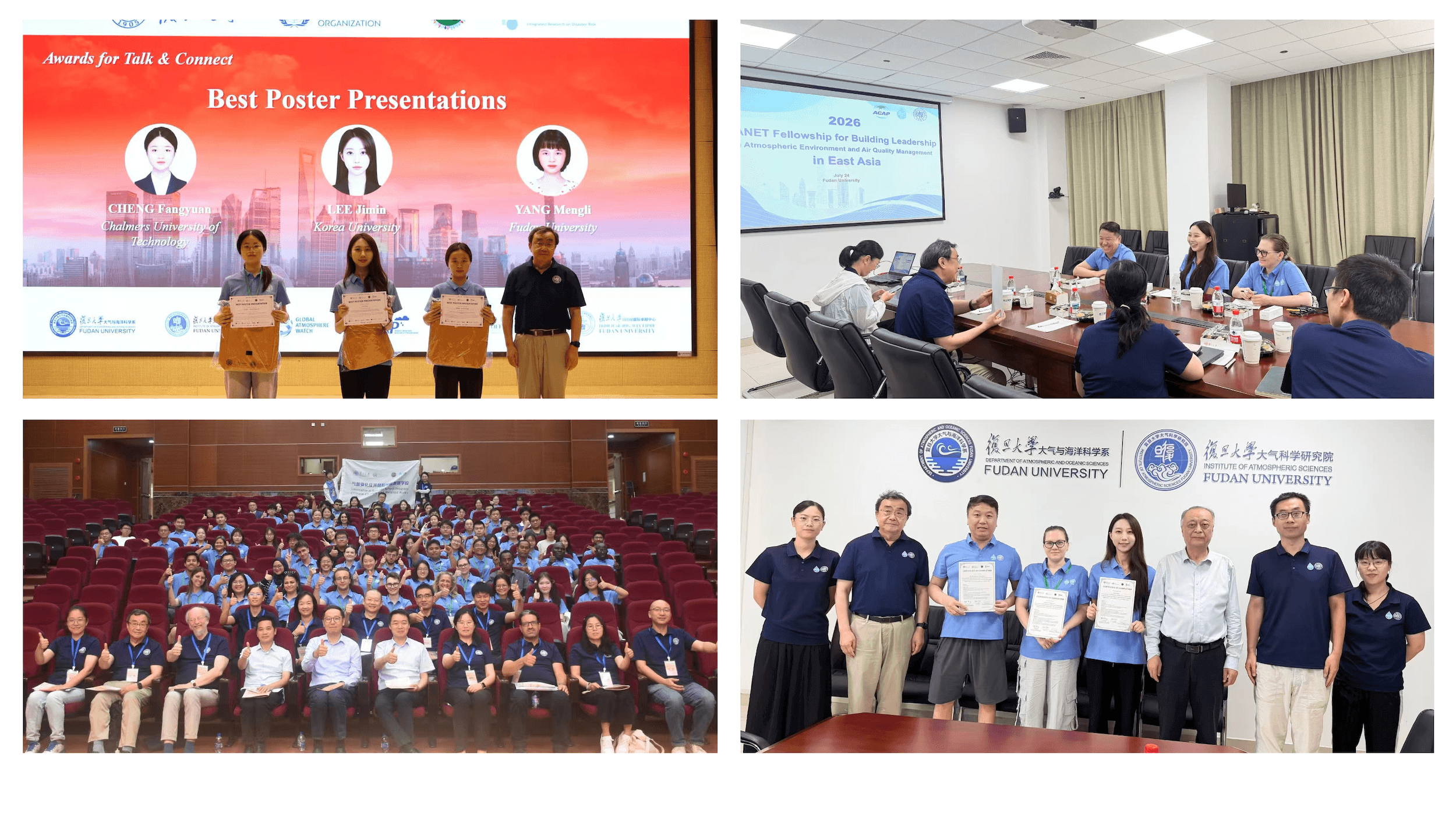
Webinar Workshop for Emission Inventory of VOCs and its Application for Policy Consideration – Join us on December 4th!

.

1. Background

Volatile Organic Compounds (VOCs) are a group of organic chemicals that have a high vapor pressure and comprise various components with different chemical characteristics. In addition to the toxic effects of some VOCs, considering atmospheric environmental problems in EANET Participating Countries, VOCs play important roles as precursors of ozone and secondary PM2.5.

To tackle severe air pollution problems, it is essential to understand the status of VOCs’ emissions and consider effective mitigation measures. Emission inventories are essential to obtain such information and help to make appropriate atmospheric environmental policies. However, VOCs’ emissions are from varieties of sources especially evaporative sources such as solvent use, extraction processes of fossil fuels, and evaporative emissions from gasoline vehicles, and thus, a lot of data and information is necessary to estimate emissions of VOCs. Furthermore, in addition to anthropogenic emissions, biogenic sources are important for VOCs’ emissions. Therefore, the framework for the national emission inventory of VOCs is different from other sources.

The Webinar Workshop for Emission Inventory of VOCs and its Application for Policy Consideration will take place on Wednesday 4 December 2024, from 12:30 to 16:35 (UTC+7), via Zoom. The event is organized by the Asian Center for Air Pollution Research (ACAP), serving as the Network Center for the EANET and with the support of the EANET Project Fund.

 .

2. Objectives

The objectives of the Emission Inventory Webinar Workshop are to learn basic methodologies to estimate emissions of VOCs from stationary sources and road transport, especially for evaporative sources as well as from biogenic sources. In addition, the roles of emission inventory in atmospheric environmental management, air quality modeling of VOCs, and control measures of VOCs are introduced as applications of emission inventories for policy consideration.

.

3. Expected Participants

Policymakers, practitioners, and technical officers of local/national governments related to air pollution issues in the Participating Countries of EANET and other countries in Asia.

.
4. Program

 .

5. Registration

To register, please download and send the registration form (Word format) to the Webinar Workshop Secretariat (eiwws@acap.asia) by 30 November 2024.

.

For further inquiries, contact the Webinar Workshop Secretariat.

.

Online Workshop on the Utilization of Low Cost Sensors (LCS) for Air Quality Monitoring: Recommendations and Strategies – Join us on November 6th!

.

1. Background

Air quality administrations usually use conventional reference monitors. However, low- and middle-income countries cannot fully use these in their air quality monitoring networks due to the limitation of resources. Less expensive and smaller monitoring devices, so-called Low-Cost Sensors (LCS), are capable of filling the gaps in existing air quality monitoring networks, and the data measured by LCS may provide information for policy-relevant air quality measures.

In most areas in the Asian region, air quality monitoring capacities of the national and local governments are still limited and need to be developed to improve their air quality to achieve Sustainable Development Goals (SDGs). Considering emerging sub-regional-scale and serious seasonal air pollution events, such as Ozone and PM2.5 pollution, building a network of reliable and internationally comparable air quality data becomes more important. Thus, practitioners must consider how they can wisely select and use reliable LCS with a network of reference-level monitors in an integrated manner for enhanced air quality monitoring.

The EANET has been supporting the development of air quality monitoring networks in the East Asia region in partnership with its 13 Participating Countries’ governments and scientists, assisting them to develop local capacity of scientific and internationally comparable air quality monitoring. The EANET has expanded its scope to wider air pollution issues in 2021, and the wise use of reliable LCS is one of the EANET’s interests aiming at developing its monitoring capacities. The EANET project titled “Methodology Study for Development of LCS Hybrid Air Quality Monitoring Network (HAQMN)” has been implemented since 2022, with the support of the Ministry of the Environment, Japan, and the EANET Project Fund.

Besides the above-mentioned EANET project, there are other projects implementing air quality monitoring using LCS networks of urban and regional scales in East Asia. These networks are collecting the data via the Internet and some projects demonstrate real-time data. These preceded projects show how LCS technology and citizen participation can contribute to monitoring and improving air quality. They also show how data transparency and open access are important to increase public awareness of air pollution issues.

The Online Workshop on the Utilization of Low-Cost Sensors for Air Quality Monitoring: Recommendations and Strategies will take place on Wednesday 6 November 2024, from 13:00 to 16:45 (UTC+7), via Zoom. The event is organized by the Asian Center for Air Pollution Research (ACAP), serving as the Network Center for the EANET.

 .

2. Objectives
  • To share information on technical requirements, data management, and visualization, citizen participation, policy involvement, and business models by preceded projects on LCS monitoring networks in the Asian region
  • To discuss scopes and challenges for establishing a sustainable LCS monitoring network in East Asia and for sharing LCS data and scientific findings to strengthen efforts to improve the regional air quality in East Asia.
  • To consider recommendations on future directions of LCS monitoring in EANET

.

3. Expected Participants

Policymakers, practitioners, and technical officers of local/national governments related to air pollution issues in the Participating Countries of EANET and other countries in Asia.

.
4. Concept Note, Agenda and Speakers

Download the Concept Note and Programme.

.

 .

For further inquiries, contact the Network Center for the EANET

.

EANET Online Workshop on the Utilization of Low-Cost Sensors for Air Quality Monitoring: Recommendations and Strategies

15 November 2024 – Niigata, Japan

The EANET Online Workshop on the Utilization of Low-Cost Sensors for Air Quality Monitoring: Recommendations and Strategies took place on 6 November 2024. Organized by the Network Center for the EANET, it gathered 152 participants, from the EANET Participating Countries and beyond, to discuss the utilization of Low-Cost Sensors (LCS) in Asia.

Opening Remarks

Dr. Fan Meng, Deputy Director General, the Asia Center for Air Pollution Research, ACAP (the Network Center for the EANET), delivered Opening Remarks. He highlighted the significance of the hybrid method which consists of using both conventional air quality sensors and LCS in addressing monitoring resource constraints. However, he emphasized that accuracy and reliability issues persist, requiring calibration, validation, and quality control to integrate LCS data effectively. He underlinied the workshop’s objectives to share LCS application insights, technical knowledge, data visualization, and discuss sustainable network opportunities within the EANET region.

Air quality monitoring by using a LCS network in the Asian region

Dr. Tomoki Nakayama, from Nagasaki University, shared a presentation on air pollution monitoring using Low-Cost Sensors, focusing on projects in India, and in the ASEAN and African regions. In collaboration with Nagoya University and others, his team measures pollutants such as PM2.5 and CO. These sensors, co-developed with Panasonic Corp., detect particles via light scattering and are effective even under diverse environmental conditions.

Dr. Justin Sentian, Universiti Malaysia Sabah, presented the deployment of LCS air quality sensors in schools, an initiative funded by UNICEF, in partnership with Malaysia’s Environmental Protection Department. These sensors, part of the Air Quality Monitoring in Schools (AQUAMS) program, aim to monitor air quality and promote environmental awareness among students. In the first phase, sensors were installed in five schools, and data on pollutants and weather conditions have been gathered.

Dr. Nguyen Viet Hoai, Vietnam National University presented the “Building Equality Monitoring Capacity in Southeast Asia” project which aims to enhance air quality monitoring in Thailand, Laos, and Viet Nam. Key goals include deploying low-cost PM2.5 sensors, raising public awareness, providing real-time data, and identifying pollution hotspots. Nearly 100 sensors have been installed across the region, supporting data analysis and empowering local authorities and communities.

Dr. Maria Obiminda Cambaliza, Ateneo de Manila University, presented IGAC-MANGO, a research initiative addressing air pollution in Southeast Asia. The project uses Low-Cost Sensors to measure PM2.5 exposure and its health impacts, particularly in high-risk groups. She also highlighted the Health Investigation and Air Sensing for Asian Pollution (Hi-ASAP) project, which started in 2019, aiming to gather data on pollution levels and health effects.

.

Report on the EANET project “Methodology Study for Development of LCS Hybrid Air Quality Monitoring Network (HAQMN)”

Dr. Akie Yuba, a Senior Researcher from ACAP, provided a report on LCS technical studies in Viet Nam and Myanmar, which were carried out as part of EANET Project Activities. In Hoa Binh, Viet Nam, five LCS units were installed, with a specific focus on PM2.5 and other parameters. In Yangon, Myanmar, LCS units, specifically GBiot and Haz Scanner, were utilized for monitoring PM2.5, O3, NO2, and meteorological data during both monsoon and non-monsoon seasons. A good correlation was observed in the data, though different values were displayed in the slopes, emphasizing the need for blackout preparedness to prevent electricity voltage fluctuations. Dr. Yuba also explained the draft contents of the guidelines for establishing HAQMN and the manual for low-cost sensor system operation.

.

Discussions on scopes and challenges for establishing a sustainable LCS monitoring network in East Asia

The panel discussion covered the various challenges and approaches to air quality management across different countries, highlighting the role of LCS in both developed and developing countries. Key questions explored during the discussion included: what are the key local air quality issues in your country? How will citizens and communities be kept informed about air quality data? Is there adequate infrastructure, such as internet and power supply, to support an LCS network?, and How do governments and local authorities intend to use data from this network for policymaking? Additionally, What funding and support will be required to ensure the sustainability of the LCS network?

The panel discussion highlighted several common challenges in air quality management. These included infrastructure and connectivity issues, particularly in developing countries where limited access to power and the internet can undermine the reliability of LCS networks. Funding and sustainability were also major concerns, as many countries depend on international financial support and technical assistance for LCS implementation. Additionally, the importance of public awareness and communication was emphasized, with some countries planning to automate alerts about high pollution levels through platforms like social media. Lastly, the panel underscored the need for regular calibration and maintenance of LCS networks to ensure data accuracy, especially in resource-constrained settings.

The panel concluded that while LCS offers affordable and scalable options for air quality monitoring, its effectiveness depends on sustained funding, accurate data calibration, and enhanced public awareness. Building regional and international collaborations remains essential for addressing air pollution in the Southeast and East Asian regions.

.

Find out more on EANET Project Fund and EANET Projects.

.

Useful Resources:

.

Photo credits: rice field at daytime by Hikarinoshita Hikari (2019).

Building Capacity for Volatile Organic Compounds (VOCs) Monitoring: EANET Successfully Concludes the 2024 Annual Meeting and Training

21 November 2024 – Niigata, Japan

In October 2024, ACAP, serving as the Network Center (NC) for the EANET successfully concluded both the Volatile Organic Compounds (VOCs) Project’s Annual Meeting and Training at the Center for Environmental Science in Saitama (CESS), Japan. The NC for the EANET is implementing the  Project Capacity Building in Promoting VOCs in the EANET, approved by the Twenty-fifth Intergovernmental Meeting (IG25) in 2023, with the financial support of the Ministry of the Environment, Japan (MOEJ).

.

EANET VOC Annual Meeting Reviews Progress and Discusses Plans for 2025

The VOCs Annual Meeting took place at the Center for Environmental Science in Saitama (CESS),  in Saitama, Japan, on October 22nd and 23rd 2024 and gathered the VOCs Advisory Group members as well as members from the Participating Countries including Cambodia, China, Mongolia, the Philippines, and Viet Nam, responsible for overseeing this project. The goal of the meeting was to review the progress to date and develop a detailed plan for 2025 focusing mainly on monitoring methods, sites, and timing.

The Annual Meeting was conducted both in-person at CESS and online. Opening remarks were delivered by Dr. Mitsuo Uematsu, President of CESS, and Dr. Toshimasa Ohara, Director General of the Asia Center for Air Pollution Research (ACAP), moderated by Dr. Meihua Zhu, Chief Senior Researcher of the Planning and Training Department of ACAP. Each Participating Country shared their project progress in 2024 and their monitoring and related capacity building plan. During the meeting, Dr. Soo Ran Won, Department of Environmental Science and Engineering, Ewha Womans University, gave a special talk entitled: a Research Introduction on the “First measurement report for Volatile Organic Compounds’ characteristics during winter in Ulaanbaatar, Mongolia”. During the Annual Meeting, participants reviewed the progress of the project’s activities in 2024 and discussed the activity plan for 2025.

.

Participants at the Annual VOCs Meeting and during the field visit to GL Sciences

.

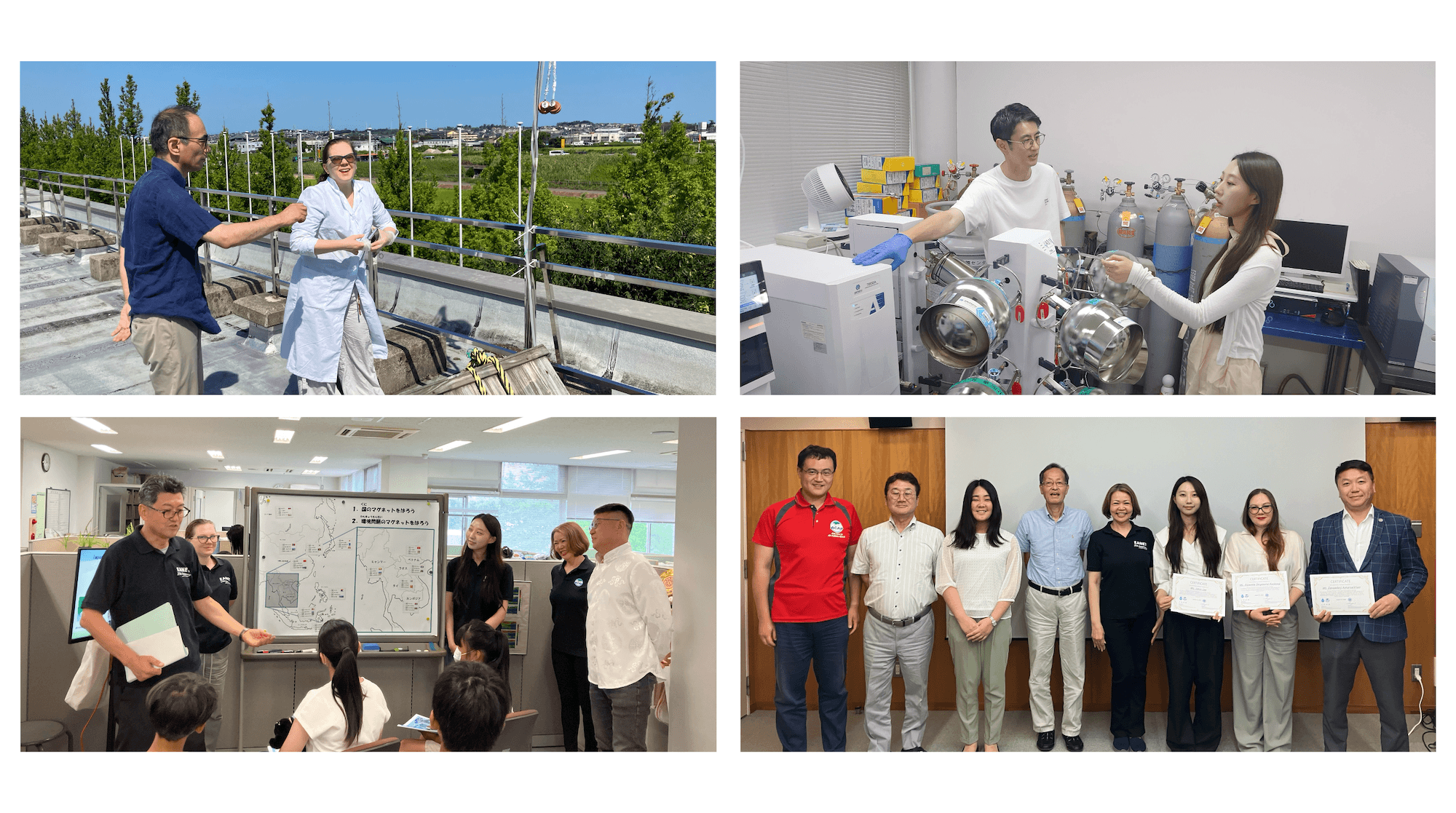
On the second day, on October 23rd, a site survey of an VOCs’ instrument manufacturer was conducted at GL Sciences, Saitama prefecture, Japan. The site survey included an introduction to GL Sciences and to their support system, air analysis instruments, and related products. It also consisted of a laboratory tour and presentation of various equipments’ usage such as gas chromatography/mass spectrometry (GC/MS) with canister concentrator, GC-MS with thermal desorption, sampling and related tools, and air sampler for Perfluoroalkyl and Polyfluoroalkyl Substances (PFAS).

.

Highlights of the Training – VOCs Monitoring and Measurement

The Training Program for VOCs Monitoring and Measurement was held at the Center for Environmental Science in Saitama (CESS), Japan, from October 21st to 25th 2024. To conduct the training in a cost- and time-efficient manner, online lectures were provided to the trainees prior to the hands-on training in Japan. The proposed curriculum for online training consisted of three parts: a background introduction to VOCs, an introduction to VOCs’ monitoring methodologies, and an introduction to case studies on VOCs’ monitoring. Five participants from Cambodia, Mongolia, the Philippines, and Viet Nam, in charge of VOCs monitoring and lab work and part of EANET VOCs project, participated to the training. The VOCs Advisory Group members, CESS, and the NC actively provided support.

On the first two days, Mr. Kouki Sasaka, Group Reader, Atmospheric Environment Group, CESS, and Dr. Yujiro Ichikawa, Researcher, Atmospheric Environment Group, CESS, provided lectures on canister and flow controller including on canister cleaning, flow controller cleaning and flow adjustment, canister sampling, dilutor, preparation of standard gas, pre-concentrator and GC/MS. From October 24 to the afternoon of the 25th, a representative from Nishikawa Keisoku Co., Ltd. presented a lecture on standard and sample measurement (Preconcentrator-GC/MS), data analysis, and the daily maintenance of GC/MS. In the afternoon of October 25, a lecture on air sampling pumps, sorbent tubes (both active and passive), and Low-Cost Sensors was shared by a representative of Sibata Scientific Technology Ltd.  During the closing session, Dr. Akio Imai, Research Director at the CESS presented the completion certificate to the trainees on behalf of the program organizers.

.

VOCs trainees from Cambodia, Mongolia, the Philippines, and Viet Nam at the Center for Environmental Science in Saitama, and with their completion certificates

.

The successful conclusion of the VOCs Project’s Annual Meeting and Training in 2024 strengthens EANET countries’ capacity to monitor and manage VOC emissions. Through collaboration, hands-on training, and advanced monitoring technologies, the initiative sets a solid foundation for improving air quality monitoring in the region.

.

Find out more about the EANET Projects.

.

Useful Resources

.

Photo credits: all rights reserved to EANET.

Expanding Air Quality Monitoring with Low Cost Sensors: What Policymakers and Practitioners Need to Know

6 March 2026

The UN Environment Programme’s Global Environment Outlook 7 (GEO‑7) warns that “globally, six out of the top ten countries with the worst air pollution levels are from Asia and the Pacific, leading to respiratory diseases, poor health and lower agricultural productivity”. Against this global backdrop, EANET’s two new publications offer region‑specific guidance to help countries deploy Hybrid Air Quality Monitoring Networks (HAQMN) that combine reference‑grade monitors with Low‑Cost Sensors (LCS).

.

Guidelines for Establishing a Hybrid Air Quality Monitoring Network – Strategic direction for policymakers and planners

While reference-grade monitors have been traditionally used for air quality monitoring, based on their reliability and high accuracy, they also require a high investment and strong technical operation knowledge. Sensors refered to as ‘Low-Cost Sensors’ (LCS), on the other hand, have appeared in the recent years with improved technology related to the size and energy efficiency, lower cost and easier deployment, in particular in zones with limited infrastructures. However, LCS lack the same measurement precision and require maintenance and data analysis. The complementary use of LCSs and reference-grade monitors is referred to as Hybrid Air Quality Monitoring with Low-Cost Sensors (HAQMN), as described in these EANET Guidelines.

The Hybrid Air Quality Monitoring with Low-Cost Sensors Guidelines provide governments with a strategic framework for integrating LCS into existing reference‑grade networks. They emphasize that LCS should supplement, not replace,  reference-grade monitors, ensuring expanded coverage without compromising accuracy. They also lay out critical principles such as robust Quality Assurance and Quality Control practices, contextualized network planning, and clear differentiation from the EANET’s traditional monitoring practices and guidelines.

Aimed at senior government officials, these Guidelines describe institutional responsibilities, site selection criteria, and governance considerations. They serve as supporting documents to the EANET’s existing technical manuals, helping countries in the region and beyond expand monitoring capacity methodically and consistently.

.

Technical Manual for Hybrid Air Quality Monitoring with Low‑Cost Sensors – Operational guidance for technicians and practitioners

The Technical Manual provides detailed, operational instructions for implementing and maintaining LCS within hybrid networks. It includes step‑by‑step procedures for LCS assembly, installation, calibration, site preparation, communication systems, maintenance, and safety.

The document also incorporates expanded Quality Assurance and Quality Control procedures—such as data screening, bias correction, and performance evaluation—reflecting technical revisions made after expert review. It is designed for technicians, field operators, and analysts responsible for ensuring high‑quality, reliable data.

 .

/


.
How the Two Reports Work Together

.

.
A Regional Response to a Global Environmental Warning

Together, EANET’s Hybrid Air Quality Monitoring Guidelines and Technical Manual form a comprehensive, region‑tailored toolkit that intend to help countries modernize their monitoring systems, strengthen data quality, and better protect public health.

Adopted by the Twenty-seventh Intergovernmental Meeting on the EANET in November 2025, both publications reflect the increased interest to intergrate the use of new technologies for air quality monitoring in the EANET countries, in line with the EANET’s recently launched Medium-Term Plan (2026-2030).

.

Read the Guidelines for Establishing Hybrid Air Quality Monitoring Network (HAQMN) in the EANET region

Read the Technical Manual for Hybrid Air Quality Monitoring with Low-Cost Sensors: Implementation Guidelines in EANET

.

Photo credits: Ho Chi Minh by Andrei Miranchuk (2019).

EANET Monitoring Data Drives Scientific Research in 2024–2025

9 February 2026

EANET data continued to play an important role in international scientific research during 2024–2025, with over 135 peer-reviewed papers using the network’s long-term monitoring datasets to examine atmospheric chemistry, ecosystem impacts, and regional air-pollution trends. The number of research highlights the important scientific value of harmonized regional monitoring systems in addressing regional air-pollution challenges.

.

Advancing Understanding of Atmospheric Deposition and Air Pollution

A large share of recent publications used EANET observations to investigate wet and dry deposition of nitrogen, sulfur, and other atmospheric pollutants across East and Southeast Asia. Studies examined long-term deposition trends, spatial variability of precipitation chemistry, and seasonal patterns in pollutant concentrations (e.g., Temporal and seasonal variations in high-concentration precipitation samples at EANET sites in Japan: 20 years of wet-deposition data, 2025; Spatiotemporal distribution in chemical composition of wet atmospheric deposition in Bandung, Indonesia, 2024), contributing to improved understanding of how emission changes influence regional environmental conditions.

EANET datasets were also widely applied in atmospheric modelling research. Scientists incorporated the measurements to evaluate chemistry-climate models, refine emission inventories, and improve simulations of aerosol formation, transport, and deposition processes (e.g., Evaluation of atmospheric sulfur dioxide simulated with the EMAC chemistry-climate model using satellite and ground-based observations, 2025). Such work strengthens the reliability of regional and global air-quality projections used in policy and climate assessments.

.

Regional Data Supporting Global Science and linking Air Pollution, Ecosystems, and Climate

Beyond atmospheric science, researchers increasingly used EANET data to explore environmental impacts of deposition on ecosystems. Recent studies analysed nitrogen inputs to lakes and forested watersheds, relationships between acid deposition and vegetation changes, and long-term variations in stream and precipitation chemistry (e.g., Wet and dry deposition of atmospheric nitrogen to Lake Erhai Basin: Composition, spatiotemporal patterns and implications, 2025). These findings help clarify how atmospheric pollution interacts with climate variability and ecosystem health across the region.

In addition, several global-scale investigations incorporated EANET measurements to evaluate worldwide nitrogen-deposition trends and to assess future scenarios under changing socio-economic and climate conditions (e.g., Changing patterns of global nitrogen deposition driven by socio-economic development, 2025), demonstrating the EANET’s contribution to global environmental assessments.

.

Strengthening Evidence-Based Regional Cooperation

The increasing number of publications using EANET data reflects both the growing accessibility of standardized monitoring datasets and the importance of long-term observations for regional cooperation. By providing comparable measurements across multiple Participating Countries, EANET enables cross-country analyses that support scientific collaboration, policy evaluation, and improved understanding of regional air pollution.

.

Useful Resources:

.

Photo credits: a house on a hill with mountains in the background (2023) by Charles MingZ.

Sustainable Nitrogen Management Seminar 2025 Highlights EANET’s Role in Tackling Nitrogen Pollution

20 January 2026

The Sustainable Nitrogen Management Seminar 2025 – Accumulation of Nitrogen Data in EANET was held online on December 22, 2025 bringing together 58 participants. Organized under the EANET Project Fund Activity 2025-04 by the Network Center for the EANET, the seminar focused on strengthening the accumulation, analysis, and utilization of nitrogen-related data to address growing regional and global nitrogen pollution challenges.

.

Addressing Nitrogen Beyond Planetary Boundaries

The seminar opened with remarks underscoring nitrogen as a pollutant that has transgressed planetary boundaries, posing serious risks to ecosystems, human health, and climate. Speakers referred to the 2022 United Nations Environment Assembly (UNEA) Resolution on Sustainable Nitrogen Management that calls for sustainable nitrogen management worldwide. Against this backdrop, EANET’s role as a long-term regional monitoring network in East Asia was positioned as increasingly critical for evidence-based policymaking.

Moderated by Dr. Hiroyuki Sase of the Asia Center for Air Pollution Research (ACAP), serving as the Network Center for the EANET, the session highlighted how EANET’s Medium-Term Plan (MTP) 2026–2030 places nitrogen management as one of the core objectives. Dr. Toshimasa Ohara, Director General of ACAP, emphasized that EANET’s extensive datasets on atmospheric concentration and deposition offer a strong foundation for advancing sustainable nitrogen strategies and supporting international environmental cooperation.

.

Advancing Nitrogen Monitoring Science

The technical session showcased cutting-edge research and monitoring approaches. Professor Kazuhide Matsuda from Tokyo University of Agriculture and Technology presented an assessment of atmospheric nitrogen deposition using EANET data. He drew attention to the growing significance of reduced nitrogen (ammonia) and the challenges of accurately measuring it, particularly the artifact problems associated with traditional filter-pack methods. He proposed passive samplers as a practical, cost-effective option for expanding ammonia monitoring across rural and forested areas.

Complementing this, Dr. Yongjoo Choi from Hankuk University of Foreign Studies demonstrated how CrIS satellite data, combined with in-situ measurements and machine learning bias correction, can map ammonia concentrations with high spatial and temporal resolution. His findings revealed elevated ammonia levels over agricultural and livestock-intensive regions in Republic of Korea, especially during summer, illustrating the value of integrating satellite and ground-based observations.

.

Focus on Ammonia and Deposition Complexity

A major discussion theme was the complexity of ammonia (NH₃) deposition, particularly its bidirectional exchange between the atmosphere and ecosystems. Depending on environmental conditions, ammonia can be either deposited or re-emitted, complicating net flux estimates. Participants stressed the need for improved models, enhanced measurement techniques, and hybrid data approaches to better understand ammonia’s ecological impacts.

.

Strengthening Collaboration for the Future

In closing, Dr. Fan Meng, Deputy Director General of ACAP, thanked the speakers and participants for their active engagement. The seminar concluded with a shared understanding that enhanced monitoring, innovative data analysis, and international collaboration will be essential for managing reactive nitrogen pollution effectively across the EANET region.

.

Find out more about the EANET Project Fund.

.

Useful Resources:

Event Summary

-Presentations:

.

Photo credits: Japan (2019) by Nomadic Julien.

Joint SATREPS–EANET Training Advances PM2.5 Source Apportionment Capacity in Cambodia

15 January 2025

From 1–5 December 2025, EANET and the Japanese Science and Technology Research Partnership for Sustainable Development (SATREPS) jointly organized a five-day hybrid training program focused on PM2.5 chemical analysis and source apportionment techniques, in Niigata, Japan to support air quality monitoring in Cambodia and in Southeast Asia. The initiative, supported by the Japan International Cooperation Agency (JICA SATREPS) and the EANET Project Fund (Project 2025-01), gathered seven Cambodian researchers and government officials, as well as experts from Kanazawa University and Nagasaki University. A total of 232 participants joined onsite and online.

 .

Strengthening Monitoring and Analysis for Southeast Asia

Opening on 1 December, the training took place in Niigata, Japan, at the Asia Center for Pollution Research (ACAP), serving as the Network Center for the EANET. The training started with an introduction to the ongoing AIR-SATREPS project “Establishment of a Risk Management Platform for Air Pollution in Cambodia”, implemented by Kanazawa University with the Institute of Technology of Cambodia. The project aims to reinforce air monitoring infrastructure, establish analytical capacity for particulate matter, and support local practitioners in managing air pollution challenges.

EANET’s Network Center provided additional context on regional cooperation and emerging priorities, including VOCs monitoring, and the newly adopted Medium-Term Plan for the EANET (2026–2030).

 .

Hands-On PM2.5 Components Training

On 2–3 December, participants took part in onsite laboratory sessions on inorganic ion analysis using PM2.5 roll tape samples. Lectures and demonstrations from Nagasaki University and the EANET Network Center emphasized Ion Chromatography (IC) procedures and data processing. The training also focused on Quality Assurance and Quality Control (QA/QC) to improve the precision of analytical outputs, an essential step for source apportionment studies.

 .

Applying the PMF Method for Source Apportionment

On 3–4 December, participants explored the Positive Matrix Factorization (PMF) modeling technique, used globally to identify air pollution sources from particulate matter data. Practical exercises guided trainees through model installation, running simulations with demonstration datasets, and matching factor profiles with known emission indicators. Case studies from Japan, Thailand, and Viet Nam illustrated how PMF analysis informs air quality management policies in the region.

 .

Broader Insights: Haze Detection and VOCs Monitoring

The final day featured lectures on haze prediction technologies, including satellite observation, emission inventories, and Chemical Transport Models. A session on EANET’s Volatile Organic Compounds (VOCs) monitoring project showcased measurement methods and initial results from field studies in Mongolia, the Philippines, and Cambodia, with plans to develop technical guidance for VOCs monitoring in the EANET countries in the near future.

.

Find out more about the EANET Project Fund.

.

Useful Resources:

-Read the training summary

– Read the Procedures for PMF Analysis

-Read the Lecture of Methodology of PMF analysis / Practice of PMF analysis using demo data

.

Photo credits: cover photo by Daniel Bernard (2020); other photos: all rights reserved to EANET.

EANET Highlights the Future of Air Quality Monitoring at Clean Air Week 2025

15 December 2025 – Bangkok, Thailand

Experts gathered during the EANET Regional Awareness Workshop during Clean Air Week 2025 to discuss how innovative technologies, empowered communities, and strengthened governance frameworks will be critical to tackling Asia’s air pollution crisis, in Bangkok, Thailand, on 26 November 2025.

 .

A Collaborative Platform for Clean Air Solutions

Co-organized by the EANET and the United Nations Environment Programme (UNEP), the session titled “Next-Generation Air Quality Monitoring: Technologies, Communities, and Governance for Clean Air” convened policymakers, scientists, civil society leaders and technology innovators to explore how air quality monitoring systems can evolve to better protect public health and the environment. The session brought together over 100 in-person participants (and around 50 online participants), with strong representation from both women and men across government, academia, civil society and the private sector.

Air pollution remains the world’s leading environmental health risk, with Asia bearing a disproportionate share of its impacts. Participants agreed that while reference-grade monitoring stations remain essential, their usage can be complemented by low-cost sensors. Emerging tools, including low-cost sensors, satellite observations, artificial intelligence, numerical modelling and open-source platforms, are transforming how air quality data are generated, shared and used for decision-making.

.

Setting the Scene: From Data to Action
Ms. Siwaporn Rungsiyanon

Opening the session, Ms. Siwaporn Rungsiyanon of Thailand’s Pollution Control Department, Ministry of Natural Resources and Environment, underscored the importance of reliable, policy-relevant data in driving effective air quality management.

The session was moderated by Ms. Yujeong Kim, Senior Programme Management Officer at UNEP and Ad Interim Coordinator, Secretariat for the EANET, who highlighted the need to better connect scientific innovation with governance and public participation.

.

Showcasing Innovation and Regional Experience

A series of lightning presentations illustrated how next-generation monitoring approaches are being applied across different contexts. Prof. Gao Jian of the Chinese Research Academy of Environmental Sciences (CRAES) shared lessons from China’s air quality management experience, including applications relevant to urban environments such as Bangkok. Mr. Achim Haug of AirGradient demonstrated how open-source, hyperlocal monitoring toolkits can complement official networks and improve access to air quality information.

Assoc. Prof. Sirima Panyametheekul from Chulalongkorn University highlighted the practical contributions of validated low-cost sensors to air quality management and policy implementation. From a regional perspective, Dr. Meihua Zhu of the Asia Center for Air Pollution Research (ACAP), the Network Center for the EANET, outlined EANET’s strategic directions for 2026–2030, emphasizing sustainability and regional cooperation.

Advanced scientific tools were also featured, with Dr. Bertrand Bessagnet of the French National Centre for Scientific Research (CNRS) presenting innovations in numerical air quality modelling through the CHIMERE model.

Panelists and the audience during the Regional Awareness Workshop

 .

Communities, Governance and the Right to Know

The role of communities and civil society was emphasized during the Workshop. Mr. Nuttawut Teachatanawat of the Clean Air Fund (CAF) shared insights from the Breathe Bangkok Initiative, demonstrating how community-led air quality and health monitoring can support data governance. Ms. Penchom Saetang of EARTH highlighted the significance of Thailand’s Pollution Release and Transfer Register (PRTR) bill in strengthening transparency, public participation and the right to know.

 .

Looking Ahead: Collaboration for Cleaner Air
Prof. Meng Fan

An interactive discussion explored how innovative monitoring technologies can be integrated into existing reference networks, how trust in air quality data can be built through legal and institutional mechanisms, and how regional platforms, including UNDP’s Clean Air for Blue Sky Asia initiative, presented by Prof. Heekwan Lee, from Incheon National University, can strengthen capacity across Asia.

Closing the session, Prof. Meng Fan, from ACAP, emphasized that the future of air quality monitoring lies in collaboration between governments, researchers, and communities, and invited for collaboration with the EANET. By combining cutting-edge science with inclusive governance and citizen engagement, next-generation monitoring can become a powerful driver for cleaner air and healthier lives across the region.

 .

Useful Resources

.

Photo credits: all rights reserved to EANET.

EANET Adopts New Five-Year Plan at the Twenty-seventh Intergovernmental Meeting in Bangkok

17 December 2025 – Bangkok, Thailand

The Twenty-seventh Session of the Intergovernmental Meeting (IG27) on the Acid Deposition Monitoring Network in East Asia (EANET) was held in Bangkok, Thailand, from 27 to 28 November 2025, in the margins of the 2025 Clean Air Week. Representatives from the 13 Participating Countries of the EANET joined the hybrid Intergovernmental Meeting, in person and online. About 70 participants from the EANET countries, Secretariat and Network Center for the EANET, UNEP, and observers, engaged in key discussions focusing mainly on the future activities of the Network, including on the adoption of the new Medium-Term Plan for the EANET (2026-2030).

.

Strengthened Regional Cooperation to Address Air Pollution

Hosted and chaired by the Kingdom of Thailand, the IG27 started with Welcome Remarks by Mr. Chirapong Kuhakanchana, Deputy Director General, Pollution Control Department, Ministry of Natural Resources and Environment, Thailand. In his remarks, Mr. Chirapong underscored Thailand’s recent air quality improvements and strong national actions and reaffirmed the country’s full support for strengthened regional collaboration through the EANET.

Dr. Dechen Tsering, Regional Director, United Nations Environment Programme (UNEP), Regional Office Asia Pacific (ROAP), delivered the Opening Remarks. In her remarks, she emphasized the region’s persistent air pollution challenges and recognized EANET’s progress over 25 years. Dr. Tsering underscored the urgency of stronger regional cooperation and upcoming transitions, including EANET’s new Medium-Term Plan and broader UN reforms.

Dr. Toshimasa Ohara, Director General of the Asia Center for Air Pollution Research (ACAP), delivered the Introductory Remarks, and highlighted East Asia’s air pollution challenges. He emphasized EANET’s crucial role and emerging priorities and underscored the importance of the IG27 in adopting the Medium-Term Plan (2026-2030) and the 2026 Work Programme and Budget.

Left to right, Dr. Dechen Tsering, Mr. Chirapong Kuhakanchana, Dr. Toshimasa Ohara

The session elected Thailand as the Chairperson, Lao PDR and Viet Nam as Vice-Chairpersons, and Japan as the Rapporteur. The Bureau of the IG27 will remain in office until the next Intergovernmental Meeting, to be held in Niigata, Japan, in November 2026.

From right to left – Dr. Toshimasa Ohara, Dr. Le Ngoc Cau, Ms. Siwaporn Rungsiyanon, Ms. Yujeong Kim

.

EANET’s Future Direction and Strategy

In addition to adopting several important documents, such as the 2024 Progress and Financial Reports, and Work Program and Budget in 2026, the IG27 also endorsed the 2024 Data Report and the Report on the Inter-laboratory Comparison Projects, the Guidelines for Establishing Hybrid Air Quality Monitoring Network, and the Technical Manual for Hybrid Air Quality Monitoring with Low-Cost Sensors, which had been approved by the Twenty-fifth Scientific Advisory Committee (SAC25) on the EANET held in Vientiane, Lao PDR, from 20 to 22 October 2025.

Furthermore, in a key decision, the IG27 approved the EANET’s new Medium-Term Plan (MTP) (2026–2030), which concluded discussions from a series of consultations and meetings in 2024 and 2025.

The MTP (2026-2030) aims to define the strategic outcomes and priority actions for EANET’s work programme for the next five years in line with the EANET Instrument and its Annex. The fifth MTP (2026-2030) is the first MTP that substantially addresses EANET’s expanded scope with wider atmospheric environment pollutants which was adopted in 2021 at IG23.

Participants at the IG27 meeting
Additional US$380,000 Allocated for Air Quality Projects in 2026

In addition to the Core Budget of the EANET for its ongoing activities focused mainly on monitoring, and supporting its meetings and awareness activities, the IG27 approved eleven EANET Projects under the EANET Project Fund.

The proposed projects cover a comprehensive set of technical and capacity-building priorities, including the collection of long-term atmospheric nitrogen data, advanced PM2.5 source identification, and broader integrated monitoring efforts that also strengthen understanding and capacities of ozone and VOC pollution across the region. They further support improved use of satellite observations, and stronger national skills in emissions monitoring, financing strategies, and project planning. In parallel, the portfolio promotes regional leadership through fellowships, international trainings for government officials, and targeted workshops on sustainable agricultural practices and air quality legislation—providing EANET countries with practical tools to better manage air pollution in East and Southeast Asia.

A total of over US$387,000 was pledged through the EANET Project Fund, including financial and in-kind support from China (Fudan University), Japan (MOEJ), Thailand (Pollution Control Department, and the Thailand Environment Institute), the Republic of Korea (NIER), and UNEP.

.

Read the MTP (2026-2030) and the Report of IG27.

.

View the IG27 photos.

.

Photo credits: all rights reserved to EANET.