Webinar Workshop for Emission Inventory of VOCs and its Application for Policy Consideration – Join us on December 4th!

.

1. Background

Volatile Organic Compounds (VOCs) are a group of organic chemicals that have a high vapor pressure and comprise various components with different chemical characteristics. In addition to the toxic effects of some VOCs, considering atmospheric environmental problems in EANET Participating Countries, VOCs play important roles as precursors of ozone and secondary PM2.5.

To tackle severe air pollution problems, it is essential to understand the status of VOCs’ emissions and consider effective mitigation measures. Emission inventories are essential to obtain such information and help to make appropriate atmospheric environmental policies. However, VOCs’ emissions are from varieties of sources especially evaporative sources such as solvent use, extraction processes of fossil fuels, and evaporative emissions from gasoline vehicles, and thus, a lot of data and information is necessary to estimate emissions of VOCs. Furthermore, in addition to anthropogenic emissions, biogenic sources are important for VOCs’ emissions. Therefore, the framework for the national emission inventory of VOCs is different from other sources.

The Webinar Workshop for Emission Inventory of VOCs and its Application for Policy Consideration will take place on Wednesday 4 December 2024, from 12:30 to 16:35 (UTC+7), via Zoom. The event is organized by the Asian Center for Air Pollution Research (ACAP), serving as the Network Center for the EANET and with the support of the EANET Project Fund.

 .

2. Objectives

The objectives of the Emission Inventory Webinar Workshop are to learn basic methodologies to estimate emissions of VOCs from stationary sources and road transport, especially for evaporative sources as well as from biogenic sources. In addition, the roles of emission inventory in atmospheric environmental management, air quality modeling of VOCs, and control measures of VOCs are introduced as applications of emission inventories for policy consideration.

.

3. Expected Participants

Policymakers, practitioners, and technical officers of local/national governments related to air pollution issues in the Participating Countries of EANET and other countries in Asia.

.
4. Program

 .

5. Registration

To register, please download and send the registration form (Word format) to the Webinar Workshop Secretariat (eiwws@acap.asia) by 30 November 2024.

.

For further inquiries, contact the Webinar Workshop Secretariat.

.

Online Workshop on the Utilization of Low Cost Sensors (LCS) for Air Quality Monitoring: Recommendations and Strategies – Join us on November 6th!

.

1. Background

Air quality administrations usually use conventional reference monitors. However, low- and middle-income countries cannot fully use these in their air quality monitoring networks due to the limitation of resources. Less expensive and smaller monitoring devices, so-called Low-Cost Sensors (LCS), are capable of filling the gaps in existing air quality monitoring networks, and the data measured by LCS may provide information for policy-relevant air quality measures.

In most areas in the Asian region, air quality monitoring capacities of the national and local governments are still limited and need to be developed to improve their air quality to achieve Sustainable Development Goals (SDGs). Considering emerging sub-regional-scale and serious seasonal air pollution events, such as Ozone and PM2.5 pollution, building a network of reliable and internationally comparable air quality data becomes more important. Thus, practitioners must consider how they can wisely select and use reliable LCS with a network of reference-level monitors in an integrated manner for enhanced air quality monitoring.

The EANET has been supporting the development of air quality monitoring networks in the East Asia region in partnership with its 13 Participating Countries’ governments and scientists, assisting them to develop local capacity of scientific and internationally comparable air quality monitoring. The EANET has expanded its scope to wider air pollution issues in 2021, and the wise use of reliable LCS is one of the EANET’s interests aiming at developing its monitoring capacities. The EANET project titled “Methodology Study for Development of LCS Hybrid Air Quality Monitoring Network (HAQMN)” has been implemented since 2022, with the support of the Ministry of the Environment, Japan, and the EANET Project Fund.

Besides the above-mentioned EANET project, there are other projects implementing air quality monitoring using LCS networks of urban and regional scales in East Asia. These networks are collecting the data via the Internet and some projects demonstrate real-time data. These preceded projects show how LCS technology and citizen participation can contribute to monitoring and improving air quality. They also show how data transparency and open access are important to increase public awareness of air pollution issues.

The Online Workshop on the Utilization of Low-Cost Sensors for Air Quality Monitoring: Recommendations and Strategies will take place on Wednesday 6 November 2024, from 13:00 to 16:45 (UTC+7), via Zoom. The event is organized by the Asian Center for Air Pollution Research (ACAP), serving as the Network Center for the EANET.

 .

2. Objectives
  • To share information on technical requirements, data management, and visualization, citizen participation, policy involvement, and business models by preceded projects on LCS monitoring networks in the Asian region
  • To discuss scopes and challenges for establishing a sustainable LCS monitoring network in East Asia and for sharing LCS data and scientific findings to strengthen efforts to improve the regional air quality in East Asia.
  • To consider recommendations on future directions of LCS monitoring in EANET

.

3. Expected Participants

Policymakers, practitioners, and technical officers of local/national governments related to air pollution issues in the Participating Countries of EANET and other countries in Asia.

.
4. Concept Note, Agenda and Speakers

Download the Concept Note and Programme.

.

 .

For further inquiries, contact the Network Center for the EANET

.

EANET Online Workshop on the Utilization of Low-Cost Sensors for Air Quality Monitoring: Recommendations and Strategies

15 November 2024 – Niigata, Japan

The EANET Online Workshop on the Utilization of Low-Cost Sensors for Air Quality Monitoring: Recommendations and Strategies took place on 6 November 2024. Organized by the Network Center for the EANET, it gathered 152 participants, from the EANET Participating Countries and beyond, to discuss the utilization of Low-Cost Sensors (LCS) in Asia.

Opening Remarks

Dr. Fan Meng, Deputy Director General, the Asia Center for Air Pollution Research, ACAP (the Network Center for the EANET), delivered Opening Remarks. He highlighted the significance of the hybrid method which consists of using both conventional air quality sensors and LCS in addressing monitoring resource constraints. However, he emphasized that accuracy and reliability issues persist, requiring calibration, validation, and quality control to integrate LCS data effectively. He underlinied the workshop’s objectives to share LCS application insights, technical knowledge, data visualization, and discuss sustainable network opportunities within the EANET region.

Air quality monitoring by using a LCS network in the Asian region

Dr. Tomoki Nakayama, from Nagasaki University, shared a presentation on air pollution monitoring using Low-Cost Sensors, focusing on projects in India, and in the ASEAN and African regions. In collaboration with Nagoya University and others, his team measures pollutants such as PM2.5 and CO. These sensors, co-developed with Panasonic Corp., detect particles via light scattering and are effective even under diverse environmental conditions.

Dr. Justin Sentian, Universiti Malaysia Sabah, presented the deployment of LCS air quality sensors in schools, an initiative funded by UNICEF, in partnership with Malaysia’s Environmental Protection Department. These sensors, part of the Air Quality Monitoring in Schools (AQUAMS) program, aim to monitor air quality and promote environmental awareness among students. In the first phase, sensors were installed in five schools, and data on pollutants and weather conditions have been gathered.

Dr. Nguyen Viet Hoai, Vietnam National University presented the “Building Equality Monitoring Capacity in Southeast Asia” project which aims to enhance air quality monitoring in Thailand, Laos, and Viet Nam. Key goals include deploying low-cost PM2.5 sensors, raising public awareness, providing real-time data, and identifying pollution hotspots. Nearly 100 sensors have been installed across the region, supporting data analysis and empowering local authorities and communities.

Dr. Maria Obiminda Cambaliza, Ateneo de Manila University, presented IGAC-MANGO, a research initiative addressing air pollution in Southeast Asia. The project uses Low-Cost Sensors to measure PM2.5 exposure and its health impacts, particularly in high-risk groups. She also highlighted the Health Investigation and Air Sensing for Asian Pollution (Hi-ASAP) project, which started in 2019, aiming to gather data on pollution levels and health effects.

.

Report on the EANET project “Methodology Study for Development of LCS Hybrid Air Quality Monitoring Network (HAQMN)”

Dr. Akie Yuba, a Senior Researcher from ACAP, provided a report on LCS technical studies in Viet Nam and Myanmar, which were carried out as part of EANET Project Activities. In Hoa Binh, Viet Nam, five LCS units were installed, with a specific focus on PM2.5 and other parameters. In Yangon, Myanmar, LCS units, specifically GBiot and Haz Scanner, were utilized for monitoring PM2.5, O3, NO2, and meteorological data during both monsoon and non-monsoon seasons. A good correlation was observed in the data, though different values were displayed in the slopes, emphasizing the need for blackout preparedness to prevent electricity voltage fluctuations. Dr. Yuba also explained the draft contents of the guidelines for establishing HAQMN and the manual for low-cost sensor system operation.

.

Discussions on scopes and challenges for establishing a sustainable LCS monitoring network in East Asia

The panel discussion covered the various challenges and approaches to air quality management across different countries, highlighting the role of LCS in both developed and developing countries. Key questions explored during the discussion included: what are the key local air quality issues in your country? How will citizens and communities be kept informed about air quality data? Is there adequate infrastructure, such as internet and power supply, to support an LCS network?, and How do governments and local authorities intend to use data from this network for policymaking? Additionally, What funding and support will be required to ensure the sustainability of the LCS network?

The panel discussion highlighted several common challenges in air quality management. These included infrastructure and connectivity issues, particularly in developing countries where limited access to power and the internet can undermine the reliability of LCS networks. Funding and sustainability were also major concerns, as many countries depend on international financial support and technical assistance for LCS implementation. Additionally, the importance of public awareness and communication was emphasized, with some countries planning to automate alerts about high pollution levels through platforms like social media. Lastly, the panel underscored the need for regular calibration and maintenance of LCS networks to ensure data accuracy, especially in resource-constrained settings.

The panel concluded that while LCS offers affordable and scalable options for air quality monitoring, its effectiveness depends on sustained funding, accurate data calibration, and enhanced public awareness. Building regional and international collaborations remains essential for addressing air pollution in the Southeast and East Asian regions.

.

Find out more on EANET Project Fund and EANET Projects.

.

Useful Resources:

.

Photo credits: rice field at daytime by Hikarinoshita Hikari (2019).

Building Capacity for Volatile Organic Compounds (VOCs) Monitoring: EANET Successfully Concludes the 2024 Annual Meeting and Training

21 November 2024 – Niigata, Japan

In October 2024, ACAP, serving as the Network Center (NC) for the EANET successfully concluded both the Volatile Organic Compounds (VOCs) Project’s Annual Meeting and Training at the Center for Environmental Science in Saitama (CESS), Japan. The NC for the EANET is implementing the  Project Capacity Building in Promoting VOCs in the EANET, approved by the Twenty-fifth Intergovernmental Meeting (IG25) in 2023, with the financial support of the Ministry of the Environment, Japan (MOEJ).

.

EANET VOC Annual Meeting Reviews Progress and Discusses Plans for 2025

The VOCs Annual Meeting took place at the Center for Environmental Science in Saitama (CESS),  in Saitama, Japan, on October 22nd and 23rd 2024 and gathered the VOCs Advisory Group members as well as members from the Participating Countries including Cambodia, China, Mongolia, the Philippines, and Viet Nam, responsible for overseeing this project. The goal of the meeting was to review the progress to date and develop a detailed plan for 2025 focusing mainly on monitoring methods, sites, and timing.

The Annual Meeting was conducted both in-person at CESS and online. Opening remarks were delivered by Dr. Mitsuo Uematsu, President of CESS, and Dr. Toshimasa Ohara, Director General of the Asia Center for Air Pollution Research (ACAP), moderated by Dr. Meihua Zhu, Chief Senior Researcher of the Planning and Training Department of ACAP. Each Participating Country shared their project progress in 2024 and their monitoring and related capacity building plan. During the meeting, Dr. Soo Ran Won, Department of Environmental Science and Engineering, Ewha Womans University, gave a special talk entitled: a Research Introduction on the “First measurement report for Volatile Organic Compounds’ characteristics during winter in Ulaanbaatar, Mongolia”. During the Annual Meeting, participants reviewed the progress of the project’s activities in 2024 and discussed the activity plan for 2025.

.

Participants at the Annual VOCs Meeting and during the field visit to GL Sciences

.

On the second day, on October 23rd, a site survey of an VOCs’ instrument manufacturer was conducted at GL Sciences, Saitama prefecture, Japan. The site survey included an introduction to GL Sciences and to their support system, air analysis instruments, and related products. It also consisted of a laboratory tour and presentation of various equipments’ usage such as gas chromatography/mass spectrometry (GC/MS) with canister concentrator, GC-MS with thermal desorption, sampling and related tools, and air sampler for Perfluoroalkyl and Polyfluoroalkyl Substances (PFAS).

.

Highlights of the Training – VOCs Monitoring and Measurement

The Training Program for VOCs Monitoring and Measurement was held at the Center for Environmental Science in Saitama (CESS), Japan, from October 21st to 25th 2024. To conduct the training in a cost- and time-efficient manner, online lectures were provided to the trainees prior to the hands-on training in Japan. The proposed curriculum for online training consisted of three parts: a background introduction to VOCs, an introduction to VOCs’ monitoring methodologies, and an introduction to case studies on VOCs’ monitoring. Five participants from Cambodia, Mongolia, the Philippines, and Viet Nam, in charge of VOCs monitoring and lab work and part of EANET VOCs project, participated to the training. The VOCs Advisory Group members, CESS, and the NC actively provided support.

On the first two days, Mr. Kouki Sasaka, Group Reader, Atmospheric Environment Group, CESS, and Dr. Yujiro Ichikawa, Researcher, Atmospheric Environment Group, CESS, provided lectures on canister and flow controller including on canister cleaning, flow controller cleaning and flow adjustment, canister sampling, dilutor, preparation of standard gas, pre-concentrator and GC/MS. From October 24 to the afternoon of the 25th, a representative from Nishikawa Keisoku Co., Ltd. presented a lecture on standard and sample measurement (Preconcentrator-GC/MS), data analysis, and the daily maintenance of GC/MS. In the afternoon of October 25, a lecture on air sampling pumps, sorbent tubes (both active and passive), and Low-Cost Sensors was shared by a representative of Sibata Scientific Technology Ltd.  During the closing session, Dr. Akio Imai, Research Director at the CESS presented the completion certificate to the trainees on behalf of the program organizers.

.

VOCs trainees from Cambodia, Mongolia, the Philippines, and Viet Nam at the Center for Environmental Science in Saitama, and with their completion certificates

.

The successful conclusion of the VOCs Project’s Annual Meeting and Training in 2024 strengthens EANET countries’ capacity to monitor and manage VOC emissions. Through collaboration, hands-on training, and advanced monitoring technologies, the initiative sets a solid foundation for improving air quality monitoring in the region.

.

Find out more about the EANET Projects.

.

Useful Resources

.

Photo credits: all rights reserved to EANET.

EANET Working Group 2024: Reviewing Achievements and Planning Activities for Better Air Quality in Northeast and Southeast Asia

28 August 2024 – Bangkok, Thailand

The Working Group Meeting on the EANET held its 2024 session virtually on 20-21 August, focusing on reviewing the progress of activities in 2023 and 2024, preparing the next Medium-Term Plan (MTP) for EANET (2026-2030), and considering new projects for 2024. The session brought together over 50 representatives from the Participating Countries to assess achievements, discuss strategic directions, and plan future projects and activities.

.

Progress Report of Activities Conducted in 2023 and 2024

The Working Group began by reviewing the significant achievements in the last quarter of 2023 and the first half of 2024, highlighting key activities.

The Secretariat and Network Center for the EANET presented Draft Reports on EANET Core Activities and Projects for 2023 and 2024. The Secretariat outlined activities including organizing the 23rd Session of the Scientific Advisory Committee (SAC23), the 25th Intergovernmental Meeting (IG25), and the Informal Meeting on the Initial Preparation of the Draft Medium-Term Plan (2026-2030) (IM2024). Highlights included the EANET Regional Awareness Workshop and National Awareness Workshops in China and Cambodia, as well as updates to the EANET website and communications.

The Network Center reported on its activities, such as preparing National Monitoring Plans, the EANET Data Report, technical manuals, and QA/QC activities. EANET Project Activities for 2024 covered studies on atmospheric deposition, VOCs capacity building, Low-Cost Sensors, PM2.5 source apportionment, and various meetings and webinars on air quality and nitrogen management. The Secretariat also reported on a project assessing emissions inventories and source apportionment in Southeast Asia.

Some participants at the virtual WG2024 meeting

.

Preparation of the Next Medium-Term Plan (MTP) for the EANET (2026-2030)

A major focus of the session was the development of the next MTP, setting the strategic direction for 2026-2030.

The Secretariat presented the Draft Annotated Outline for the Medium-Term Plan (MTP) for EANET (2026-2030) and the Draft Partnership and Resource Mobilization Strategy. An overview of the proposed content for each section of the outline was provided and the steps for drafting the MTP were discussed. The session invited comments and suggestions for improvement.

Key points of the discussion included the need to address emerging challenges in air quality management. Recommendations were made for better data utilization in policymaking, incorporating cost-benefit analyses and considering the key results from the Draft Partnership and Resource Mobilization Strategy. The Secretariat will integrate feedback from the WG2024 and refine the outline which will be submitted for review by the SAC24 in October in Seoul, Republic of Korea, and for consideration at the IG26 in Kuala Lumpur, Malaysia, in November 2024.

.

Proposed Projects for 2024

A total of 11 Project Plans were presented to the Session.

The Network Center and the Secretariat explained the proposed projects including studies on atmospheric deposition effects, VOC capacity building, and feasibility studies for new monitoring technologies. Other projects focused on analyzing precipitation and particulate matter, webinars for emission inventories, and strengthening nitrogen cycle management. supporting emission inventory development in Southeast Asia and improving regional capacity building for air quality monitoring and assessment.

In the discussion, various representatives highlighted key points: the need for enhanced capacity building alongside pollution control, the value of satellite monitoring, support for field studies and VOC projects, and the importance of linking project activities to the upcoming Medium-Term Plan (MTP). There were also suggestions to prioritize capacity-building activities, as well as to include additional meteorological factors in projects related to particulate matter.

 .

Closing Session

The 2024 session of the EANET Working Group highlighted significant progress in 2023, set the stage for the next MTP, and laid out new initiatives for 2024.

.

Further discussions on the proposed Project Plans, among other important agenda items, will be held during the Twenty-fourth Scientific Advisory Committee (SAC24) meeting on the EANET to be organized from 29 to 31 October 2024, in Seoul, Republic of Korea.

.

Read the Report of the Session.

 .

Find out more about EANET’s Project Fund and Project Activities.

.

Photo credits: Photo of Bangkok, Benchakitti forest park by Andre Bestman (2023); all other photos, all rights reserved to EANET.

EANET Working Group Advances Medium-Term Plan Development and Project Proposals for 2026

14 August 2025 – Bangkok, Thailand

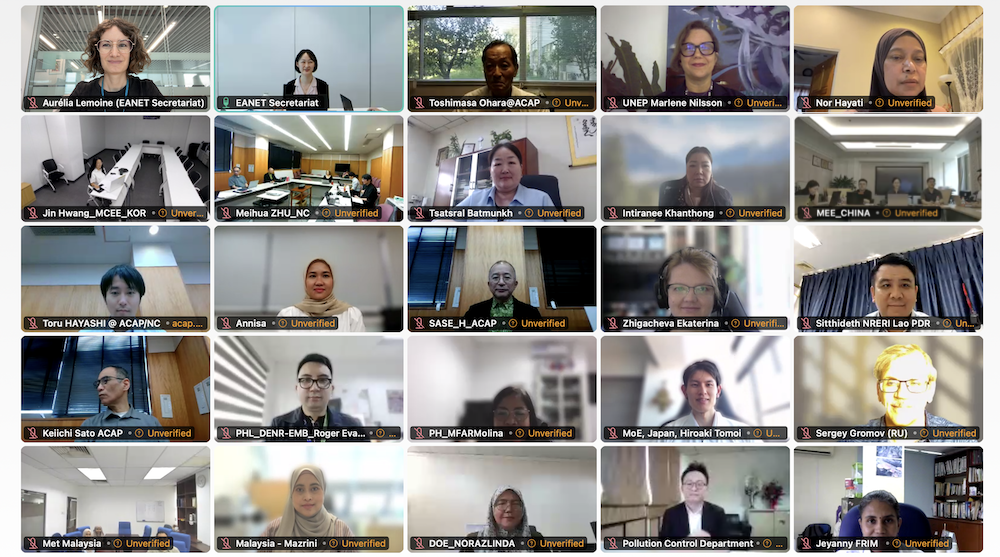
The Working Group Meeting in 2025 (WG2025) on the EANET brought together over 60 participants virtually, including representatives from the 13 Participating Countries, UNEP, ACAP, the Secretariat and the Network Center for the EANET, and participants from other organizations presenting proposals for cooperation with EANET in 2026. The meeting mainly focused on the future direction of the network including on the review of the Second Draft Medium-Term Plan (MTP) (2026–2030) and proposed Project Activities for 2026.

.

Opening Remarks

Dr. Mushtaq Memon, Regional Coordinator for Chemicals and Pollution Action, United Nations Environment Programme (UNEP), Regional Office for Asia and the Pacific, highlighted the urgent need for stronger regional cooperation on air pollution, noting its growing recognition at global forums. He stressed that the new MTP will guide EANET’s future work and strengthen its role in regional and international initiatives.

Dr. Toshimasa Ohara, Director General of the Asia Center for Air Pollution Research (ACAP), pointed out East Asia’s serious challenges with pollutants such as ozone and PM2.5. He underlined EANET’s valuable two decades of monitoring and called for the new MTP to also address wider issues such as climate change and nitrogen management.

 .

Shaping the Next Medium-Term Plan (2026-2030)

A central focus of the meeting was the consultation on the Second Draft Medium-Term Plan (2026–2030). Participating Countries welcomed the revisions made following the June 2025 Working Group Meeting on the First Draft of the MTP (2026-2030), noting significant improvements.

Countries highlighted the importance of leveraging new technologies while stressing the need for resource mobilization strategies to support the next MTP. The draft will undergo further written consultations until September, with the final version to be considered at the upcoming Intergovernmental Meeting (IG27) in November 2025.

Screenshot of some participants during the WG2025 virtual meeting

.

New Project Activities Proposed for 2026

The meeting also reviewed nine draft Project Plans and two Concept Notes for 2026. These proposals cover diverse themes, including:

Proposed Project Plans (EPPs)

  1. EPP 2026-01: Accumulation of atmospheric nitrogen deposition data for sustainable nitrogen management in existing EANET monitoring sites
  2. EPP 2026-02: Fellowship for building leadership in Atmospheric Environment and Air Quality Management in East Asia
  3. EPP 2026-03: Collaboration of Technical and Training (TNT) and capacity building program for personnel of the Participating Countries on monitoring
  4. EPP 2026-04: Webinar for understanding of influences by changing climate on air quality over East Asia
  5. EPP 2026-05: Capacity building webinar workshop on application of satellite observation for atmospheric environmental management
  6. EPP 2026-06: Methodological Study on PM2.5 Source Identification and Capacity Enhancement in EANET with Emphasis on Southeast Asia
  7. EPP 2026-07: Strengthening EANET Capacity in Financing Strategies for Project Planning and Advanced Methods for Monitoring of Air Pollution and Emissions
  8. EPP 2026-08: Driving Action through Data: Development of the EANET Data Dashboard
  9. EPP 2026-09: Enhancing Regional Understanding of Black Carbon Pollution through Integrated Monitoring Across EANET Countries

Proposed Project Concept Notes (PCNs)

  1. PCN 2026-01: Knowledge exchange and capacity strengthening on sustainable agricultural practices for clean air in Mekong region
  2. PCN 2026-02: Strengthening capacity on air quality legislation: Capacity building workshop on Law and Air Quality for EANET

Countries emphasized the need to prioritize projects within the scope of the EANET (based on its Annex to EANET Instrument) and encouraged expanding capacity-building initiatives.

All Project Plans and Concept Notes, with modifications when relevant, will be further considered at the upcoming Scientific Advisory Committee Meeting (SAC25) on the EANET held on 20-22 October in Vientiane, Lao PDR, before being submitted for final consideration and approval at the Twenty-seventh Intergovernmental meeting on the EANET (IG27) in November 2025 in Bangkok, Thailand.

 .

Next Steps

EANET representatives will meet again in September during the Twenty-sixth Senior Technical Manager’s Meeting (STM26) in Manila, Philippines, followed by the SAC25 and IG27. The IG27 will review the Final Draft of the Medium-Term Plan (2026–2030) supporting EANET’s strengthened role in tackling air pollution and advancing regional cooperation in East Asia.

.

Read the Meeting Report.

.

Photo credits: green trees under white clouds (2020) by Boudewijn Huysmans; all other images: all rights reserved to EANET.

Sustainable Nitrogen Management Seminar: Experts Convene to Address Global Challenges

nitrogen seminar

Bangkok, 23 February 2024

As a pre-seminar to UNEA-6, the Sustainable Nitrogen Management Seminar, addressed the significant yet underrepresented issue of nitrogen management in Asia and globally, and provided a platform for EANET Participating Countries to enhance their understanding of the nitrogen challenge. Organized virtually by EANET, with the support of the Ministry of the Environment, Japan, through the EANET Project Fund, the Seminar gathered around 100 participants. It aimed to explore strategies for sustainable nitrogen management through experts’ lectures and discuss the accumulation of nitrogen data within the EANET framework.

The seminar, facilitated by Ms. Aurélia Lemoine (Session 1) and by Bert Fabian (Session 2) from the Secretariat for the EANET, hosted by UNEP, started with an opening address by Mr. Yu Kamei, Director for International Cooperation at the Ministry of the Environment, Japan.

.

Global Trends and Insights

Dr. Ning Liu,  Programme Management Officer, Source to Sea Pollution Unit, UNEP, presented updates on the UNEP Working Group on Nitrogen, highlighting the importance of collaborative efforts in addressing nitrogen-related challenges. Prof. Kentaro Hayashi, Professor, at the Research Institute for Humanity and Nature, Japan emphasized the interconnectedness of nitrogen issues with the atmosphere and the overall narrative surrounding nitrogen management.

Dr. Wilfried Winiwarter, a Senior Research Scholar from the Pollution Management Research Group, Energy, Climate, and Environment at the International Institute for Applied Systems Analysis (IIASA), Austria, presented the use of nitrogen budgets for sustainable management, highlighting comprehensive approaches to tackle nitrogen-related issues. Dr. Kazuya Nishina, a Senior Researcher at the Earth System Division (Biogeochemical Cycle Modeling and Analysis Section), from the National Institute for Environmental Studies (NIES),  introduced the Japan Nitrogen Waste project, underlining the importance of national inventories in understanding nitrogen dynamics.

.

EANET’s Role in Nitrogen Management

Dr. Hiroyuki Sase, Head of the Ecological Impact Research Department, ACAP, presented the potential of EANET in contributing to sustainable nitrogen management, emphasizing the importance of monitoring nitrogen cycles comprehensively. Dr. Le Ngoc Cau, Deputy Director General, Viet Nam Institute of Meteorology, Hydrology and Climate Change (IMHEN), Ministry of Natural Resources and Environment Viet Nam, highlighted efforts in Viet Nam to identify and control nitrate pollution in water bodies, reflecting the global significance of nitrogen management.

The seminar featured Q&A sessions, where participants raised questions regarding the implications of ammonia as a new fuel and the role of nitrogen in European farming practices. Discussions revolved around the need for enhanced collaboration and the significance of localized approaches in nitrogen management strategies.

.

Moving Forward

Wrapping up Part I, Prof. Hayashi emphasized the pivotal role of EANET in addressing atmospheric aspects of nitrogen management, stressing its direct and indirect contributions to sustainable practices. Dr. Sase concluded Part II by highlighting EANET’s extensive data accumulation efforts, emphasizing its potential to understand nitrogen flows comprehensively. Experts reiterated the importance of EANET’s role in nitrogen management, emphasizing the need for continued collaboration and data-driven approaches.

.

Find out more about the EANET Project Fund

.

Useful Resources

Panelists’ Presentations

1. Update on UNEP Working Group on Nitrogen by Mr. Liu

2. The overall story about the nitrogen issue connected to the atmosphere by Prof. Hayashi

3. Using nitrogen budgets for sustainable nitrogen management by Dr. Winiwarter

4. The Potential of EANET to Contribute to Sustainable Nitrogen Management by Dr. Sase

.

Photo credits: featured photo by Dr. Mingqun Huo, all rights reserved.

The Twenty-sixth Session of the Intergovernmental Meeting on the EANET

11 December 2024 – Bangkok, Thailand

The Twenty-sixth Session of the Intergovernmental Meeting (IG26) on the Acid Deposition Monitoring Network in East Asia (EANET) was held in Kuala Lumpur, Malaysia, from 27 to 28 November 2024. All the 13 Participating Countries of the EANET were represented in-person in the Intergovernmental Meeting. Overall, there were about 80 participants from the EANET, engaged in key discussions related to the network’s 2025 activities and to air quality and acid deposition challenges in Northeast and Southeast Asia.

.

Regional Cooperation Addressing Acid Deposition and Air Pollution

Hosted and chaired by the government of Malaysia, the IG26 started with Welcome Remarks delivered by Datuk Nor Yahati binti Awang, Deputy Secretary General of Malaysia’s Environmental Sustainability at the Ministry of Natural Resources and Environmental Sustainability (NRES). Opening Remarks followed by Dr. Toshimasa Ohara, Director General of the Asia Center for Air Pollution Research (ACAP), and Mr. Bert Fabian, Coordinator of the Secretariat for the EANET.

Datuk Nor Yahati highlighted Malaysia’s commitment to tackling air pollution through initiatives such as the National Clean Air Action Plan (2025–2040). Dr. Ohara emphasized the expanded scope of EANET activities, and Mr. Fabian underscored the importance of the science-policy interface in EANET’s mission. The session elected Malaysia as Chairperson, Thailand and Mongolia as Vice-Chairpersons, and Japan as Rapporteur.

.

Over US$300,000 Allocated for Air Quality Projects in 2025

In addition to the Core Budget of the EANET for its ongoing activities focused mainly on monitoring, and supporting its meetings, the IG26 approved twelve EANET Projects under the EANET Project Fund.

The Projects focus on capacity building, public awareness, monitoring and research activities, applied to various issues such as Nitrogen management, Volatile Organic Compounds (VOCs), innovative monitoring technologies including low-cost sensors and satellite monitoring, and understanding the effects of acid deposition on ecosystems, among others. A total of US$300,000 mainly coming from Japan (MOEJ), and with co-financing from the Republic of Korea (NIER), the Philippines (EMB), and China (Fudan University), was allocated for these initiatives.

 .

Future Directions and Key Approvals

In addition to these key decisions, the IG25 approved several important documents, such as the Work Program and Budget of the EANET in 2025, including the organization of key meetings in 2025 such as the Working Group Meeting in 2025 (WG2025), the 24th Scientific Advisory Committee (SAC25) and the 27th Session of the Intergovernmental Meeting on the EANET (IG27). The IG26 also approved the process of development of the EANET’s next Medium-Term Plan (2026–2030) which will include several consultations and meetings among Participating Countries in 2025, emphasizing expanded collaboration and innovative approaches to air quality monitoring and policy support.

.

Read the Report of IG26

.

Photos credits: all rights reserved to EANET.

The Twenty-fifth Session of the Intergovernmental Meeting on the EANET

30 November 2023 – Hanoi, Viet Nam

The Twenty-fifth Session of the Intergovernmental Meeting on the Acid Deposition Monitoring Network in East Asia (EANET) (IG25) took place from 29 to 30 November 2023, in Hanoi, Viet Nam and online. Over 70 representatives from the EANET Participating Countries, UNEP and ACAP, the Secretariat and Network Center for the EANET, participated in the discussions related to the network’s 2024 activities and to address air quality issues in the region.

.

Regional Cooperation Fighting Acid Deposition and Air Pollution

Hosted and chaired by Viet Nam, the IG25 started with the Welcome Remarks by His Excellency Mr. Le Cong Thanh, Vice Minister, Ministry of Natural Resources and Environment (MONRE), followed by opening Remarks by Ms. Marlene Nielsson, Deputy Regional Director for Asia and the Pacific, UNEP, and by Dr. Hatakeyama, Director General, Asia Center for Air Pollution Research (ACAP).

His Excellency Mr. Le Cong Thanh delivering the Opening Remarks.

His Excellency Mr. Le Cong Thanh emphasized the significant challenges of air pollution and acid deposition in Viet Nam and globally. He highlighted the efforts of MONRE in developing legal frameworks and a nationwide monitoring network and expressed appreciation for the EANET’s contributions over the past twenty years. Ms. Nilsson underscored the significance of multilateralism in tackling environmental challenges, particularly acid deposition and air pollution, highlighting EANET’s expanded role in policy actions and capacity building for improved air quality. Dr. Shiro Hatakeyama highlighted the successful outcomes of the expansion of scope and the Project Fund adopted two years ago, specifically citing the Hybrid Air Quality Monitoring Network (HAQMN) project’s positive results with Low-Cost Sensors (LCS).

The IG25 Session was chaired by Viet Nam, vice-chaired by Lao PDR and Cambodia, and Thailand was elected Rapporteur.

.

Over US$600,000 allocated to Building Government Capacity and Addressing Air Quality Management Issues in the Region

In addition to the Core Budget of the EANET to support its activities focused on monitoring, and supporting its meetings, the IG25 approved eleven EANET Projects in 2024 primarily focusing on capacity building for government officials but also concerning key air quality management-related issues such as on Volatile Organic Compounds (VOCs), low-cost sensors (LCS), emissions inventories, and source apportionment projects in the region.

The EANET Projects for 2024 received funding through the EANET Project Fund, EANET’s financial mechanism allowing collaboration with implementation partners and co-financing from outside the EANET Network.

The total funding for Project Activities in 2024 is $605,000, including funding from the EANET Secretariat and NC funds, additional financial support from Japan (MOEJ), and from the Republic of Korea (NIER).

.

Ways forward

In addition to these key decisions, the IG25 also approved several important documents, such as the Work Program and Budget of the EANET in 2024, including the organization of key meetings in 2024 such as the Working Group Meeting in 2024 (WG2024), the 24th Scientific Advisory Committee (SAC24) and the 26th Session of the Intergovernmental Meeting on the EANET (IG26), and the process to finalize the revision of the EANET’s Administrative and Financial Guidelines and of the EANET Project Fund and Project Guideline.

 .

Read the Report of IG25 and discover the meeting’s pictures on Flickr.

.

Photos credits: all rights reserved to EANET.

Improving Air Quality: Insights and Collaboration at the EANET Workshop on VOCs Related Activities

Bangkok, 28 November 2023

The Workshop on Knowledge Sharing for VOCs Related Activities in EANET took place at the Asian Development Bank (ADB) Headquarters, Manila, Philippines, and online on Tuesday 14 November 2023, as a pre-event to the  Better Air Quality Conference (BAQ) 2023. It gathered around 35 experts in the auditorium of ADB Headquarters, Manila, Philippines, and about 80 participants online.

.

EANET’s Initiatives for a Comprehensive Understanding of VOCs

Volatile Organic Compounds (VOCs) are components of air pollution that include a complex mixture of hundreds of carbon-containing gases. VOCs also include a wide variety of chemicals, some of which can cause short- and long-term adverse health effects. However, due to the unique characteristics of VOCs and the relatively high cost of measurement, VOCs monitoring and its related activities in the EANET region are still at an early stage. Since February 2023, the EANET has launched the “Feasibility for Promoting VOCs related Capacity Building in the EANET” project as part of the first batch of EANET Projects funded by the EANET Project Fund.

The EANET Workshop on Knowledge Sharing for VOCs Related Activities aimed at providing a complete understanding of VOCs related activities from the monitoring design to policy implementation, and to foster a comprehensive understanding and collaboration in the field of VOCs by bringing together experts, researchers, and practitioners in a multidisciplinary platform.

Mr. Yu Kamei, Director of the International Cooperation Office, Environment Management Bureau, Ministry of the Environment, Japan (MOEJ) and Engr. Marcelino N. Rivera Jr. OIC of the Environmental Quality Management Division of the Environmental Management Bureau (EMB) of the Philippines,  Central Office, on behalf of the EMB Director and concurrent Assistant Secretary Gilbert C. Gonzales, delivered opening remarks. Five presentations followed and covered VOC-related activities, from monitoring to emission control. Mr. Bert Fabian, Coordinator, Secretariat for the EANET moderated the Workshop.

.

Advancements in VOCs Monitoring and Emission Control Across East Asia

Dr. Yujiro Ichikawa, Researcher at the Atmospheric Environment Group,  Center for Environmental Science in Saitama (CESS) Japan, presented ” Methods of Measuring Atmospheric VOCs and Case Study in Japan”. Afterwards, Dr. Toshimasa Ohara, Research Director, Center for Environmental Science in Saitama (CESS), the SAC member of Japan for the EANET, and Dr. Kessinee Unapumnuk, Director, Transboundary Air Pollution Sub-Division, Air Quality, and Noise Management Division, Pollution Control Department  (PCD), Thailand, delivered presentations on “VOCs and secondary air pollution in East Asia” and “Establishment of Environmental Standards and Guideline Values of Volatile Organic Compounds in the Kingdom of Thailand”, respectively.

.

.

From the perspective of VOCs emission control, Mr. Junjie Tian, Engr., Shanghai Academy of Environmental Science, and Dr. Miao Feng, Director, Institute of Atmospheric Environment, Chengdu Academy of Environmental Science, delivered presentations on the “Prevention and Control of VOC pollution in Shanghai: progress, achievement and prospect” and “Volatile Organic Compounds (VOCs) emission control in Chengdu, China”. During their presentations, they introduced the Chinese local governments’ practices, the lessons learned, and the achievements made during the past decade.

.

.

Prof. Fan Meng, Deputy Director General of the NC for the EANET, Asia Center for Air Pollution Research (ACAP) delivered closing remarks. The session was marked by active discussions and exchange of information, including with online participants. The event exemplified EANET’s commitment to fostering a multidisciplinary platform for experts, researchers, and practitioners to collectively address the challenges of VOCs in air pollution.

.

This activity was implemented by the EANET and funded by the Ministry of the Environment, Japan, (MOEJ) and the Environmental Management Bureau (EMB) of the Philippines, through the EANET Project Fund.

.

Find out more about the EANET Project Fund.

.

Useful Resources:

-Read the Panelists’ Presentations:

.

-Read the Q&A Report

-View the Photos on Flickr

View the recordings on YouTube

.

Photo credits: Manila, Philippines (2020) by Alexes Gerard; all other photos and videos: all rights reserved to EANET.