The Twenty-first Session of the Scientific Advisory Committee on the Acid Deposition Monitoring Network in East Asia

29 October 2021 – Bangkok, Thailand

The Scientific Advisory Committee (SAC) of the Acid Deposition Monitoring Network in East Asia (EANET) held its Twenty-first Session of the SAC (SAC21) Meeting from 26-28 October 2021, to discuss acid deposition monitoring data provided in 2020.

 .

Reporting on Acid Deposition Monitoring in 2020

The Session was organized virtually by the Secretariat and the Network Center (NC) for the EANET. Over 60 members of the SAC and/or their representatives from the Participating Countries of the EANET joined the meeting.

Scientists from the NC presented the results from activities of acid deposition monitoring, based on data provided by the EANET Participating Countries and retrieved from their national monitoring sites for 2020.

The Draft EANET Data Report 2020 was presented to the Session, showcasing different results and trends in the region since 2000. In addition, the Draft Report on the Inter-laboratory Comparison (ILC) Projects 2020 was also introduced, and it showed that most samples submitted by the participating laboratories met the Data Quality Objective (DQO) of EANET.

.

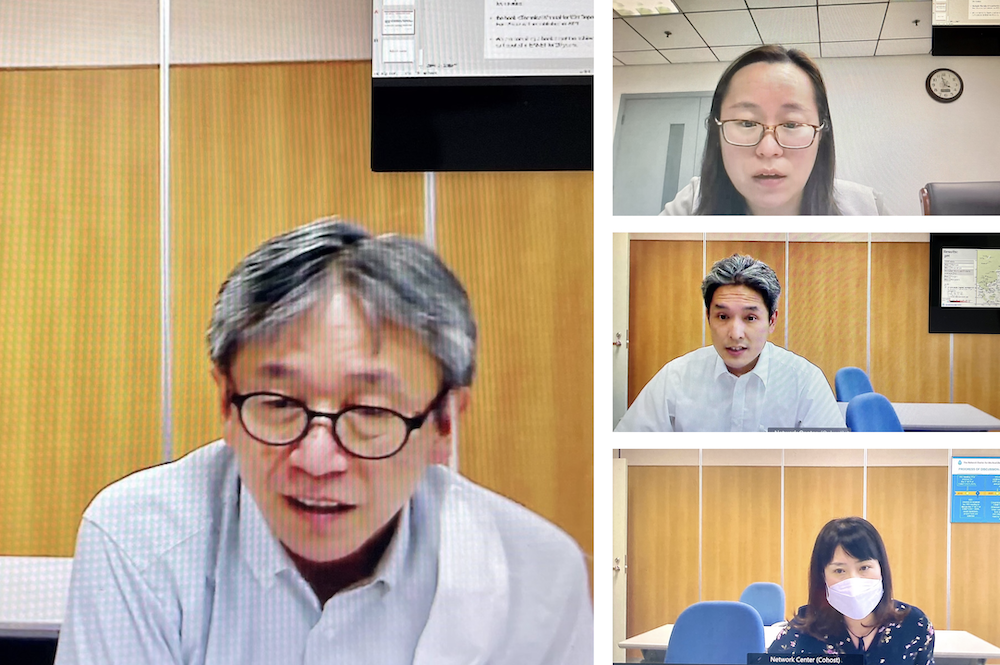
Scientists from the EANET Network Center presenting several acid deposition monitoring data reports

.

Discussing EANET’s Future Activities for 2021-2025

The NC presented an overview of the National Monitoring Plans of the Participating Countries for 2021, based on the submissions made during the recent Twenty-second Senior Technical Managers’ Meeting (STM22) on the EANET.

As part of the ongoing process of expansion of the scope of the EANET, as decided by the IG22, the SAC21 members were also invited to share their comments, from the scientific viewpoint, on the draft Annex to the EANET Instrument, for consideration and approval at the IG23 of EANET, in November 2021.

.

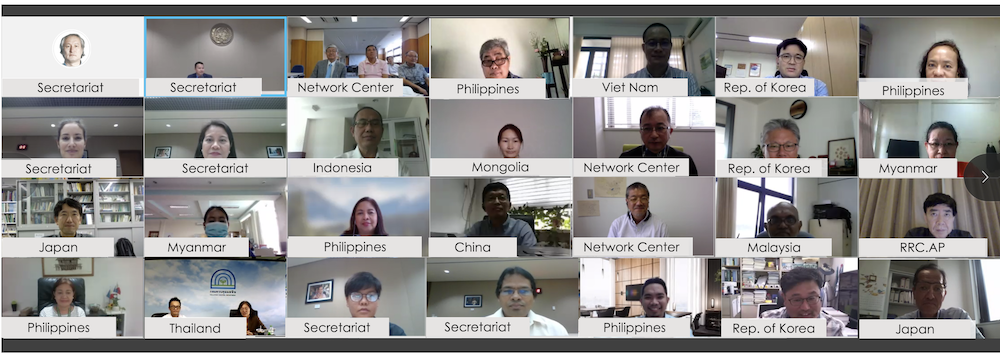
Some participants during the SAC21 virtual meeting

.

Other important administrative documents and publications such as the Summary of the 20th Anniversary of the EANET and the Draft Fourth Periodic Report on the State of Acid Deposition in East Asia (PRSAD4) were also discussed during the SAC21.

.

EANET Data Reports can be accessed on EANET’s website and 2020 data will be available soon.

.

Photo credits: All rights reserved to EANET.

The 22nd Scientific Advisory Committee Meeting on the EANET

25 October 2022 – Bangkok, Thailand

The Scientific Advisory Committee (SAC) of the Acid Deposition Monitoring Network in East Asia (EANET) held its Twenty-second Session of the SAC (SAC22) Meeting from 18-20 October 2022, to discuss the progress of acid deposition monitoring activities since 2021.

 .

Reporting on Acid Deposition Monitoring in 2021

Over 50 members of the SAC and/or their representatives from the Participating Countries of the EANET joined the virtual meeting. The SAC22 started with Opening Remarks from Mr. Bert Fabian, Coordinator, Secretariat for the EANET, and by Welcome Remarks from Dr. Shiro Hatakeyama, Director General, Asia Center for Air Pollution Research (ACAP).

Scientists from the NC presented the results from activities of acid deposition monitoring, based on data provided by the EANET Participating Countries and retrieved from their national monitoring sites for 2021.

The Draft EANET Data Report 2021 was presented to the Session, showcasing different results and trends. In addition, the Draft Report on the Inter-laboratory Comparison (ILC) Projects 2021 was also introduced, and it showed that most samples submitted by the participating laboratories met the Data Quality Objective (DQO) of EANET.

.

Discussing EANET’s Future Activities

The NC presented an overview of the National Monitoring Plans of the Participating Countries for 2022, based on the submissions made during the recent Twenty-third Senior Technical Managers’ Meeting (STM23) on the EANET.

The SAC22 members were also invited to share their comments, from the scientific viewpoints, on the proposed Project Plans for 2023 to be funded by the newly introduced EANET Project Fund, and before approval at the IG24 of EANET, in November 2022.

Finally, the Network Center shared the program of the EANET Emission Inventory Webinar Workshop on Open Biomass Burning that will take place on 5 December 2022, the EANET Workshop on the Relationship between the Atmospheric Environment, Human Health and Ecosystems on 31 October 2022, and the 13th International Workshop on Atmospheric Modeling Research in East Asia, on 22-23 December 2022.

The Network Center also presented the Acid Rain 2020 event, organized by ACAP, which will take place in April 2023, and reminded the abstracts’ submission date is extended to 31 October 2022.

.

EANET Data Reports can be accessed on EANET’s website and 2021 data will be available soon.

.

Read the Report of SAC22 here and view the photos on Flickr.

.

Photo credits: All rights reserved to EANET.

The Twenty-third Senior Technical Managers’ Meeting on the EANET

Niigata, 29 September 2022

The Twenty-third Senior Technical Managers’ Meeting (STM23) on the Acid Deposition Monitoring Network in East Asia (EANET) was held online on 28 and 29 September 2022. The Meeting gathered over 40 senior technical officials from the 13 EANET Participating Countries to discuss the status of the Network’s monitoring activities.

.

EANET Monitoring Activities in 2021

Dr. Shiro Hatakeyama, Director General, Asia Center for Air Pollution Research (ACAP), delivered the Opening Remarks, followed by Welcome Remarks by Mr. Bert Fabian, Coordinator, Secretariat for the EANET.

After presenting the progress of EANET activities in 2021 since STM22, the Network Center for the EANET (NC) shared the results of various reports on acid deposition and related substances monitoring activities. STM23 participants were invited to discuss and share knowledge and experience to collectively review these draft publications.

.

Participants of the STM23 meeting

.

Overview of the Preliminary Draft Data Report 2020 and Evaluation of the Results of the Inter-laboratory Comparison (ILC) Projects 2020

The NC presented the Preliminary Draft Data Report 2021. This report focuses on wet deposition, dry deposition (air concentration), soil and vegetation, inland aquatic environment, and catchment-scale monitoring. It includes a summary of the monitoring data in 2021 and related information submitted by the Participating Countries.

The NC also introduced the preliminary draft Report on the Inter-laboratory Comparison Projects in 2021 for wet deposition, dry deposition (filter pack method), soil, and inland aquatic environment.

.

Consideration of the National Monitoring Plans (NMPs), Current Monitoring Activities for the EANET and Overall Air Concentration Monitoring Status of the Participating Countries

In line with previous STM meetings’ process, representatives of the Participating Countries presented their National Monitoring Plans (NMPs) and current EANET activities, including monitoring capacities, technical challenges, and future plans, while focusing on the general improvement of the activities of the EANET.

Other important matters were also discussed, including the progress on the Revision of the Technical Manuals for Dry Deposition Flux Estimation and Air Concentration Monitoring.

Dr. Meng Fan, Deputy Director General, ACAP, delivered the Closing Remarks. He expressed his great appreciation for the improvement of the data quality due to the efforts of the Participating Countries and hoped that the EANET monitoring, research and capacity-building activities would continue to be strengthened through the expansion of the scope of the EANET.

.

Find out more and access EANET monitoring data.

.

Photo credits: cover photo by Anna Sushok (2020), other images, all rights reserved to EANET.

The Twenty-second Senior Technical Managers’ Meeting of the Acid Deposition Monitoring Network in East Asia

3 September 2021 – Niigata, Japan

The Twenty-second Senior Technical Managers’ Meeting (STM22) of the Acid Deposition Monitoring Network in East Asia (EANET) was held online on 1 and 2 September 2021, gathering over 40 senior technical officials from the 13 EANET Participating Countries to discuss the status of the EANET monitoring activities.

.

EANET Monitoring Activities in 2020

Dr. Shiro Hatakeyama, Director General, Asia Center for Air Pollution Research (ACAP), delivered the Opening Remarks, followed by Welcome Remarks by Mr. Tomi Haryadi, Coordinator, Secretariat for the EANET.

After presenting the progress of EANET activities in 2020 since STM21, the Network Center for the EANET (NC) shared the results of various important reports on acid deposition and related substances monitoring activities. STM22 participants were invited to discuss and share important knowledge and experience to collectively review these draft publications.

.

Figure 1: Discussions and presentations during the STM22

.


Overview of the Preliminary Draft Data Report 2020 and Evaluation for the Results of the Inter-laboratory Comparison (ILC) Projects 2020

The NC presented the Preliminary Draft Data Report 2020. This report focuses on wet deposition, dry deposition (air concentration), soil and vegetation, inland aquatic environment, and catchment-scale monitoring. It includes a summary of the monitoring data in 2020 and related information submitted by the Participating Countries.

The NC also introduced the preliminary draft Report on the Inter-laboratory Comparison Projects in 2020 for wet deposition, dry deposition (filter pack method), soil, and inland aquatic environment.

.

Consideration of the National Monitoring Plans (NMPs), Current Monitoring Activities for the EANET and Overall Air Concentration Monitoring Status of the Participating Countries

In line with previous STM meetings’ process, representatives of the Participating Countries presented their National Monitoring Plans (NMPs) and current EANET activities, including monitoring capacities, technical challenges, and future plans, while focusing on the general improvement of the activities of the EANET.

Other important matters were also discussed, including the progress on the Revision of the Technical Manuals for Dry Deposition Flux Estimation and Air Concentration Monitoring.

Dr. Erdenebat Eldev-Ochir, Deputy Director General, ACAP, delivered the Closing Remarks. He expressed his great appreciation for the improvement of the data quality due to the efforts of the Participating Countries. He highlighted that, despite the COVID-19 pandemic, the EANET has been continuously strengthening the capacity of the Participating Countries through online training, research fellowship, public awareness workshops, and joint research.

.

Find out more and access EANET monitoring data.

.

Photo credits: All rights reserved to EANET.

Updated EANET Monitoring Site Information Accessible Online

29 July 2021 – Niigata, Japan

To provide useful inputs for decision-making at the local, national, and regional levels, the Acid Deposition Monitoring Network in East Asia (EANET) has been monitoring acid deposition in East Asia for over 20 years. Recently, an updated version of the Site Information page has been released, displaying detailed information on each monitoring site.

.

Monitoring Acid Deposition across East Asia

With a coverage expanded through Cambodia, China, Indonesia, Japan, Lao PDR, Malaysia, Mongolia, Myanmar, Republic of Korea, Russia, Thailand, Philippines, and Viet Nam, EANET has assisted over the years in the deployment of monitoring stations in very diverse urban, rural and remote locations.

These monitoring sites gather high-quality data related to the deposition of major acidifying species and related chemical substances such as SO42-, NO3, H+ in precipitation, SO2, NO2 ozone, and particulate matter (PM) in ambient air.

.

Figure 1 – Location of acid deposition monitoring sites in 2019 (access the most recent sites’ information on the EANET Site Information page)

.

Dry and Wet Deposition Monitoring

Among the EANET’s major activities, acid deposition monitoring consists mainly in the review and revision or establishment of national monitoring plans, as well as the deployment of monitoring equipment, using common methodologies, to measure wet deposition, dry deposition, analyze the impacts of these depositions on soil and vegetation as well as on the inland aquatic environment.

.

Comprehensive Monitoring Site Information Available Online

Recently updated in June 2021, the Site Information webpage displays detailed information about the current 66 EANET monitoring sites, including, among others, each site’s address and location, characteristics, the monitoring period and items, and monitoring instrument name.

To find out more about the results and data on each site, visitors can also access the sites’ data reports on the Monitoring System Data Report page.

.

Contact the Network Center if you wish to update any data from your monitoring site.

.

Photo credits: all rights reserved to EANET.

The Twentieth Session of the Scientific Advisory Committee on the Acid Deposition Monitoring Network in East Asia

SAC20 virtual Participants

25 September 2020 – Bangkok, Thailand

The Scientific Advisory Committee (SAC) of the Acid Deposition Monitoring Network in East Asia (EANET) held its Twentieth Session of the SAC (SAC20) from 23-24 September 2020, virtually. The Session was organized by the Secretariat and the Network Center (NC) for the EANET.

Nearly 50 members of the SAC and/or their representatives from the Participating Countries of the EANET (from Cambodia, China, Indonesia, Japan, Lao PDR, Malaysia, Mongolia, Myanmar, Philippines, Republic of Korea, Russia, Thailand, Viet Nam) and from the Secretariat and the NC, participated in the two-day meeting.

.

Designing EANET’s Future Activities for 2021-2025

Main discussions, on day one, concerned the considerations by the SAC members of future activities from technical and scientific viewpoints. Outcomes of these discussions were recommendations to be presented to the 22nd Intergovernmental Meeting of EANET (IG22) and considered in finalizing the MTP for the EANET (2021-2025).

Currently, EANET’s main activities focus essentially on acid deposition monitoring and provision of data; promotion of quality assurance and quality control (QA/QC); implementation of technical support and capacity building; dispatch of technical missions; promotion of research and studies; and promotion of public awareness activities.

SAC20 members discussed the Draft MTP that includes new activities proposed by the Participating Countries. This will be further discussed next month during the Second Session of the Working Group Meeting.

.

Understanding Acid Deposition Monitoring and Data in 2019
Data Presentations from NC
Figure 1- Scientists from the EANET Network Center presented several acid deposition monitoring data reports from 2019, during the SAC20 virtual meeting, on September 24th, 2020.

.

Day two of the meeting focused essentially on the results from activities of acid deposition monitoring, compilation, evaluation, storage, and provision of data in 2019, based on data provided by the 13 EANET Participating Countries, retrieved from their national monitoring sites.

Scientists from the NC presented detailed results from the EANET Data Report 2019 data on wet deposition, dry deposition, soil and vegetation, inland aquatic environment, and catchment-scale, as well as and from the Report on the Inter-laboratory Comparison (ILC) Projects 2019, focusing on results of wet deposition, dry deposition (filter pack method), soil, and inland aquatic environment ILC Projects carried out in 2019.

An overview of the National Monitoring Plans from the EANET Participating Countries, Reports from the Chairpersons of the Task Forces of the Scientific Advisory Committee (SAC), Progress of Development of the Fourth Periodic Report on the State of Acid Deposition in East Asia (PRSAD4) and updates on other relevant scientific activities were also presented throughout the day.

EANET Data Reports can be accessed on EANET’s website and Reports for 2019 will soon be available.

.

Photo credits: All rights reserved to EANET.

EANET Research Fellowship Programme – The impacts of exposure to fine particulate matter on premature mortality in Bangkok, Thailand

EANET Fellowship 2018 featured image

1 December 2020 – Niigata, Japan

The Acid Deposition Monitoring Network in East Asia (EANET)’s fellowship program aims at funding researchers from the EANET’s participating countries to carry out research pertaining to acid deposition at the Network Center in Japan. Kessinee Unapumnuk, from Thailand, was awarded the EANET fellowship for 2018. She led her research on the impacts of exposure to fine particulate matter on premature mortality in Bangkok.

.

The impacts of fine particulate matters on human health

Fine particulate matters (PM2.5) affect human health and can lead to premature death if exposed for a long time. Chronic exposure to PM2.5 increases the risk of developing cardiovascular and respiratory diseases, as well as lung cancer. The World Health Organization (WHO) reported 4.2 million premature deaths due to cardiovascular and respiratory diseases and cancers worldwide in 2016 related to the exposure to ambient PM2.5 in both urban and rural areas.

Bangkok, Thailand’s capital, has been experiencing frequent episodes of air pollution characterized by a high concentration of PM2.5 due to combustion emissions from multiple sources and stagnant metrological conditions from January to April every year. Transportation-related sources are the major contributions to the PM2.5 levels and result in poor air quality in the city.

.

Understanding premature mortality attributable to PM2.5 in Bangkok’s districts

Unapumnuk has estimated premature mortalities caused by chronic obstructive pulmonary disease (COPD), lung cancer (LC), ischemic heart disease (IHD), and stroke attributed to long-term exposure to PM2.5 in several districts in Bangkok from 2010 to 2017.

In conclusion, the study suggests that a strict emission control of PM2.5 is needed in Bangkok to avoid significant mortality attributable to PM2.5.

.

Under the EANET Research Fellowship program 2018, this study was conducted at the Asia Center for Air Pollution (ACAP), Niigata Japan. The author acknowledged the help received from the Asia Centre for Air Pollution Research (ACAP) for performing the research as well from the Thai Pollution Control Department and the Ministry of Public Health.

.

Read the full article by Unapumnuk et al. in the EANET Science Bulletin Volume 5.

.

Photo credits: Bangkok by Nick van den Berg, free of the copyright license.

EANET Research Fellowship Programme – Study on the impacts of air pollution transport and its effects to human health in Cambodia

17 February 2021 – Niigata, Japan

The Acid Deposition Monitoring Network in East Asia (EANET)’s fellowship programme aims at funding researchers from the EANET’s Participating Countries to carry out research pertaining to acid deposition at the Network Center in Japan. Kong Savuth, from Cambodia, was awarded the EANET fellowship in 2018. Mr. Savuth’s research described human health effects of exposure to air pollutants, namely, ozone (O3) and particulate matter (PM2.5) in reference to the WHO Air quality guidelines (2005).

.

Impacts of air pollutants on human health

PM2.5 can penetrate deep inside the lungs and contribute to increasing the risk of cardiovascular and respiratory diseases including lung cancer. According to recent epidemiological studies, reducing the annual average PM2.5 concentrations of 10 μg m-3 could result in a significant reduction of premature mortality.

Ground-level O3 can cause respiratory problems leading to asthma, cough, inflammation of the respiratory tract, chronic bronchitis, and lung damage. A high-level concentration of O3 also causes premature mortality.

WHO estimates that in 2016, some 58% of outdoor air pollution-related premature deaths were due to ischaemic heart disease and strokes, while 18% of deaths were due to chronic obstructive pulmonary disease and acute lower respiratory infections respectively, and 6% of deaths were due to lung cancer.


.

Estimating premature mortality caused by PM2.5 and O3 in Cambodia

The researchers (Savuth and Yamashita) estimated premature mortality caused by the exposure to PM2.5 and O3 in Cambodia by using PM2.5 and O3 data simulated by CMAQ (Community Multiscale Air Quality – a chemical transport model) and Concentration-Response (C-R) functions.


Read the full study and its results, published in the EANET Science Bulletin, Vol 5.

.

Under the EANET Research Fellowship programme 2018, this study was conducted at the Asia Center for Air Pollution (ACAP), Niigata, Japan. The researcher, Kong Savuth, acknowledged the support and facilities provide by ACAP and by the National Institute for Environmental Studies (NIES), Japan, for performing the research.

Photo credits: Cambodia by Daniel Kirsch, free of the copyright license.

EANET Research Fellowship Programme – Komarovka river catchment analysis by long-term observations at the Russian EANET Primorskaya station

Komarovka river by Hiroyuki SASE

17 September – Niigata, Japan

The Acid Deposition Monitoring Network in East Asia (EANET)’s fellowship program aims at funding researchers from the EANET’s participating countries to carry out research pertaining to acid deposition at the Network Center in Japan. Ekaterina Zhigacheva, from Russia, was awarded the EANET fellowship in 2017. She led her research on the investigation of atmospheric input and runoff discharge of sulphur and nitrogen compounds as the balance components of Komarovka river catchment by long-term observations at the Russian EANET Primorskaya station (for 2005 – 2015).

.

The impact of acid deposition on rivers

Air pollution consists of significant amounts of compounds of sulphur and nitrogen. These compounds deposit on the earth’s surface through wet and dry depositions and cause detrimental impacts on the ecosystems and environment, including acidification of the water bodies, such as rivers and lakes.

Zhigacheva, in this study, analysed the components of the Komarovka river catchment at Russian EANET Primorskaya station using observations from 2005 to 2015. The goal of the study was to evaluate the effects of pollution on regional ecosystems.


The author acknowledged the help received from the EANET Primorskaya site and PCEM laboratory for data and financial support and facilities from the Asia Centre for Air Pollution Research (ACAP) for performing the research.

.

Read the full article by Zhigacheva et al. in the EANET Science Bulletin Volume 5.

.

Photo credits: Komarovka river by Hiroyuki SASE, all rights reserved.

The Twenty-First Senior Technical Managers’ Meeting (STM21)

STM21 featured image

27 August 2020 – Niigata, Japan

The Twenty-First Senior Technical Managers’ Meeting (STM21) on the Acid Deposition Monitoring Network in East Asia (EANET) was held online on 7 August 2020. The Meeting was organized by the Network Center (NC) for the EANET in collaboration with the Secretariat for the EANET. About 40 senior technical officials involved in the EANET monitoring activities from Cambodia, China, Indonesia, Japan, Lao PDR, Malaysia, Mongolia, Myanmar, Philippines, Republic of Korea, Russia, Thailand, and Viet Nam participated in the meeting.


Acid Deposition Monitoring Activities in 2019

The objectives of this annual meeting were to exchange information on the current status of the EANET monitoring activities, including the consideration of the draft Data Report 2019 and the draft Inter-laboratory Comparison Project Report 2019, as well as to discuss the EANET’s National Monitoring Plans for 2020.

During the meeting, the NC presented the preliminary draft Data Report 2019 which contains wet deposition, dry deposition (air concentration), soil and vegetation, inland aquatic environment, and catchment-scale monitoring data, as well as a summary of the monitoring data of 2019 and related information submitted by the 13 EANET Participating Countries in 2019.

The representatives of the EANET Participating Countries, later on, presented their National Monitoring Plans and current EANET activities, including monitoring capacities, technical limitations, future plans, etc. Throughout the meeting, the senior technical officials discussed implementation challenges and shared their experiences and knowledge to foster solutions in favor of future innovation.


Expanded Monitoring Sites in 2020

In 2020, the number of the EANET monitoring sites has significantly increased, with a total number of 60 wet deposition monitoring sites, 47 dry deposition monitoring sites, 21 soil and vegetation monitoring sites, 19 inland aquatic environment monitoring sites, and 2 catchment-scale monitoring sites, located in 13 countries of Asia.

Most recently, China started monitoring wet and dry deposition in two newly registered EANET monitoring sites: in Wuzhishan, Hainan Province, and Lijiang, Yunnan Province. Indonesia also introduced two new EANET monitoring sites: in Jembrana, in the province of Bali, and Lombok Barat, in West Nusa Tenggara Province.

.

Find out more about EANET’s monitoring activities on EANET’s website or contact us for more information on acid deposition monitoring and data.

Photo credits: Lijiang Shi, Yunnan Sheng, China, by Culacinno, free of copyright license.