Highlights from the Twenty-fourth Session of the Scientific Advisory Committee (SAC24) on the EANET

7 November 2024 – Bangkok, Thailand

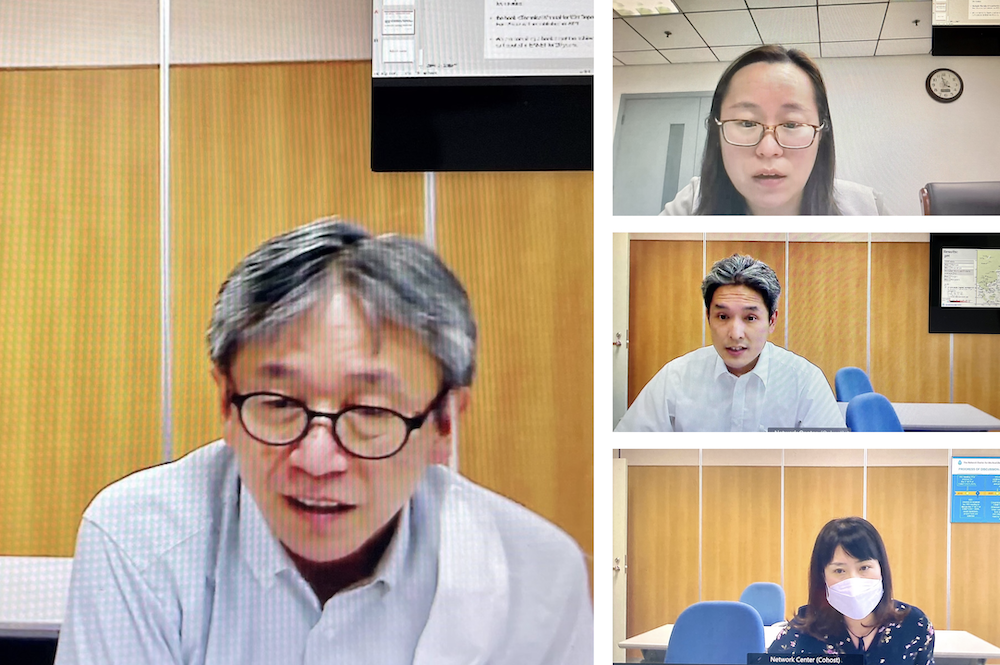
The Twenty-fourth Session of the Scientific Advisory Committee (SAC24) on the EANET took place from October 29 to 31, 2024, in Seoul, Republic of Korea and online, hosted by the Ministry of Environment, Republic of Korea, and the National Institute of Environmental Research (NIER), Republic of Korea. The session gathered over 55 representatives from the 13 EANET Participating Countries, along with the Network Center and the Secretariat for the EANET, to discuss the network’s recent achievements, assess key reports, and contribute suggestions for the upcoming Medium-Term Plan (MTP) of the EANET (2026-2030).

 .

Progress of EANET in 2023-2024

EANET reported substantial progress in its 2023-2024 core activities and project activities. This included advancements in both acid deposition research and broader air quality management issues, reflecting the network’s expanded scope. The Secretariat and Network Center highlighted successful activities, such as capacity building, project implementation and workshops to enhance awareness of air pollution challenges across East Asia. They also presented updates on EANET’s acid deposition and air quality monitoring, PM2.5 characterization, and ecosystems impact assessment. Among others, findings emphasized the effects of nitrogen on ecosystems and identified major pollution sources like biomass and plastic combustion. Pilot trials for a Hybrid Air Quality Monitoring Network revealed challenges in using Low-Cost Sensors, necessitating the need to further review the guidelines for low-cost sensor use in conventional air quality monitoring. A review of emission inventories and source apportionment studies in Southeast Asia underscored the need for further improvement and standardizing methodologies.

.

In-person participants at the SAC24

.

Adoption of Key Reports and National Monitoring Plans

A central aspect of SAC24’s discussions involved reviewing and adopting essential EANET reports. The 2023 Data Report provided an in-depth overview of monitoring data on wet and dry deposition, soil and vegetation, and inland aquatic environment in the 13 Participating Countries. Meanwhile, the Inter-laboratory Comparison (ILC) Report documented quality assessments across laboratories within the network, ensuring consistent analytical standards. Updated National Monitoring Plans were also reviewed, underscoring countries’ commitments to refining their data collection and monitoring capabilities. The adoption of these reports marks a significant step forward, providing reliable data that will support scientific research and policy decisions across the region.


Countries’ suggestions for the Next Medium-Term Plan (2026-2030)

The SAC24 engaged in forward-looking discussions regarding the next Medium-Term Plan (MTP) of EANET (2026-2030). Participating Countries offered valuable insights aimed at strengthening the monitoring network, expanding capacity-building efforts, and refining targeted pollutants in line with regional environmental priorities. Suggestions included developing sustainable monitoring frameworks that integrate advanced data collection methods, such as low-cost sensors and satellite data. Participants also emphasized the need for enhanced monitoring of specific pollutants like sulfur dioxide (SO₂), ozone (O3), nitrogen oxides (NOₓ), and PM2.5, while strengthening regional collaborations to align EANET’s objectives with international air quality standards. These insights will serve as a foundation for shaping EANET’s future strategies and objectives.

In conclusion, the SAC24 underscored EANET’s commitment to enhancing scientific collaboration across East Asia. The discussions and decisions during this session laid the groundwork for furthering EANET’s mission in air quality management and pollution control. Looking ahead, EANET’s focus on expanding its monitoring capabilities and strategic planning will be instrumental in addressing the region’s growing environmental challenges.

Recommendations from the SAC24 will be further considered in November 2024 by the 26th session of the Intergovernmental meeting (IG26) on the EANET, to be held in Kuala Lumpur, Malaysia.

.

Read the SAC24’s Report of the Session.

.

View the meeting photos on Flickr.

.

Photo credits: featured image of Bukhansan National Park, Bogungmun-ro, Seongbuk-gu, Seoul, Republic of Korea (2024) by Elliot Gouy; other images: all rights reserved to EANET.

Advancing Atmospheric and Environmental Monitoring in Asia: Technical Missions Supporting EANET Countries in 2023 and 2024

Bangkok, 20 February 2024

The Asia Center for Air Pollution Research (ACAP), as the Network Center (NC) for the EANET, has undertaken a series of technical missions aimed at supporting EANET Participating Countries to conduct their monitoring activities, e.g. Wet and Dry Deposition of atmospheric pollutants, inland, soil & vegetation and catchment monitoring, and meteorological data. From Mongolia, Indonesia, Lao PDR, and Cambodia, these missions have sought to enhance environmental monitoring capabilities and facilitate collaboration among stakeholders.

 .

Enhancing Monitoring Infrastructures in Mongolia

In Mongolia, the technical mission took place from 12th to 19th November 2023 in Ulaanbaatar and focused on updating monitoring site information and providing advanced technical guidance on the analysis of ion chromatography results. Additionally, a new rain sensor was deployed to enhance data accuracy. Meetings with the National Agency for Meteorology and Environmental Monitoring (NAMEM), the Central Laboratory of Environment and Meteorology (CLEM), the German-Mongolia Institute for Resources and Technology (GMIT), and the National University of Mongolia took place and aimed at deepening the understanding of EANET activities, particularly in Volatile Organic Compounds (VOCs) monitoring. Successful training sessions on VOCs monitoring, utilizing the sorbent tubes method, were conducted to reinforce local capacities.

.

Technical Knowledge Exchange in Indonesia

The technical mission in Indonesia took place from 11th to 16th December 2023 in Jakarta and Bandung, in partnership with the Secretariat for the EANET. It involved collaboration with laboratories affiliated with EANET activities. Visits were made to key institutions such as the Ministry of the Environment and Forestry, PSILKH Serpong, BMKG Jakarta, and BRIN Bandung, where technical guidance was provided, and feedback was collected. Discussions revolved around potential institutional arrangements to strengthen EANET implementation in Indonesia, promoting improved coordination and efficiency in environmental monitoring. During the mission, the NC representatives also met with the ASEAN Secretariat to discuss possible collaboration opportunities.

.

Pictures from the technical missions in Cambodia, Mongolia, and Lao PDR (Indonesia: see cover image above).
.
Strengthening Monitoring Infrastructures in Lao PDR

In Lao PDR, the technical mission took place in Vientiane, from the 11th to 15th December 2023. A visit was made to the Natural Resources and Environment Research Institute (NRERI), Ministry of Natural Resources and Environment (MoNRE). It included a comprehensive assessment of monitoring infrastructures and procedures. Maintenance work was undertaken on monitoring equipment, including the Wet-Only sampler and Filter Pack, to ensure precise data collection. Technical guidance was shared on inspection procedures and analytical methodologies, particularly focusing on ion chromatography. Additionally, knowledge exchange through meetings and discussions on EANET activities facilitated enhanced collaboration among stakeholders.

.

Sustaining Environmental Monitoring Efforts in Cambodia

The mission in Cambodia took place in Phnom Penh, from the 8th to the 12th of January 2024. It focused on sustaining continuous monitoring efforts for various pollutants. A visit was made to the Ministry of Environment, Cambodia, to provide maintenance and calibration of the ozone monitor, which was installed in 2019 through the IBAQ Programme, alongside training sessions to ensure effective ozone data reporting. Technical assistance was extended for repairing sampling systems and optimizing ion chromatography procedures, thereby strengthening the country’s capacity for environmental monitoring.

.

The NC for the EANET’s technical missions across Mongolia, Indonesia, Lao PDR, and Cambodia have aimed at enhancing environmental monitoring capabilities and fostering collaboration among stakeholders. By providing specialized technical expertise and facilitating knowledge exchange, these missions significantly contribute to assisting Participating Countries’ efforts to provide high-quality air quality monitoring data and improve technical capabilities in the Region. The NC will conduct more technical missions in 2024 to support other EANET Participating Countries.

.

Find out more about the EANET monitoring sites and download EANET data.

.

Photo credits: all rights reserved to EANET.

The Twenty-fourth Senior Technical Managers’ Meeting on the EANET

5 September 2023 – Bangkok, Thailand

The Twenty-fourth Senior Technical Managers’ Meeting (STM24) on the Acid Deposition Monitoring Network in East Asia (EANET) took place in Niigata, Japan and online, on 29 and 30 August 2023. The Meeting gathered over 40 senior technical officials from the 13 EANET Participating Countries to discuss the status of the Network’s monitoring activities.

.

EANET Monitoring Activities in 2022

Dr. Shiro Hatakeyama, the Director General of the Asia Center for Air Pollution Research (ACAP), delivered the Opening Remarks, followed by Welcome Remarks by Mr. Bert Fabian, the Coordinator of the Secretariat for the EANET.

After presenting the progress of EANET activities in 2022 since STM23, the Network Center for the EANET (NC) shared the results of various reports on acid deposition and related substances monitoring activities. STM24 participants were invited to discuss and share knowledge and experience to collectively review these draft publications.

.

Some Participants of the STM24 in Niigata, Japan

.

Overview of the Preliminary Draft Data Report 2022 and Evaluation of the Results of the Inter-laboratory Comparison (ILC) Projects 2022

The NC presented the Preliminary Draft Data Report 2022. This report focuses on wet deposition, dry deposition (air concentration), soil and vegetation, inland aquatic environment, and catchment-scale monitoring. It includes a summary of the monitoring data in 2022 and related information submitted by the Participating Countries.

The NC also introduced the preliminary draft Report on the Inter-laboratory Comparison Projects in 2022 for wet deposition, dry deposition (filter pack method), soil, and inland aquatic environment.

.

Consideration of the National Monitoring Plans (NMPs), Current Monitoring Activities for the EANET, and Overall Air Concentration Monitoring Status of the Participating Countries

In line with previous STM meetings’ process, representatives of the Participating Countries presented their National Monitoring Plans (NMPs) and current EANET activities, including monitoring capacities, technical challenges, and future plans, while focusing on the general improvement of the activities of the EANET.

Dr. Meng Fan, Deputy Director General, ACAP, delivered the Closing Remarks. He expressed his great appreciation for the improvement of the data quality due to the efforts of the Participating Countries and hoped that the EANET monitoring, research, and capacity-building activities would continue to be strengthened through the expansion of the scope of the EANET.

.

The Report of the STM24 will soon be available on the Meeting Reports page. View the STM24 photos on Flickr.

.

Find out more, and access EANET data on the Monitoring System page.

.

Photo credits: cover photo of Japanese rice farm by S. Tsuchiya (2022), other images, all rights reserved to EANET.

Acid deposition in East and Southeast Asia – EANET Researchers look at the science and policy over the last 30 years

3 June 2022 – Niigata, Japan

The well-renowned researcher Prof. Hajime Akimoto and co-authors recently published the article Development of science and policy related to acid deposition in East Asia over 30 years on the occasion of the celebration of the twentieth anniversary of the EANET. 

.

Acid Deposition and its Impacts

Acid deposition is a scientific phenomenon in which air pollutants, mainly sulfur dioxide (SO2) and oxides of nitrogen (NOX), and other air pollutants are emitted into the atmosphere from the combustion of fossil fuels and forest fires. They are transformed via long-range transport and chemical reactions with water, oxygen, and other atmospheric chemicals, which produce nitric acid, sulfuric acid, and other acids in the atmosphere and come down on the earth’s surface. The deposition of acids on the surface causes detrimental impacts on the ecosystem, water bodies, soil, forests, and infrastructures.

.

Evaluation of Policy Development

Based on three decades of knowledge on acid deposition in East Asia, Professor Akimoto and co-authors in EANET summarized the development of science and policy on acid deposition in East Asia over the period of 30 years.

In this article, the authors reviewed the state of acid deposition in East Asia since the 1980s and early 1990s and report important information on acidification of inland water, forest soil, and forest decline in the East Asia region.

In the context of broadening the scope of the EANET to include wider air pollution issues, Akimoto et al. also analyzed the past successes and future challenges the EANET will face in the coming years.

.

Read the full article on the following link: Akimoto et al. (2022), Development of science and policy related to acid deposition in East Asia over 30 years, Ambio, https://doi.org/10.1007/s13280-022-01702-6

.

Continue the discussion on science, policy, and acid deposition in East Asia and ask questions to Professor Akimoto during The State of Acid Deposition in East Asia, from data to policy online awareness workshop on 20 June 2022.

.

Photo credits: Indonesia by Ali Burhan (2021), free of the copyright license.

The EANET launches its Project Fund and Project Guideline

21 April 2022 – Bangkok, Thailand

The Acid Deposition Monitoring Network in East Asia (EANET) launched the EANET Project Fund and Project Guideline, a new mechanism to encourage cooperation to fight the adverse effects of acid deposition and related pollutants on ecosystems and human health.

.

The EANET Project Fund

Almost one-third of the world’s population lives in the East Asian region. Due to rapid economic growth and industrialization, many countries in this region are facing a serious threat from acid deposition and related pollutants. Impacts of acid deposition affect aquatic environments, forests, soils; including human health when airborne particles are inhaled. Today almost the entire global population (99%) breathes air that exceeds the World Health Organization’s air quality limits.

The EANET Project Fund and Project Guideline, approved by the IG23 in 2021, is a new financial mechanism allowing EANET to build co-financed EANET Projects with partners in the region and beyond. Co-financing and contributing to the Project Fund will allow supporting effective action in East Asia and fund projects to help countries fight acid deposition’s effects.

.

The EANET Projects

Participating Countries and partner organizations, not members of EANET, now have the possibility to cooperate in a strong regional platform with extensive experience and knowledge, as part of the EANET Projects.

The EANET Projects are a set of projects defined by the Medium Term Plan (MTP) for the Acid Deposition Monitoring Network in East Asia (EANET) (2021-2025) to conduct specific non-core activities to achieve EANET objectives, using the EANET Project Fund, in accordance with the MTP and other EANET guiding documents.

EANET was established in 2001 as an intergovernmental initiative to create a common understanding of the state of acid deposition problems in East Asia, provide useful inputs for decision-making at various levels, and promote cooperation among countries. EANET Projects, in line with these objectives, will mainly focus on the monitoring of acid deposition and control of data, research, capacity building, and awareness-raising activities.

.

Find out more on the EANET Project Fund and Project Guideline, how to contribute to the EANET Fund, and submit a project proposal on the dedicated webpage or contact the Secretariat or the Network Center for additional information.

.

Photo credits: Ao Nang, Mueang Krabi District, Krabi, Thailand by Erik Karits (2022), free of copyright license.

The Network Center for the EANET releases the Data Report 2024


17 April 2026

(This post has been updated from the original post, published on 20 February 2025).

Composed of data collected in 2024, comprising atmospheric deposition and air pollution monitoring data endorsed by the Scientific Advisory Committee (SAC) end of 2025, the “Data Report 2024” and the “Report of the Inter-laboratory Comparison Project 2024” have been uploaded in open access on the EANET website.

.

What is EANET data?
Figure 1 – Location of acid deposition monitoring sites in 2019 (access the most recent sites’ information on the EANET Site Information page)

In the context of the resolution on promoting regional cooperation on air pollution to improve air quality globally, adopted in UNEA-6 in March 2024, the importance of referring to high-quality data for air quality management has never been greater.

Covering the area of 13 countries, from Irkutsk (Russia) in the North to Lombok (Indonesia) in the South, Ochiishi (Japan) in the East, and Mandalay (Myanmar) in the West, the EANET’s total surface is extremely wide and diverse.

Since 1998 (during the preparatory phase activities of the Network), the EANET has deployed monitoring stations in urban, rural, and remote locations to monitor atmospheric deposition and air pollution (in 2021, the EANET countries adopted an Annex defining monitored atmospheric environment-related substances). These monitoring sites gather high-quality data related to the deposition of major acidifying species and related chemical substances such as sulfate (SO42-), nitrate (NO3), hydrogen (H+) in precipitation, sulfur dioxide (SO2), nitrogen dioxide (NO2), ozone (O3), and particulate matter (PM) in ambient air.

Monitoring data are used to evaluate the state of atmospheric deposition and air pollution as well as their impacts on ecosystems. Data on the atmospheric wet deposition of acidic components and other relevant pollutants have for example been used to understand the impacts of pollution on forest ecosystems, such as for the study led by EANET scientists in the dry evergreen forest of Sakaerat, in Nakhon Ratchasima Province, in northeastern Thailand.

Monitoring activities carried out in 2024 are presented in the Data Report 2024 (published in December 2025) and available in open access online.

.

High-quality Data

Over the years, EANET scientists and monitoring officers have improved the collective knowledge and skills of the Network, among others on the quality assurance and quality control (QA/QC) of the data.

The Report of the Inter-laboratory Comparison Project is conducted each year among the EANET analytical laboratories, based on the quality assurance/quality control (QA/QC) programs of the Network. The objectives of this project are to recognize the analytical precision and accuracy of the measurement in each participating laboratory, to give further opportunities to improve the quality of the analysis and to improve the reliability of analytical data through the assessment of suitable analytical methods and techniques.

.

Why download EANET data?

EANET data is available for non-commercial use for scientists, researchers, students, mobile app developers, etc… and anyone who wishes to understand the state of acid deposition and air pollution in East Asia over the last two decades.

By widely sharing data, EANET aims to improve global knowledge on atmospheric deposition and air pollution, as well as provide collaboration opportunities to improve public health and ecosystems’ restoration. In 2024 and 2025, over 135 peer-reviewed papers we published using the network’s long-term monitoring datasets.

.

How to access EANET Data?

The “Data Report 2024” and the “Report of the Inter-laboratory Comparison Project 2024” are available in open access online, for non-commercial use only.

Users may also access customized data, such as hourly, weekly, and bi-weekly data on wet and dry deposition monitoring, by registering on the monitoring portal.

.

Download the “Data Report 2024” and the “Report of the Inter-laboratory Comparison Project 2024”

.

Photo credits: Monitoring sites map: all rights reserved to EANET; cover photo: Aerial view of trees during daytime by Luke Paris, (2019), free of copyrights.

The Network Center for the EANET releases the Data Report 2023

20 February 2025 – Niigata, Japan

(This post has been updated from the original post, published on 11 March 2024).

Composed of data collected in 2023, comprising acid deposition and air pollution monitoring data endorsed by the Scientific Advisory Committee (SAC) end of 2024, the “Data Report 2023” and the “Report of the Inter-laboratory Comparison Project 2023” have been uploaded in open access on the EANET website.

.

What is EANET data?
Figure 1 – Location of acid deposition monitoring sites in 2019 (access the most recent sites’ information on the EANET Site Information page)

In the context of the resolution on promoting regional cooperation on air pollution to improve air quality globally, adopted in UNEA-6 in March 2024, the importance of referring to high-quality data for air quality management has never been greater.

Covering, in 2024, the area of 13 countries, from Irkutsk (Russia) in the North to Lombok (Indonesia) in the South, Ochiishi (Japan) in the East, and Mandalay (Myanmar) in the West, the EANET’s total surface is extremely wide and diverse.

Since 1998 (during the preparatory phase activities of the Network), the EANET has deployed monitoring stations in urban, rural, and remote locations to monitor acid deposition and air pollution (in 2021, the EANET countries adopted an Annex defining monitored atmospheric environment-related substances). These monitoring sites gather high-quality data related to the deposition of major acidifying species and related chemical substances such as sulfate (SO42-), nitrate (NO3), hydrogen (H+) in precipitation, sulfur dioxide (SO2), nitrogen dioxide (NO2), ozone (O3), and particulate matter (PM) in ambient air.

Monitoring data are used to evaluate the state of acid deposition and air pollution as well as their impacts on ecosystems. Data on the atmospheric wet deposition of acidic components and other relevant pollutants have for example been used to understand the impacts of pollution on forest ecosystems, such as for the study led by EANET scientists in the dry evergreen forest of Sakaerat, in Nakhon Ratchasima Province, in northeastern Thailand.

Monitoring activities carried out in 2023 are presented in the Data Report 2023 (published in December 2024) and available in open access online.

.

High-quality Data

Over the years, EANET scientists and monitoring officers have improved the collective knowledge and skills of the Network, among others on the quality assurance and quality control (QA/QC) of the data.

The Report of the Inter-laboratory Comparison Project is conducted each year among the EANET analytical laboratories, based on the quality assurance/quality control (QA/QC) programs of the Network. The objectives of this project are to recognize the analytical precision and accuracy of the measurement in each participating laboratory, to give further opportunities to improve the quality of the analysis and to improve the reliability of analytical data through the assessment of suitable analytical methods and techniques.

.

Why download EANET data?

EANET data is available for non-commercial use for scientists, researchers, students, mobile app developers, etc… and anyone who wishes to understand the state of acid deposition and air pollution in East Asia over the last two decades.

By widely sharing data, EANET aims to improve global knowledge on acid deposition and air pollution, as well as provide collaboration opportunities to improve public health and ecosystems’ restoration.

.

How to access EANET Data?

The “Data Report 2023” and the “Report of the Inter-laboratory Comparison Project 2023” are available in open access online, for non-commercial use only.

Users may also access customized data, such as hourly, weekly, and bi-weekly data on wet and dry deposition monitoring, by registering on the monitoring portal.

.

Download the “Data Report 2023” and the “Report of the Inter-laboratory Comparison Project 2023”

.

Photo credits: Monitoring sites map: all rights reserved to EANET; cover photo: Cloud fall in Japan by S. Tsuchiya, (2023), free of copyrights.

The Network Center for the EANET releases the Data Report 2022

Data Report

11 March 2024 – Niigata, Japan

(This post has been updated from the original post, published on 21 February 2023).

Composed of data collected in 2022, comprising acid deposition and air pollution monitoring data endorsed by the Scientific Advisory Committee (SAC) end of 2023, the “Data Report 2022” and the “Report of the Inter-laboratory Comparison Project 2022” have been uploaded in open access on the EANET website.

.

What is EANET data?
Figure 1 – Location of acid deposition monitoring sites in 2019 (access the most recent sites’ information on the EANET Site Information page)

In the context of the resolution on promoting regional cooperation on air pollution to improve air quality globally, adopted in UNEA-6 in March 2024, the importance of referring to high-quality data for air quality management has never been greater.

Covering, in 2024, the area of 13 countries, from Irkutsk (Russia) in the North to Lombok (Indonesia) in the South, Ochiishi (Japan) in the East, and Mandalay (Myanmar) in the West, the EANET’s total surface is extremely wide and diverse.

Since 1998 (during the preparatory phase activities of the Network), the EANET has deployed monitoring stations in urban, rural, and remote locations to monitor acid deposition and air pollution (in 2021, the EANET countries adopted an Annex defining monitored atmospheric environment-related substances). These monitoring sites gather high-quality data related to the deposition of major acidifying species and related chemical substances such as sulfate (SO42-), nitrate (NO3), hydrogen (H+) in precipitation, sulfur dioxide (SO2), nitrogen dioxide (NO2), ozone (O3), and particulate matter (PM) in ambient air.

Monitoring data are used to evaluate the state of acid deposition and air pollution as well as their impacts on ecosystems. Data on the atmospheric wet deposition of acidic components and other relevant pollutants have for example been used to understand the impacts of pollution on forest ecosystems, such as for the study led by EANET scientists in the dry evergreen forest of Sakaerat, in Nakhon Ratchasima Province, in northeastern Thailand.

Monitoring activities carried out in 2021 are presented in the Data Report 2022 (published in December 2023) and available in open access online.

.

High-quality Data

Over the years, EANET scientists and monitoring officers have improved the collective knowledge and skills of the Network, among others on the quality assurance and quality control (QA/QC) of the data.

The Report of the Inter-laboratory Comparison Project is conducted each year among the EANET analytical laboratories, based on the quality assurance/quality control (QA/QC) programs of the Network. The objectives of this project are to recognize the analytical precision and accuracy of the measurement in each participating laboratory, to give further opportunities to improve the quality of the analysis, and to improve the reliability of analytical data through the assessment of suitable analytical methods and techniques.

.

Why download EANET data?

EANET data is available for non-commercial use for scientists, researchers, students, mobile app developers, etc… and anyone who wishes to understand the state of acid deposition and air pollution in East Asia over the last two decades.

By widely sharing data, EANET aims to improve the global knowledge on acid deposition, as well as to provide collaboration opportunities to improve public health and ecosystems’ restoration.

.

How to access EANET Data?

The “Data Report 2022” and the “Report of the Inter-laboratory Comparison Project 2022” are available in open access online, for non-commercial use only.

Users may also access customized data, such as hourly, weekly, and bi-weekly data on wet and dry deposition monitoring, by registering on the monitoring portal.

.

Download the “Data Report 2022” and the “Report of the Inter-laboratory Comparison Project 2022”

.

Photo credits: Monitoring sites map: all rights reserved to EANET; cover photo: lake during golden hour by Hendra Yudha Pratama, (2018), free of copyrights.

The Network Center for the EANET releases the Data Report 2021

21 February 2023 – Niigata, Japan

(This post has been updated from the original post, published on 25 March 2022).

Composed of acid deposition monitoring data gathered in 2021 and endorsed by the Scientific Advisory Committee (SAC) in 2022, the “Data Report 2021” and the “Report of the Inter-laboratory Comparison Project 2021” have been uploaded in open access on EANET website.

.

What are EANET data?
Figure 1 – Location of acid deposition monitoring sites in 2019 (access the most recent sites’ information on the EANET Site Information page)

In the context of the recent adoption in March 2022 by governments at UNEA-5.2 of a key resolution supporting the establishment of a comprehensive science policy panel on the sound management of chemicals and waste and preventing pollution, the importance of referring to high-quality data has never been greater.

Covering in 2022 the area of 13 countries, from Irkutsk (Russia) in the North to Lombok (Indonesia) in the South, Ochiishi (Japan) in the East, and Mandalay (Myanmar) in the West, the Acid Deposition Monitoring Network in East Asia (EANET)’s total surface is extremely wide and diverse.

Since 1998 (during the preparatory phase activities of the Network), the EANET has deployed monitoring stations in urban, rural, and remote locations to monitor acid deposition. These monitoring sites gather high-quality data related to the deposition of major acidifying species and related chemical substances such as sulfate (SO₄²⁻), nitrate (NO₃⁻), hydrogen (H+) in precipitation, sulfur dioxide (SO₂), nitrogen dioxide (NO₂), ozone (O₃), and particulate matter (PM) in ambient air.

Monitoring data are used to evaluate the state of acid deposition as well as impacts on ecosystems. Data on the atmospheric wet deposition of acidic components and other relevant pollutants have for example been used to understand the impacts of pollution on forest ecosystems, such as for the study led by EANET scientists in the dry evergreen forest of Sakaerat, in Nakhon Ratchasima Province, in northeastern Thailand.

Monitoring activities carried out in 2021 are presented in the Data Report 2021 (published in December 2022) and available in open access online.

.

High-quality Data

Over the years, EANET scientists and monitoring officers have improved the collective knowledge and skills of the Network, among others on the quality assurance and quality control (QA/QC) of the data.

The Report of the Inter-laboratory Comparison Project is conducted each year among the EANET analytical laboratories, based on the quality assurance/quality control (QA/QC) programs of the Network. The objectives of this project are to recognize the analytical precision and accuracy of the measurement in each participating laboratory, to give further opportunities to improve the quality of the analysis, and to improve the reliability of analytical data through the assessment of suitable analytical methods and techniques.

.

Why download EANET data?

EANET data is available for non-commercial use for scientists, researchers, students, mobile app developers, etc… and anyone who wishes to understand the state of acid deposition and air pollution in East Asia over the last two decades.

By widely sharing data, EANET aims at improving the global knowledge on acid deposition, as well as providing collaboration opportunities to improve public health and ecosystems’ restoration.

.

How to access EANET Data?

The “Data Report 2021” and the “Report of the Inter-laboratory Comparison Project 2021” are available in open access online, for non-commercial use only.

Users may also access customized data, such as hourly, weekly, and bi-weekly data on wet and dry deposition monitoring, by registering on the monitoring portal.

.

Download the “Data Report 2021” and the “Report of the Inter-laboratory Comparison Project 2021”

.

Photo credits: Monitoring sites map: all rights reserved to EANET; cover photo: Cloud fall in Japan by S. Tsuchiya, (2023), free of copyrights.

The Twenty-second Senior Technical Managers’ Meeting of the Acid Deposition Monitoring Network in East Asia

3 September 2021 – Niigata, Japan

The Twenty-second Senior Technical Managers’ Meeting (STM22) of the Acid Deposition Monitoring Network in East Asia (EANET) was held online on 1 and 2 September 2021, gathering over 40 senior technical officials from the 13 EANET Participating Countries to discuss the status of the EANET monitoring activities.

.

EANET Monitoring Activities in 2020

Dr. Shiro Hatakeyama, Director General, Asia Center for Air Pollution Research (ACAP), delivered the Opening Remarks, followed by Welcome Remarks by Mr. Tomi Haryadi, Coordinator, Secretariat for the EANET.

After presenting the progress of EANET activities in 2020 since STM21, the Network Center for the EANET (NC) shared the results of various important reports on acid deposition and related substances monitoring activities. STM22 participants were invited to discuss and share important knowledge and experience to collectively review these draft publications.

.

Figure 1: Discussions and presentations during the STM22

.


Overview of the Preliminary Draft Data Report 2020 and Evaluation for the Results of the Inter-laboratory Comparison (ILC) Projects 2020

The NC presented the Preliminary Draft Data Report 2020. This report focuses on wet deposition, dry deposition (air concentration), soil and vegetation, inland aquatic environment, and catchment-scale monitoring. It includes a summary of the monitoring data in 2020 and related information submitted by the Participating Countries.

The NC also introduced the preliminary draft Report on the Inter-laboratory Comparison Projects in 2020 for wet deposition, dry deposition (filter pack method), soil, and inland aquatic environment.

.

Consideration of the National Monitoring Plans (NMPs), Current Monitoring Activities for the EANET and Overall Air Concentration Monitoring Status of the Participating Countries

In line with previous STM meetings’ process, representatives of the Participating Countries presented their National Monitoring Plans (NMPs) and current EANET activities, including monitoring capacities, technical challenges, and future plans, while focusing on the general improvement of the activities of the EANET.

Other important matters were also discussed, including the progress on the Revision of the Technical Manuals for Dry Deposition Flux Estimation and Air Concentration Monitoring.

Dr. Erdenebat Eldev-Ochir, Deputy Director General, ACAP, delivered the Closing Remarks. He expressed his great appreciation for the improvement of the data quality due to the efforts of the Participating Countries. He highlighted that, despite the COVID-19 pandemic, the EANET has been continuously strengthening the capacity of the Participating Countries through online training, research fellowship, public awareness workshops, and joint research.

.

Find out more and access EANET monitoring data.

.

Photo credits: All rights reserved to EANET.