The State of Acid Deposition in East Asia, from data to policy – Join us on 20 June!

.

The registration is now closed.

.

1. Background

The Acid Deposition Monitoring Network in East Asia (EANET) was established in 2001 as a regional intergovernmental network to promote cooperation among countries in East Asia to address acid deposition problems. The Network is composed of 13 Participating Countries and its main objectives are:

    • to create a common understanding of the state of acid deposition problems in East Asia;
    • to provide useful inputs for decision-making at the local, national, and regional levels aimed at preventing, or reducing adverse impacts on the environment caused by acid deposition;
    • and to contribute to cooperation on the issues related to acid deposition among the participating countries.

In the last 20 years, the EANET has made excellent progress in acid deposition monitoring cooperation. The Network has fostered a regional acid deposition monitoring methodology and scientific exchange platforms which have contributed gradually to solving acid deposition problems in East Asia.

However, due to rapid economic growth and industrialization, many countries in the East Asia region are still facing serious threats from acid deposition related pollutants, in a more global context where almost the entire global population (99%) breathes air that exceeds the World Health Organization’s air quality limits, hindering populations’ right to a healthy environment.

Since 2006, the EANET has been developing Periodic Reports on the State of Acid Deposition in East Asia (PRSADs), published every four to five years, and aiming at providing high-quality data to be used for research, formulation of policies, and measures to reduce the impacts of acid deposition and related air pollutants on the environment. In 2022, the Fourth Periodic Report on the State of Acid Deposition in East Asia (PRSAD4), prepared by a Drafting Committee composed of members from the 13 EANET Participating Countries, will be released.

In November 2021, the Secretariat for the EANET organized the EANET Science and Policy Dialogue outreach event. In the results of the survey from the EANET Science and Policy Dialogue Event Report, it was suggested to discuss the findings from the Fourth Periodic Report on the State of Acid Deposition in East Asia (PRSAD4).

In November 2021, the IG23 approved the Work Programme and Budget of EANET in 2022, among which Objective 4, Activity 10: Promotion of public awareness on acid deposition, including other priority chemical species. In this respect, and in line with the efforts to facilitate the sharing of a common understanding of atmospheric environmental issues among the scientific and policy-makers communities, the EANET Awareness Workshop in 2022 will be organized virtually on Monday, 20 June 13:00-16:00 (ICT) under the name “The State of Acid Deposition in East Asia – from data to policy”.

.

2. Objectives and Participants

The EANET Awareness Workshop is expected to increase public understanding of acid deposition issues, appreciate the work achieved in the last 20 years by the EANET from the monitoring, research, and policymaking perspectives, and generate collaboration ideas for future EANET Projects, based on the findings and recommendations from the PRSAD4.

The EANET Awareness Workshop is open to the public, but will mainly be attended by the EANET National Focal Points, Scientific Advisory Committee members, policymakers and national researchers and scientists of the Network’s 13 Participating Countries, and representatives of partner organizations working on acid deposition and air pollution-related issues.

.

3. Programme

The virtual event will focus on sharing key findings from the PRSAD4, from the lead authors’ perspective, and provide some highlights for EANET Participating Countries’ policy-makers and other representatives, by sharing recommendations (on inputs for policies, technological improvements, and best practices…). The goal is to provide a discussion forum to brainstorm ideas to foster future projects and cooperation in the region.

.

.

4. The Speakers (in order of appearance)

Dr. Isabelle Louis

Dr. Isabelle Louis, Deputy Regional Director of UNEP Asia Pacific office, has over 25 years of experience in sustainable development and natural resource management at global, Asia Pacific regional and national levels. She coordinates the UNEP’s work programme in the region pursuant to the organization’s mandate to support UN Member States on issues related to the environment, sustainability and the 2030 Sustainable Development Goals. She oversees UNEP’s work related to strategic priorities:  climate change, pollution, nature-based solutions, resource efficiency, environmental law and governance, with approaches including science-based policies, sustainable financing, gender, human rights, and environment and health. She also facilitates UNEP’s strategic partnerships in the region.

.

Mr. Kenichiro Fukunaga

Mr. Kenichiro Fukunaga is the Deputy Director General in charge of Administrative Management at Asia Center for Air Pollution Research (ACAP). He provides support to the strategic development of the EANET in ACAP, including tackling the EANET transition period tasks of introducing the new EANET Project mechanism through communication and collaboration with various stakeholders, both internally and externally.

.

Ms. Courtney Savie Lawrence

Ms. Courtney Savie Lawrence currently works with the UNDP Chief Digital Office and UNICEF’s Eastern and Southern Africa Regional Teams on all things climate innovation, tech and digital while also coleading the Oxford Climate Tech Initiative and the Circular Design Lab as a volunteer. Over the past 15 years she has lived, worked and traveled across more than 70 countries with a laser focus on positive impact and is currently earning her Executive MBA at the University of Oxfrord’s Saïd Business School focused on the green transition.

.

Prof. Meng Fan

Prof. Meng Fan is the Deputy Director General in charge of the Network Center for EANET, Asia Center for Air Pollution Research (ACAP). Prior to this position, he has been deputy chief engineer, director of the Institute of Atmospheric Environment and director of the Research Department for the 2+26 Cities in Beijing, Tianjin, Hebei of Chinese Academy of Environmental Sciences (CRAES). He has been conducting research in the field of air quality modeling, atmospheric chemistry, air pollution control policy and synergistic control of air pollution and climate change. Dr. Meng Fan has been published as author and co-author of over 80 papers in highly regarded, peer-reviewed journals and is also adjunct professor and doctoral supervisor of Beijing Normal University and Tongji University of China.

.

Mr. Jamalulail bin Abu Bakar

Mr. Jamalulail bin Abu Bakar is the Undersecretary for the Environmental Management Division, Ministry of Environment and Water, Malaysia.  He holds a Bachelor’s Degree in Fishery from Agriculture University Malaysia (UPM) and a Master’s Degree in Corporate Communication from University Putra Malaysia (UPM). He was appointed as Administration and Diplomatic Officer in 1996 and posted at the Ministry of Agriculture. Since then, he has been working with various agencies and ministries including Embassy of Malaysia in the Rep. of Ireland, Public Service Department (JPA), Ministry of Higher Education, National Public Service Institute (INTAN) and Ministry of Education (MOE). He has a vast experience in international cooperation in agriculture cooperation and higher education promotion and marketing. Mr. Jamalulail joined Ministry of Environment and Water, Malaysia, in April 2020.

.

Dr. Gantuya Ganbat

Dr. Gantuya Ganbat is an assistant professor of Environmental Engineering at the German-Mongolian Institute for Resources and Technology, Mongolia. She earned her Bachelor and Master degrees in Meteorology from the Russian State Hydrometeorological University, Russia, and Ph.D. in Earth and Environmental Sciences from the Seoul National University, Republic of Korea. She worked for the Meteorological service and the Ministry of Environment and Tourism, Mongolia. She has been involved in regional professional activities, including Scientific Advisory Committee, East Asian Network in Acid Deposition (EANET) since 2018 and Science and Policy Committee, North-East Asia Clean Air Partnership since 2020.

.

Dr. Supat Wangwongwatana

Dr. Supat Wangwongwatana is affiliated with the Faculty of Public Health, Thammasat University as a Senior Specialist in air pollution since 2017. He also serves as a Senior Advisor to the Thailand Environment Institute. Before that, he served in the Royal Thai Government for more than 30 years. He was the Director General of the Pollution Control Department (PCD) for 5 years in charge of the management of air quality, water quality, solid waste, hazardous waste, and chemicals and environmental law enforcement. Dr. Supat Wangwongwatana was awarded multiple awards among which the EANET Award of Recognition for his long term involvement and contribution from the start of the EANET, and in 2016 the Kong Ha Award for Excellence in Air Quality Management from Clean Air Asia (CAA). Between 2012-2015, Dr. Supat Wangwongwatana served as the Coordinator of the EANET Secretariat and a member of the Scientific Advisory Panel of the Clean Air and Climate Coalition. Presently, he serves as a member of the Pollution Control Board of Thailand, a member of the Senate Sub-Commission on Environment, the Senior Advisor of Thailand Environment Institute (TEI), and the co-chair of the Advisory Group of Asian Co-benefit Partnership (AC).

.

Prof. Hajime Akimoto

Prof. Hajime Akimoto received PhD in 1967 in physical chemistry from Tokyo Institute of Technology. After spending three years at the University of California, Riverside, as a postdoc, he has worked at the National Institute for Environmental Studies (NIES), University of Tokyo, Frontier Research Center for Global Change at JAMSTEC. From 2009 to 2015, he served as DG of Asia Center for Air pollution Research (ACAP). After retiring from ACAP, he is now a guest scientist at NIES. His expertise is in atmospheric chemistry, and formation mechanisms of ozone and secondary aerosols. Recently, he focused his interest in the science and policy interface on SLCP co-control for air pollution and climate change mitigation.

.

Dr. Mushtaq Memon

Dr. Mushtaq Ahmed Memon is a Regional Coordinator for Chemicals and Pollution Action Subprogramme with the United Nations Environment Programme, Regional Office for Asia and the Pacific. He is a Pakistani national, and he is working with UNEP since 1 April 2005 for more than 17 years including 12 years at UNEP-IETC for water and sanitation, and waste management; and 5 years at UNEP-ROAP. He leads UNEP’s COVID-19 Response on COVID-19 waste management, he is also the Project Manager of the EU-funded SWITCH-Asia. He supervises GO4SDGs in the region. He led the Low-Carbon Lifestyle Challenge Startups. He got his PhD in Japan and a MSc in the UK. He published papers in international journals, participated in major global events, and delivered various training programmes.

.

Dr. Zhu Meihua

Dr. Meihua Zhu serves as a senior researcher in the Planning and Training Department & Atmospheric Research Department for Asia Center for Air Pollution Research (ACAP). Her research interests include regional environmental cooperation, air pollution regulations, and policies. Besides research, she also plays a vital role in achieving the goals of EANET and ACAP in improving air quality and addressing air pollution problems through international collaboration, capacity building, and training.

.

Mr. Victor Bernard

Mr. Victor Bernard is the Raoul Wallenberg Institute’s (RWI) programme officer specialised in the interlinkages between human rights and the environment. In this capacity, he leads many of RWI’s research and capacity development initiatives in Asia and the Pacific to strengthen knowledge bases on human rights, gender equality and the environment. In addition, he oversees technical support on integrating a rights-based approach into environmental programmes in collaboration with the Stockholm Environment Institute.

.

Mr. Bert Fabian

Mr. Bert Fabian is the Coordinator of the Secretariat for the EANET. He has been with the United Nations Environment Programme (UNEP) as a Programme Officer since 2013 as lead for the Sustainable Mobility Unit’s activities in Asia and the Pacific. He has supported more than 15 countries in developing policies on transport, air pollution, and climate change and managed projects worth about 13.5 million USD including about 5.6 million USD allocated for Asia and the Pacific. Mr. Fabian coordinated the activities of UNEP with the Global Fuel Economy Initiative and managed the Electric 2&3 Wheelers project in East Africa and Southeast Asia. He also managed projects on strengthening the air quality management community of practice in Asia and the Pacific and on understanding the relationships between COVID-19 and air quality impacts, policies, and measures in cities.

.

For further inquiries, contact the EANET Secretariat.

The Network Center for the EANET releases the Data Report 2024


17 April 2026

(This post has been updated from the original post, published on 20 February 2025).

Composed of data collected in 2024, comprising atmospheric deposition and air pollution monitoring data endorsed by the Scientific Advisory Committee (SAC) end of 2025, the “Data Report 2024” and the “Report of the Inter-laboratory Comparison Project 2024” have been uploaded in open access on the EANET website.

.

What is EANET data?
Figure 1 – Location of acid deposition monitoring sites in 2019 (access the most recent sites’ information on the EANET Site Information page)

In the context of the resolution on promoting regional cooperation on air pollution to improve air quality globally, adopted in UNEA-6 in March 2024, the importance of referring to high-quality data for air quality management has never been greater.

Covering the area of 13 countries, from Irkutsk (Russia) in the North to Lombok (Indonesia) in the South, Ochiishi (Japan) in the East, and Mandalay (Myanmar) in the West, the EANET’s total surface is extremely wide and diverse.

Since 1998 (during the preparatory phase activities of the Network), the EANET has deployed monitoring stations in urban, rural, and remote locations to monitor atmospheric deposition and air pollution (in 2021, the EANET countries adopted an Annex defining monitored atmospheric environment-related substances). These monitoring sites gather high-quality data related to the deposition of major acidifying species and related chemical substances such as sulfate (SO42-), nitrate (NO3–), hydrogen (H+) in precipitation, sulfur dioxide (SO2), nitrogen dioxide (NO2), ozone (O3), and particulate matter (PM) in ambient air.

Monitoring data are used to evaluate the state of atmospheric deposition and air pollution as well as their impacts on ecosystems. Data on the atmospheric wet deposition of acidic components and other relevant pollutants have for example been used to understand the impacts of pollution on forest ecosystems, such as for the study led by EANET scientists in the dry evergreen forest of Sakaerat, in Nakhon Ratchasima Province, in northeastern Thailand.

Monitoring activities carried out in 2024 are presented in the Data Report 2024 (published in December 2025) and available in open access online.

.

High-quality Data

Over the years, EANET scientists and monitoring officers have improved the collective knowledge and skills of the Network, among others on the quality assurance and quality control (QA/QC) of the data.

The Report of the Inter-laboratory Comparison Project is conducted each year among the EANET analytical laboratories, based on the quality assurance/quality control (QA/QC) programs of the Network. The objectives of this project are to recognize the analytical precision and accuracy of the measurement in each participating laboratory, to give further opportunities to improve the quality of the analysis and to improve the reliability of analytical data through the assessment of suitable analytical methods and techniques.

.

Why download EANET data?

EANET data is available for non-commercial use for scientists, researchers, students, mobile app developers, etc… and anyone who wishes to understand the state of acid deposition and air pollution in East Asia over the last two decades.

By widely sharing data, EANET aims to improve global knowledge on atmospheric deposition and air pollution, as well as provide collaboration opportunities to improve public health and ecosystems’ restoration. In 2024 and 2025, over 135 peer-reviewed papers were published using the network’s long-term monitoring datasets.

.

How to access EANET Data?

The “Data Report 2024” and the “Report of the Inter-laboratory Comparison Project 2024” are available in open access online, for non-commercial use only.

Users may also access customized data, such as hourly, weekly, and bi-weekly data on wet and dry deposition monitoring, by registering on the monitoring portal.

.

Download the “Data Report 2024” and the “Report of the Inter-laboratory Comparison Project 2024”

.

Photo credits: Monitoring sites map: all rights reserved to EANET; cover photo: Aerial view of trees during daytime by Luke Paris, (2019), free of copyrights.

The Network Center for the EANET releases the Data Report 2023

20 February 2025 – Niigata, Japan

(This post has been updated from the original post, published on 11 March 2024).

Composed of data collected in 2023, comprising acid deposition and air pollution monitoring data endorsed by the Scientific Advisory Committee (SAC) end of 2024, the “Data Report 2023” and the “Report of the Inter-laboratory Comparison Project 2023” have been uploaded in open access on the EANET website.

.

What is EANET data?
Figure 1 – Location of acid deposition monitoring sites in 2019 (access the most recent sites’ information on the EANET Site Information page)

In the context of the resolution on promoting regional cooperation on air pollution to improve air quality globally, adopted in UNEA-6 in March 2024, the importance of referring to high-quality data for air quality management has never been greater.

Covering, in 2024, the area of 13 countries, from Irkutsk (Russia) in the North to Lombok (Indonesia) in the South, Ochiishi (Japan) in the East, and Mandalay (Myanmar) in the West, the EANET’s total surface is extremely wide and diverse.

Since 1998 (during the preparatory phase activities of the Network), the EANET has deployed monitoring stations in urban, rural, and remote locations to monitor acid deposition and air pollution (in 2021, the EANET countries adopted an Annex defining monitored atmospheric environment-related substances). These monitoring sites gather high-quality data related to the deposition of major acidifying species and related chemical substances such as sulfate (SO42-), nitrate (NO3–), hydrogen (H+) in precipitation, sulfur dioxide (SO2), nitrogen dioxide (NO2), ozone (O3), and particulate matter (PM) in ambient air.

Monitoring data are used to evaluate the state of acid deposition and air pollution as well as their impacts on ecosystems. Data on the atmospheric wet deposition of acidic components and other relevant pollutants have for example been used to understand the impacts of pollution on forest ecosystems, such as for the study led by EANET scientists in the dry evergreen forest of Sakaerat, in Nakhon Ratchasima Province, in northeastern Thailand.

Monitoring activities carried out in 2023 are presented in the Data Report 2023 (published in December 2024) and available in open access online.

.

High-quality Data

Over the years, EANET scientists and monitoring officers have improved the collective knowledge and skills of the Network, among others on the quality assurance and quality control (QA/QC) of the data.

The Report of the Inter-laboratory Comparison Project is conducted each year among the EANET analytical laboratories, based on the quality assurance/quality control (QA/QC) programs of the Network. The objectives of this project are to recognize the analytical precision and accuracy of the measurement in each participating laboratory, to give further opportunities to improve the quality of the analysis and to improve the reliability of analytical data through the assessment of suitable analytical methods and techniques.

.

Why download EANET data?

EANET data is available for non-commercial use for scientists, researchers, students, mobile app developers, etc… and anyone who wishes to understand the state of acid deposition and air pollution in East Asia over the last two decades.

By widely sharing data, EANET aims to improve global knowledge on acid deposition and air pollution, as well as provide collaboration opportunities to improve public health and ecosystems’ restoration.

.

How to access EANET Data?

The “Data Report 2023” and the “Report of the Inter-laboratory Comparison Project 2023” are available in open access online, for non-commercial use only.

Users may also access customized data, such as hourly, weekly, and bi-weekly data on wet and dry deposition monitoring, by registering on the monitoring portal.

.

Download the “Data Report 2023” and the “Report of the Inter-laboratory Comparison Project 2023”

.

Photo credits: Monitoring sites map: all rights reserved to EANET; cover photo: Cloud fall in Japan by S. Tsuchiya, (2023), free of copyrights.

The Network Center for the EANET releases the Data Report 2022

Data Report

11 March 2024 – Niigata, Japan

(This post has been updated from the original post, published on 21 February 2023).

Composed of data collected in 2022, comprising acid deposition and air pollution monitoring data endorsed by the Scientific Advisory Committee (SAC) end of 2023, the “Data Report 2022” and the “Report of the Inter-laboratory Comparison Project 2022” have been uploaded in open access on the EANET website.

.

What is EANET data?
Figure 1 – Location of acid deposition monitoring sites in 2019 (access the most recent sites’ information on the EANET Site Information page)

In the context of the resolution on promoting regional cooperation on air pollution to improve air quality globally, adopted in UNEA-6 in March 2024, the importance of referring to high-quality data for air quality management has never been greater.

Covering, in 2024, the area of 13 countries, from Irkutsk (Russia) in the North to Lombok (Indonesia) in the South, Ochiishi (Japan) in the East, and Mandalay (Myanmar) in the West, the EANET’s total surface is extremely wide and diverse.

Since 1998 (during the preparatory phase activities of the Network), the EANET has deployed monitoring stations in urban, rural, and remote locations to monitor acid deposition and air pollution (in 2021, the EANET countries adopted an Annex defining monitored atmospheric environment-related substances). These monitoring sites gather high-quality data related to the deposition of major acidifying species and related chemical substances such as sulfate (SO42-), nitrate (NO3–), hydrogen (H+) in precipitation, sulfur dioxide (SO2), nitrogen dioxide (NO2), ozone (O3), and particulate matter (PM) in ambient air.

Monitoring data are used to evaluate the state of acid deposition and air pollution as well as their impacts on ecosystems. Data on the atmospheric wet deposition of acidic components and other relevant pollutants have for example been used to understand the impacts of pollution on forest ecosystems, such as for the study led by EANET scientists in the dry evergreen forest of Sakaerat, in Nakhon Ratchasima Province, in northeastern Thailand.

Monitoring activities carried out in 2021 are presented in the Data Report 2022 (published in December 2023) and available in open access online.

.

High-quality Data

Over the years, EANET scientists and monitoring officers have improved the collective knowledge and skills of the Network, among others on the quality assurance and quality control (QA/QC) of the data.

The Report of the Inter-laboratory Comparison Project is conducted each year among the EANET analytical laboratories, based on the quality assurance/quality control (QA/QC) programs of the Network. The objectives of this project are to recognize the analytical precision and accuracy of the measurement in each participating laboratory, to give further opportunities to improve the quality of the analysis, and to improve the reliability of analytical data through the assessment of suitable analytical methods and techniques.

.

Why download EANET data?

EANET data is available for non-commercial use for scientists, researchers, students, mobile app developers, etc… and anyone who wishes to understand the state of acid deposition and air pollution in East Asia over the last two decades.

By widely sharing data, EANET aims to improve the global knowledge on acid deposition, as well as to provide collaboration opportunities to improve public health and ecosystems’ restoration.

.

How to access EANET Data?

The “Data Report 2022” and the “Report of the Inter-laboratory Comparison Project 2022” are available in open access online, for non-commercial use only.

Users may also access customized data, such as hourly, weekly, and bi-weekly data on wet and dry deposition monitoring, by registering on the monitoring portal.

.

Download the “Data Report 2022” and the “Report of the Inter-laboratory Comparison Project 2022”

.

Photo credits: Monitoring sites map: all rights reserved to EANET; cover photo: lake during golden hour by Hendra Yudha Pratama, (2018), free of copyrights.

The Network Center for the EANET releases the Data Report 2021

21 February 2023 – Niigata, Japan

(This post has been updated from the original post, published on 25 March 2022).

Composed of acid deposition monitoring data gathered in 2021 and endorsed by the Scientific Advisory Committee (SAC) in 2022, the “Data Report 2021” and the “Report of the Inter-laboratory Comparison Project 2021” have been uploaded in open access on EANET website.

.

What are EANET data?
Figure 1 – Location of acid deposition monitoring sites in 2019 (access the most recent sites’ information on the EANET Site Information page)

In the context of the recent adoption in March 2022 by governments at UNEA-5.2 of a key resolution supporting the establishment of a comprehensive science policy panel on the sound management of chemicals and waste and preventing pollution, the importance of referring to high-quality data has never been greater.

Covering in 2022 the area of 13 countries, from Irkutsk (Russia) in the North to Lombok (Indonesia) in the South, Ochiishi (Japan) in the East, and Mandalay (Myanmar) in the West, the Acid Deposition Monitoring Network in East Asia (EANET)’s total surface is extremely wide and diverse.

Since 1998 (during the preparatory phase activities of the Network), the EANET has deployed monitoring stations in urban, rural, and remote locations to monitor acid deposition. These monitoring sites gather high-quality data related to the deposition of major acidifying species and related chemical substances such as sulfate (SO₄²⁻), nitrate (NO₃⁻), hydrogen (H+) in precipitation, sulfur dioxide (SO₂), nitrogen dioxide (NO₂), ozone (O₃), and particulate matter (PM) in ambient air.

Monitoring data are used to evaluate the state of acid deposition as well as impacts on ecosystems. Data on the atmospheric wet deposition of acidic components and other relevant pollutants have for example been used to understand the impacts of pollution on forest ecosystems, such as for the study led by EANET scientists in the dry evergreen forest of Sakaerat, in Nakhon Ratchasima Province, in northeastern Thailand.

Monitoring activities carried out in 2021 are presented in the Data Report 2021 (published in December 2022) and available in open access online.

.

High-quality Data

Over the years, EANET scientists and monitoring officers have improved the collective knowledge and skills of the Network, among others on the quality assurance and quality control (QA/QC) of the data.

The Report of the Inter-laboratory Comparison Project is conducted each year among the EANET analytical laboratories, based on the quality assurance/quality control (QA/QC) programs of the Network. The objectives of this project are to recognize the analytical precision and accuracy of the measurement in each participating laboratory, to give further opportunities to improve the quality of the analysis, and to improve the reliability of analytical data through the assessment of suitable analytical methods and techniques.

.

Why download EANET data?

EANET data is available for non-commercial use for scientists, researchers, students, mobile app developers, etc… and anyone who wishes to understand the state of acid deposition and air pollution in East Asia over the last two decades.

By widely sharing data, EANET aims at improving the global knowledge on acid deposition, as well as providing collaboration opportunities to improve public health and ecosystems’ restoration.

.

How to access EANET Data?

The “Data Report 2021” and the “Report of the Inter-laboratory Comparison Project 2021” are available in open access online, for non-commercial use only.

Users may also access customized data, such as hourly, weekly, and bi-weekly data on wet and dry deposition monitoring, by registering on the monitoring portal.

.

Download the “Data Report 2021” and the “Report of the Inter-laboratory Comparison Project 2021”

.

Photo credits: Monitoring sites map: all rights reserved to EANET; cover photo: Cloud fall in Japan by S. Tsuchiya, (2023), free of copyrights.

The Twenty-first Session of the Scientific Advisory Committee on the Acid Deposition Monitoring Network in East Asia

29 October 2021 – Bangkok, Thailand

The Scientific Advisory Committee (SAC) of the Acid Deposition Monitoring Network in East Asia (EANET) held its Twenty-first Session of the SAC (SAC21) Meeting from 26-28 October 2021, to discuss acid deposition monitoring data provided in 2020.

 .

Reporting on Acid Deposition Monitoring in 2020

The Session was organized virtually by the Secretariat and the Network Center (NC) for the EANET. Over 60 members of the SAC and/or their representatives from the Participating Countries of the EANET joined the meeting.

Scientists from the NC presented the results from activities of acid deposition monitoring, based on data provided by the EANET Participating Countries and retrieved from their national monitoring sites for 2020.

The Draft EANET Data Report 2020 was presented to the Session, showcasing different results and trends in the region since 2000. In addition, the Draft Report on the Inter-laboratory Comparison (ILC) Projects 2020 was also introduced, and it showed that most samples submitted by the participating laboratories met the Data Quality Objective (DQO) of EANET.

.

Scientists from the EANET Network Center presenting several acid deposition monitoring data reports

.

Discussing EANET’s Future Activities for 2021-2025

The NC presented an overview of the National Monitoring Plans of the Participating Countries for 2021, based on the submissions made during the recent Twenty-second Senior Technical Managers’ Meeting (STM22) on the EANET.

As part of the ongoing process of expansion of the scope of the EANET, as decided by the IG22, the SAC21 members were also invited to share their comments, from the scientific viewpoint, on the draft Annex to the EANET Instrument, for consideration and approval at the IG23 of EANET, in November 2021.

.

Some participants during the SAC21 virtual meeting

.

Other important administrative documents and publications such as the Summary of the 20th Anniversary of the EANET and the Draft Fourth Periodic Report on the State of Acid Deposition in East Asia (PRSAD4) were also discussed during the SAC21.

.

EANET Data Reports can be accessed on EANET’s website and 2020 data will be available soon.

.

Photo credits: All rights reserved to EANET.

The 22nd Scientific Advisory Committee Meeting on the EANET

25 October 2022 – Bangkok, Thailand

The Scientific Advisory Committee (SAC) of the Acid Deposition Monitoring Network in East Asia (EANET) held its Twenty-second Session of the SAC (SAC22) Meeting from 18-20 October 2022, to discuss the progress of acid deposition monitoring activities since 2021.

 .

Reporting on Acid Deposition Monitoring in 2021

Over 50 members of the SAC and/or their representatives from the Participating Countries of the EANET joined the virtual meeting. The SAC22 started with Opening Remarks from Mr. Bert Fabian, Coordinator, Secretariat for the EANET, and by Welcome Remarks from Dr. Shiro Hatakeyama, Director General, Asia Center for Air Pollution Research (ACAP).

Scientists from the NC presented the results from activities of acid deposition monitoring, based on data provided by the EANET Participating Countries and retrieved from their national monitoring sites for 2021.

The Draft EANET Data Report 2021 was presented to the Session, showcasing different results and trends. In addition, the Draft Report on the Inter-laboratory Comparison (ILC) Projects 2021 was also introduced, and it showed that most samples submitted by the participating laboratories met the Data Quality Objective (DQO) of EANET.

.

Discussing EANET’s Future Activities

The NC presented an overview of the National Monitoring Plans of the Participating Countries for 2022, based on the submissions made during the recent Twenty-third Senior Technical Managers’ Meeting (STM23) on the EANET.

The SAC22 members were also invited to share their comments, from the scientific viewpoints, on the proposed Project Plans for 2023 to be funded by the newly introduced EANET Project Fund, and before approval at the IG24 of EANET, in November 2022.

Finally, the Network Center shared the program of the EANET Emission Inventory Webinar Workshop on Open Biomass Burning that will take place on 5 December 2022, the EANET Workshop on the Relationship between the Atmospheric Environment, Human Health and Ecosystems on 31 October 2022, and the 13th International Workshop on Atmospheric Modeling Research in East Asia, on 22-23 December 2022.

The Network Center also presented the Acid Rain 2020 event, organized by ACAP, which will take place in April 2023, and reminded the abstracts’ submission date is extended to 31 October 2022.

.

EANET Data Reports can be accessed on EANET’s website and 2021 data will be available soon.

.

Read the Report of SAC22 here and view the photos on Flickr.

.

Photo credits: All rights reserved to EANET.

The Twenty-third Senior Technical Managers’ Meeting on the EANET

Niigata, 29 September 2022

The Twenty-third Senior Technical Managers’ Meeting (STM23) on the Acid Deposition Monitoring Network in East Asia (EANET) was held online on 28 and 29 September 2022. The Meeting gathered over 40 senior technical officials from the 13 EANET Participating Countries to discuss the status of the Network’s monitoring activities.

.

EANET Monitoring Activities in 2021

Dr. Shiro Hatakeyama, Director General, Asia Center for Air Pollution Research (ACAP), delivered the Opening Remarks, followed by Welcome Remarks by Mr. Bert Fabian, Coordinator, Secretariat for the EANET.

After presenting the progress of EANET activities in 2021 since STM22, the Network Center for the EANET (NC) shared the results of various reports on acid deposition and related substances monitoring activities. STM23 participants were invited to discuss and share knowledge and experience to collectively review these draft publications.

.

Participants of the STM23 meeting

.

Overview of the Preliminary Draft Data Report 2020 and Evaluation of the Results of the Inter-laboratory Comparison (ILC) Projects 2020

The NC presented the Preliminary Draft Data Report 2021. This report focuses on wet deposition, dry deposition (air concentration), soil and vegetation, inland aquatic environment, and catchment-scale monitoring. It includes a summary of the monitoring data in 2021 and related information submitted by the Participating Countries.

The NC also introduced the preliminary draft Report on the Inter-laboratory Comparison Projects in 2021 for wet deposition, dry deposition (filter pack method), soil, and inland aquatic environment.

.

Consideration of the National Monitoring Plans (NMPs), Current Monitoring Activities for the EANET and Overall Air Concentration Monitoring Status of the Participating Countries

In line with previous STM meetings’ process, representatives of the Participating Countries presented their National Monitoring Plans (NMPs) and current EANET activities, including monitoring capacities, technical challenges, and future plans, while focusing on the general improvement of the activities of the EANET.

Other important matters were also discussed, including the progress on the Revision of the Technical Manuals for Dry Deposition Flux Estimation and Air Concentration Monitoring.

Dr. Meng Fan, Deputy Director General, ACAP, delivered the Closing Remarks. He expressed his great appreciation for the improvement of the data quality due to the efforts of the Participating Countries and hoped that the EANET monitoring, research and capacity-building activities would continue to be strengthened through the expansion of the scope of the EANET.

.

Find out more and access EANET monitoring data.

.

Photo credits: cover photo by Anna Sushok (2020), other images, all rights reserved to EANET.

New Face of EANET Research Portal

29 September 2021 – Niigata, Japan

EANET researchers have been working collaboratively for 20 years to study mechanisms of acid deposition and its effects on ecosystems, resulting in various scientific publications. These aim at creating a common understanding of the state of acid deposition problems in East Asia, and to provide useful inputs for decision-making at the local, national, and regional levels. Recently, an updated version of the EANET Research Portal has been released, displaying detailed information on EANET research activities.

.

20 Years of Research Activities

Why is research a central component of EANET’s activities? Since the early 2000s, collaboration on data monitoring and research has significantly improved knowledge on environmental urgencies in the region. With monitoring sites deployed in 13 countries in East Asia, scientists and researchers have access to unique data on acid deposition and air pollution.

In the decision-making process, policymakers need scientific-based evidence to guide their choices. They often use scientific results to evaluate the benefits of environmental policies and to shape government programs.

Over the years, EANET’s ability to bring together diverse players such as scientists, researchers, students, young professionals, and policymakers has made it a unique knowledge-sharing platform.

.

Sharing Scientific Outputs and Fostering Collaboration Globally

The EANET Research Portal was created to promote research activities developed in the EANET community and to enhance the use of the EANET data by the scientific community globally.

The main objectives of this page are to introduce research activities conducted by the EANET community, share scientific outputs from the EANET research activities, demonstrate the importance of the EANET data for scientific research activities, and provide opportunities for joint research activities with the EANET community.

More specifically, users can access scientific articles produced by the EANET Community, Reports of the EANET Fellowships, EANET Science Bulletins, and a database of research articles using and/or mentioning EANET data.

.

How Can Researchers Contribute to the Portal?

To expand the reach of this portal, Participating Countries are invited to share this page with their scientific peers at a national level, to link this page to their websites, and help improve its content by informing the EANET Network Center on any important paper using EANET data that might be missing from the database.

.

Access the EANET Research Portal

.

Interested in collaborating on a joint research project or on using EANET data? Contact the Network Center to find out more.

.

Photo credits: All rights reserved to EANET.

The Twenty-second Senior Technical Managers’ Meeting of the Acid Deposition Monitoring Network in East Asia

3 September 2021 – Niigata, Japan

The Twenty-second Senior Technical Managers’ Meeting (STM22) of the Acid Deposition Monitoring Network in East Asia (EANET) was held online on 1 and 2 September 2021, gathering over 40 senior technical officials from the 13 EANET Participating Countries to discuss the status of the EANET monitoring activities.

.

EANET Monitoring Activities in 2020

Dr. Shiro Hatakeyama, Director General, Asia Center for Air Pollution Research (ACAP), delivered the Opening Remarks, followed by Welcome Remarks by Mr. Tomi Haryadi, Coordinator, Secretariat for the EANET.

After presenting the progress of EANET activities in 2020 since STM21, the Network Center for the EANET (NC) shared the results of various important reports on acid deposition and related substances monitoring activities. STM22 participants were invited to discuss and share important knowledge and experience to collectively review these draft publications.

.

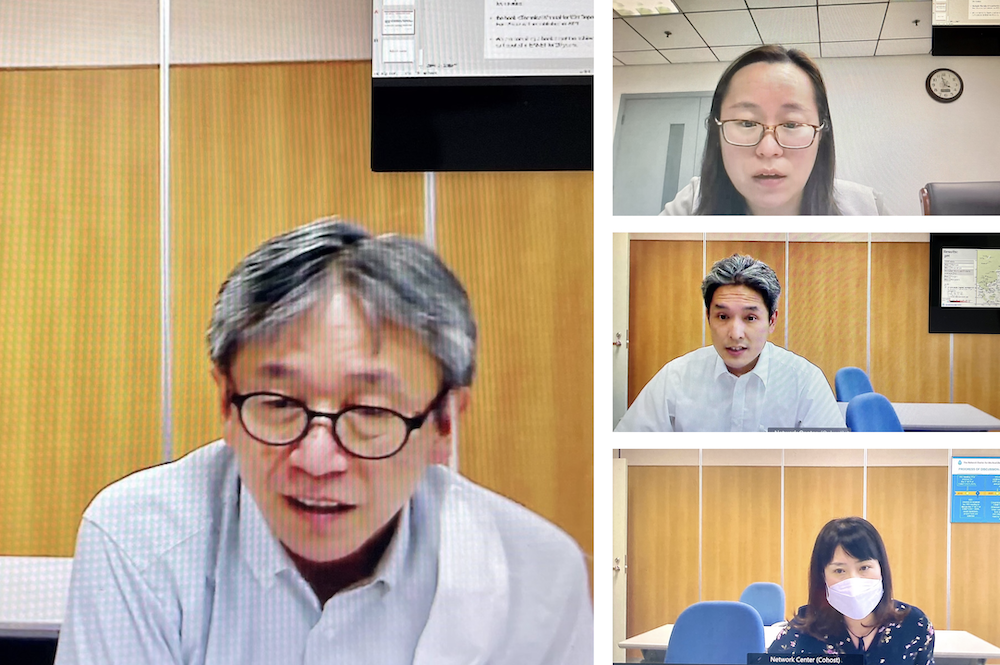
Figure 1: Discussions and presentations during the STM22

.


Overview of the Preliminary Draft Data Report 2020 and Evaluation for the Results of the Inter-laboratory Comparison (ILC) Projects 2020

The NC presented the Preliminary Draft Data Report 2020. This report focuses on wet deposition, dry deposition (air concentration), soil and vegetation, inland aquatic environment, and catchment-scale monitoring. It includes a summary of the monitoring data in 2020 and related information submitted by the Participating Countries.

The NC also introduced the preliminary draft Report on the Inter-laboratory Comparison Projects in 2020 for wet deposition, dry deposition (filter pack method), soil, and inland aquatic environment.

.

Consideration of the National Monitoring Plans (NMPs), Current Monitoring Activities for the EANET and Overall Air Concentration Monitoring Status of the Participating Countries

In line with previous STM meetings’ process, representatives of the Participating Countries presented their National Monitoring Plans (NMPs) and current EANET activities, including monitoring capacities, technical challenges, and future plans, while focusing on the general improvement of the activities of the EANET.

Other important matters were also discussed, including the progress on the Revision of the Technical Manuals for Dry Deposition Flux Estimation and Air Concentration Monitoring.

Dr. Erdenebat Eldev-Ochir, Deputy Director General, ACAP, delivered the Closing Remarks. He expressed his great appreciation for the improvement of the data quality due to the efforts of the Participating Countries. He highlighted that, despite the COVID-19 pandemic, the EANET has been continuously strengthening the capacity of the Participating Countries through online training, research fellowship, public awareness workshops, and joint research.

.

Find out more and access EANET monitoring data.

.

Photo credits: All rights reserved to EANET.