Experts from the Network Center for the EANET receive the Academic Award of the Japan Society for Atmospheric Environment for two Years in a row

29 September 2022 – Niigata, Japan

Dr. Tsuyoshi Ohizumi and Dr. Hiroyuki Sase received the Academic Award of the Japan Society for Atmospheric Environment (JSAE) at the 62nd and 63rd Annual Meetings of the JSAE in 2021 and 2022 respectively. Dr. Ohizumi serves as the Head of Data Management Department of the Asia Center for Air Pollution Research (ACAP), Network Center (NC) for the EANET, and Dr. Sase as the Head of Ecological Impact Research Department of the ACAP, NC for the EANET. Prior to these two awards, Dr. Junichi Kurokawa, Principal Researcher of the Data Management Department of ACAP, received the Creative Work Award for Young Scientists of JSAE under the award-winning title of “A study on emission inventory in Asia” in 2013.

.

Award-Winning Studies on Effects of Acid Deposition in Japan and in the East Asian Region
Dr. Tsuyoshi Ohizumi

Dr. Ohizumi received the Academic Award of the Japan Society for Atmospheric Environment at the 62nd Annual Meeting of the JSAE in 2021 for his studies of the transboundary transportation of air pollutants by observation of sulfur isotopic composition.

Through his work, seasonal differences and major routes of inter-regional transport of pollutants were clarified by streamline analysis of air mass that causes acid precipitation and observation of fluoride and other substances in atmospheric deposition. In addition, the long-term interregional transport of sulfur oxides, the cause of acid rain, was also quantitatively evaluated by observing stable isotope ratios of sulfur in atmospheric deposition at sites along the Sea of Japan.

Dr. Hiroyuki Sase

.

In 2022, Dr. Sase received the Academic Award of the Japan Society for Atmospheric Environment at the 63rd Annual Meeting of the JSAE for his various studies on the atmospheric environment and its effects on forest ecosystems in Japan and other East Asian countries.

Through EANET activities and joint research with the Participating Countries of the EANET, his work has significantly contributed to understanding the effects of acid deposition and air pollution on forest ecosystems in the East Asian region through field observation and data assessments over many years.

.

The Japan Society for Atmospheric Environment

The Japan Society for Atmospheric Environment (JSAE) is an interdisciplinary organization that brings together experts in a wide range of fields with the aim of contributing to atmospheric environment conservation.

JSAE has four awards for achievements in the field of the atmospheric environment: the Academic Award, the Meritorious Contribution Award, the Technical Development Award, and the Best Paper Award.

Dr. Ohizumi and Dr. Sase received the Academic Award, the highest honor for researchers. The purpose of the Academic Award of JSAE is to honor members for their academic achievements in the field of atmospheric environment research, their social contributions to the promotion of atmospheric quality administration, and for their contribution to the development of JSAE.

.

Find out more about EANET’s research activities on the EANET Research Portal.

.

Photo credits: featured photo by  Chery Lee on Unsplash, other photos: all rights reserved to the EANET.

Workshop on the Relationship between the Atmospheric Environment, Human Health and Ecosystems

10 November 2022 – Niigata, Japan

The Network Center for the EANET organized the Workshop « Relationships between the Atmospheric Environment, Human Health, and Ecosystems » virtually, on 31 October 2022. It gathered renowned East Asian and European researchers and experts from academia (Hokkaido University, Japan, and Nanjing University of Information Science and Technology, China), international organizations (CLRTAP-UNECE, WHO, IIASA), and the Network Center for the EANET, who shared scientific findings on the effects of atmospheric deposition on human health and ecosystems as well as best science-based practices for policymakers. About 50 participants joined the Workshop.

.

Scientific knowledge of the atmospheric environment and related effects in East Asia

Prof. Kayo Ueda, from the Graduate School of Medicine of Hokkaido University, analyzed the effects of air pollution on human health in Japan, Thailand and beyond, and showed how exposure to specific air pollutants could cause various health outcomes aside from respiratory diseases. She also explained how to estimate the mortality using epidemiological evidence and emphasized improving air quality could prevent millions of pollution-related deaths per year.

Prof. Zhaozhong Feng, from the Nanjing University of Information Science and Technology, explained the results of his research on the effects of ozone on crop production in Asia. After presenting the trends of surface ozone concentrations at the global scale, he highlighted the impacts of ozone on crops and yield loss in China, Japan, and the Republic of Korea. Results from his work demonstrated that China showed the highest relative yield loss compared to Japan and the Republic of Korea. It also estimated the total ozone-induced annual loss of crop production at US$63 billion, revealing the need to take necessary mitigation actions for ozone emission control and adaptive agronomic measures against the rising surface ozone levels across East Asia.

Dr. Hiroyuki Sase is the Head of the Ecological Impact Research Department of the Asia Center for Air Pollution Research (ACAP), Network Center (NC) for the EANET. His presentation focused on the effects of atmospheric deposition on forest ecosystems. Dr. Sase presented the changes in atmospheric deposition in the EANET joint research sites including Thailand, Japan, and Russia, and explained the different responses of forest ecosystems in various climatic zones. Key findings from the EANET sites showed that although atmospheric deposition had decreased, recovery from acidification and/or from nitrate saturation had not been necessarily observed in forest ecosystems.

.

Science-based policy experiences from Europe and beyond

Ms. Anna Kaplina, Secretariat, Convention on Long-range Transboundary Air Pollution (CLRTAP), United Nations Economic Commission for Europe (UNECE), presented the history and successes of the UNECE Convention on Long-Range Transboundary Air Pollution over the last 40 years. Among these achievements, she highlighted the decrease in emissions from 40% to 80% since 1990 in the UNECE region, resulting from the expertise, policy guidance, and capacity building among the 51 Parties.

Dr. Dorota Jarosinska, World Health Organization (WHO) Regional Office for Europe, European Centre for Environment and Health, presented the Work of the Task Force on Health under the CLRTAP and the relevant work of WHO beyond this cooperation. She highlighted, among other points, the key role of the WHO Global Air Quality Guidelines, which form robust public health recommendations, support informed decision-making worldwide, and include a comprehensive assessment of the evidence on air pollution.

Dr. Zbigniew Klimont, a scientist from the International Institute for Applied Systems Analysis (IIASA), shared his presentation on the Integrated assessment modeling contribution to Air Convention protocols by taking the example of the Gothenburg Protocol (1999), introducing also scientific tools such as the Greenhouse gas Air pollution Interactions and Synergies (GAINS) model aiming at seeking win-win solutions in policy-oriented cooperation.

Find out more about this Workshop in the Useful Resources section.

.

Useful Resources

.

Photo credits: featured photo of Schronisko PTTK Hala Kondratowa, Zakopane, Poland (2018) by Marcin Szmigiel on Unsplash.

New Face of EANET Research Portal

29 September 2021 – Niigata, Japan

EANET researchers have been working collaboratively for 20 years to study mechanisms of acid deposition and its effects on ecosystems, resulting in various scientific publications. These aim at creating a common understanding of the state of acid deposition problems in East Asia, and to provide useful inputs for decision-making at the local, national, and regional levels. Recently, an updated version of the EANET Research Portal has been released, displaying detailed information on EANET research activities.

.

20 Years of Research Activities

Why is research a central component of EANET’s activities? Since the early 2000s, collaboration on data monitoring and research has significantly improved knowledge on environmental urgencies in the region. With monitoring sites deployed in 13 countries in East Asia, scientists and researchers have access to unique data on acid deposition and air pollution.

In the decision-making process, policymakers need scientific-based evidence to guide their choices. They often use scientific results to evaluate the benefits of environmental policies and to shape government programs.

Over the years, EANET’s ability to bring together diverse players such as scientists, researchers, students, young professionals, and policymakers has made it a unique knowledge-sharing platform.

.

Sharing Scientific Outputs and Fostering Collaboration Globally

The EANET Research Portal was created to promote research activities developed in the EANET community and to enhance the use of the EANET data by the scientific community globally.

The main objectives of this page are to introduce research activities conducted by the EANET community, share scientific outputs from the EANET research activities, demonstrate the importance of the EANET data for scientific research activities, and provide opportunities for joint research activities with the EANET community.

More specifically, users can access scientific articles produced by the EANET Community, Reports of the EANET Fellowships, EANET Science Bulletins, and a database of research articles using and/or mentioning EANET data.

.

How Can Researchers Contribute to the Portal?

To expand the reach of this portal, Participating Countries are invited to share this page with their scientific peers at a national level, to link this page to their websites, and help improve its content by informing the EANET Network Center on any important paper using EANET data that might be missing from the database.

.

Access the EANET Research Portal

.

Interested in collaborating on a joint research project or on using EANET data? Contact the Network Center to find out more.

.

Photo credits: All rights reserved to EANET.

Joint Projects of the EANET with Participating Countries – Development of an Emission Inventory Manual for Mongolia

31 May 2021 – Niigata, Japan

Scientists from the EANET Participating Countries and the Network Center (located in Niigata, Japan) have been promoting joint research projects related to the EANET. In response to Mongolia’s request, an Emission Inventory Manual for Mongolia was developed and published in 2018 to provide key scientific data, including estimates of emissions of air pollutants, for policymakers to develop air pollution control measures.

.

Assessing Air Pollution in Mongolia

Mongolia is facing serious air pollution problems, especially in the capital, Ulaanbaatar city, where the population density is high. Most emissions of air pollutants result from the use of coal in power plants and domestic cooking. The level of air pollutants is normally high during the winter season when coal is also used for domestic heating. Emissions of air pollutants from road traffic are also quite significant. The major air pollutants detected in Ulaanbaatar city are sulfur dioxides (SO2), particle matters (TSP, PM10, PM2.5), and nitrogen dioxide (NO2).

To assist Mongolia in tackling air pollution issues, several international donors and agencies (World Bank, Asian Development Bank, Japan International Cooperation Agency) are developing and implementing projects for air pollution mitigation in Ulaanbaatar city. Since 2016, Clean Air Asia has been working closely with the Ministry of Environment and Tourism of Mongolia (MET) and the National Agency for Meteorology and Environmental Monitoring (NAMEM) on addressing air pollution at a national level.

 .

Developing Mongolia’s National Emission Inventory

In response to Mongolia’s request, the Asia Center for Air Pollution Research (ACAP), in collaboration with SUURI-KEIKAKU Co., Ltd, has developed an Emission Inventory Manual for Mongolia, as a part of the Integrated Programme for Better Air Quality in Asia (IBAQ Programme) of Clean Air Asia (CAA).

Available in Mongolian, English, and Japanese, the Emission Inventory Manual will be used for developing Mongolia’s national emission inventory of air pollutants and further support the formulation of effective air pollution control measures.

 .

Read the summary of the Emission Inventory Manual in the EANET Science Bulletin, Vol 5.

.

The authors appreciated the cooperation and assistance received from the Ministry of Environment and Tourism of Mongolia (MET), the National Agency for Meteorology and Environmental Monitoring (NAMEM), Clean Air Asia (CAA), and the Japan International Cooperation Agency (JICA).

.

Photo credits: Nogoonnuur, Mongolia, by Lightscape, free of the copyright license.

Joint Projects of the EANET with Participating Countries – Catchment Analysis in Thailand

10 June 2021 – Niigata, Japan

Scientists from the EANET Participating Countries and the Network Center (located in Niigata, Japan) have been promoting joint research projects related to the EANET. Consequently, the Network Center, in cooperation with the Thai Royal Forest Department, and the Environmental Research and Training Centre (ERTC), Thailand, conducted a joint research project on catchment analysis in Thailand to understand atmospheric deposition and its effects from 2005 to 2015.

.

Understanding Atmospheric Acid Deposition

Air pollution consists of significant amounts of aerosols (particulate matter) and trace gases (NOx, SOx, CO, and others). These air pollutants deposit on the earth’s surface through dry depositions and wet depositions (when dissolved in water droplets in clouds).

Wet and dry depositions of air pollutants cause detrimental impacts on the ecosystems and environment, including the acidification of the water bodies, such as rivers and lakes.

 .

Analyzing Acid Deposition and its Effects in Northeastern Thailand for Nearly 10 Years

The joint research project aimed to study the atmospheric wet deposition of acidic components and other relevant pollutants including elemental carbon, as well as their influence on water chemistry, chemical properties of soil, nutrient fluxes in soil-plant system, and sulfur dynamics in forest ecosystems.

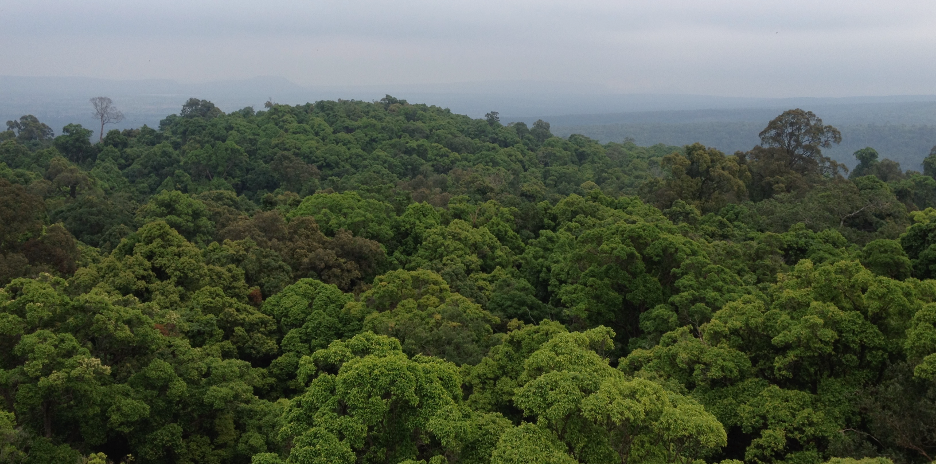
For the catchment analysis, scientists from the Network Center established a study plot in a dry evergreen forest in Sakaerat Silvicultural Research Station, Nakhon Ratchasima Province, northeastern Thailand. The surveys on-site allowed researchers to accumulate nine full years of data, from October 2005 to December 2014.

Based on these results, several scientific papers were published in international journals focusing mainly on atmospheric deposition, soil and stream water chemistry. Ultimately, these scientific outputs significantly contributed to enhancing the global understanding of atmospheric deposition and its effects on forest ecosystems in the region.

.

Read the Report of the joint research project on catchment analysis in Thailand in the EANET Science Bulletin, Vol 5.

.

The authors acknowledged Jesada Luangjame, Thiti Visaratana, and Bopit Kietvuttinon, Royal Forest Department for their great contribution to the Sakaerat project including other colleagues who were involved in the project.  The study was supported financially by the Grant-in-Aid for Scientific Research on Innovative Areas (JP20120012) from the Ministry of Education, Culture, Sports, Science, and Technology (MEXT), Japan, the Environment Research and Technology Development Fund (C-052, C-082 and B-0801) from the Ministry of the Environment of Japan, and Asia-Pacific Network for Global Change Research (APN).

.

Photo credits: Sakaerat forest by Sase H., all rights reserved.