New Face of EANET Research Portal

29 September 2021 – Niigata, Japan

EANET researchers have been working collaboratively for 20 years to study mechanisms of acid deposition and its effects on ecosystems, resulting in various scientific publications. These aim at creating a common understanding of the state of acid deposition problems in East Asia, and to provide useful inputs for decision-making at the local, national, and regional levels. Recently, an updated version of the EANET Research Portal has been released, displaying detailed information on EANET research activities.

.

20 Years of Research Activities

Why is research a central component of EANET’s activities? Since the early 2000s, collaboration on data monitoring and research has significantly improved knowledge on environmental urgencies in the region. With monitoring sites deployed in 13 countries in East Asia, scientists and researchers have access to unique data on acid deposition and air pollution.

In the decision-making process, policymakers need scientific-based evidence to guide their choices. They often use scientific results to evaluate the benefits of environmental policies and to shape government programs.

Over the years, EANET’s ability to bring together diverse players such as scientists, researchers, students, young professionals, and policymakers has made it a unique knowledge-sharing platform.

.

Sharing Scientific Outputs and Fostering Collaboration Globally

The EANET Research Portal was created to promote research activities developed in the EANET community and to enhance the use of the EANET data by the scientific community globally.

The main objectives of this page are to introduce research activities conducted by the EANET community, share scientific outputs from the EANET research activities, demonstrate the importance of the EANET data for scientific research activities, and provide opportunities for joint research activities with the EANET community.

More specifically, users can access scientific articles produced by the EANET Community, Reports of the EANET Fellowships, EANET Science Bulletins, and a database of research articles using and/or mentioning EANET data.

.

How Can Researchers Contribute to the Portal?

To expand the reach of this portal, Participating Countries are invited to share this page with their scientific peers at a national level, to link this page to their websites, and help improve its content by informing the EANET Network Center on any important paper using EANET data that might be missing from the database.

.

Access the EANET Research Portal

.

Interested in collaborating on a joint research project or on using EANET data? Contact the Network Center to find out more.

.

Photo credits: All rights reserved to EANET.

Joint Projects of the EANET with Participating Countries – Development of an Emission Inventory Manual for Mongolia

31 May 2021 – Niigata, Japan

Scientists from the EANET Participating Countries and the Network Center (located in Niigata, Japan) have been promoting joint research projects related to the EANET. In response to Mongolia’s request, an Emission Inventory Manual for Mongolia was developed and published in 2018 to provide key scientific data, including estimates of emissions of air pollutants, for policymakers to develop air pollution control measures.

.

Assessing Air Pollution in Mongolia

Mongolia is facing serious air pollution problems, especially in the capital, Ulaanbaatar city, where the population density is high. Most emissions of air pollutants result from the use of coal in power plants and domestic cooking. The level of air pollutants is normally high during the winter season when coal is also used for domestic heating. Emissions of air pollutants from road traffic are also quite significant. The major air pollutants detected in Ulaanbaatar city are sulfur dioxides (SO2), particle matters (TSP, PM10, PM2.5), and nitrogen dioxide (NO2).

To assist Mongolia in tackling air pollution issues, several international donors and agencies (World Bank, Asian Development Bank, Japan International Cooperation Agency) are developing and implementing projects for air pollution mitigation in Ulaanbaatar city. Since 2016, Clean Air Asia has been working closely with the Ministry of Environment and Tourism of Mongolia (MET) and the National Agency for Meteorology and Environmental Monitoring (NAMEM) on addressing air pollution at a national level.

 .

Developing Mongolia’s National Emission Inventory

In response to Mongolia’s request, the Asia Center for Air Pollution Research (ACAP), in collaboration with SUURI-KEIKAKU Co., Ltd, has developed an Emission Inventory Manual for Mongolia, as a part of the Integrated Programme for Better Air Quality in Asia (IBAQ Programme) of Clean Air Asia (CAA).

Available in Mongolian, English, and Japanese, the Emission Inventory Manual will be used for developing Mongolia’s national emission inventory of air pollutants and further support the formulation of effective air pollution control measures.

 .

Read the summary of the Emission Inventory Manual in the EANET Science Bulletin, Vol 5.

.

The authors appreciated the cooperation and assistance received from the Ministry of Environment and Tourism of Mongolia (MET), the National Agency for Meteorology and Environmental Monitoring (NAMEM), Clean Air Asia (CAA), and the Japan International Cooperation Agency (JICA).

.

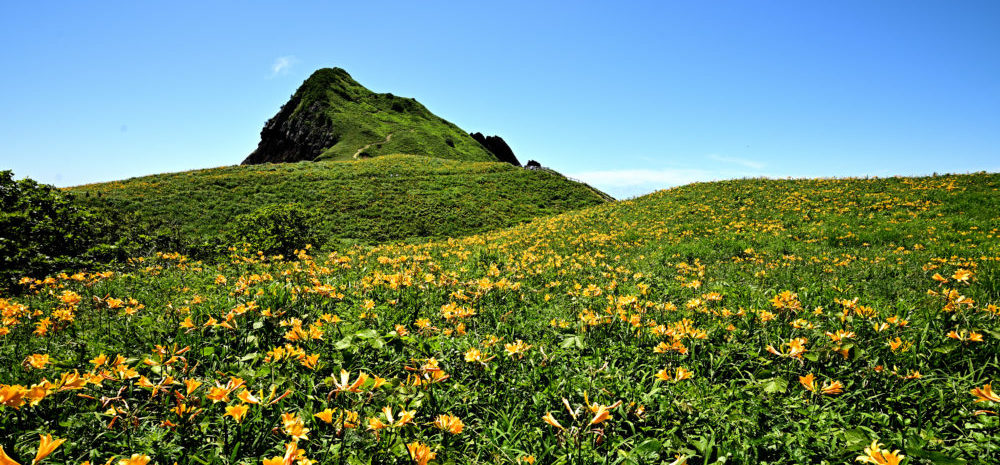
Photo credits: Nogoonnuur, Mongolia, by Lightscape, free of the copyright license.

Joint Projects of the EANET with Participating Countries – Catchment Analysis in Thailand

10 June 2021 – Niigata, Japan

Scientists from the EANET Participating Countries and the Network Center (located in Niigata, Japan) have been promoting joint research projects related to the EANET. Consequently, the Network Center, in cooperation with the Thai Royal Forest Department, and the Environmental Research and Training Centre (ERTC), Thailand, conducted a joint research project on catchment analysis in Thailand to understand atmospheric deposition and its effects from 2005 to 2015.

.

Understanding Atmospheric Acid Deposition

Air pollution consists of significant amounts of aerosols (particulate matter) and trace gases (NOx, SOx, CO, and others). These air pollutants deposit on the earth’s surface through dry depositions and wet depositions (when dissolved in water droplets in clouds).

Wet and dry depositions of air pollutants cause detrimental impacts on the ecosystems and environment, including the acidification of the water bodies, such as rivers and lakes.

 .

Analyzing Acid Deposition and its Effects in Northeastern Thailand for Nearly 10 Years

The joint research project aimed to study the atmospheric wet deposition of acidic components and other relevant pollutants including elemental carbon, as well as their influence on water chemistry, chemical properties of soil, nutrient fluxes in soil-plant system, and sulfur dynamics in forest ecosystems.

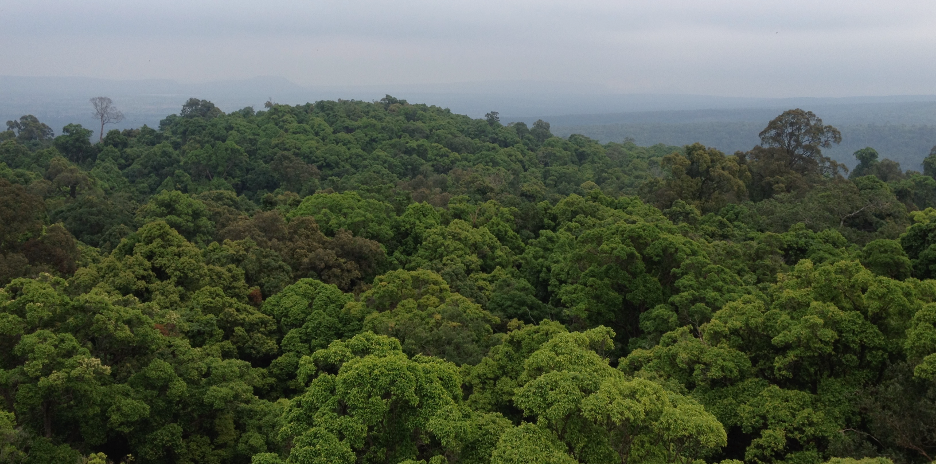
For the catchment analysis, scientists from the Network Center established a study plot in a dry evergreen forest in Sakaerat Silvicultural Research Station, Nakhon Ratchasima Province, northeastern Thailand. The surveys on-site allowed researchers to accumulate nine full years of data, from October 2005 to December 2014.

Based on these results, several scientific papers were published in international journals focusing mainly on atmospheric deposition, soil and stream water chemistry. Ultimately, these scientific outputs significantly contributed to enhancing the global understanding of atmospheric deposition and its effects on forest ecosystems in the region.

.

Read the Report of the joint research project on catchment analysis in Thailand in the EANET Science Bulletin, Vol 5.

.

The authors acknowledged Jesada Luangjame, Thiti Visaratana, and Bopit Kietvuttinon, Royal Forest Department for their great contribution to the Sakaerat project including other colleagues who were involved in the project.  The study was supported financially by the Grant-in-Aid for Scientific Research on Innovative Areas (JP20120012) from the Ministry of Education, Culture, Sports, Science, and Technology (MEXT), Japan, the Environment Research and Technology Development Fund (C-052, C-082 and B-0801) from the Ministry of the Environment of Japan, and Asia-Pacific Network for Global Change Research (APN).

.

Photo credits: Sakaerat forest by Sase H., all rights reserved.

EANET Science Bulletin Vol. 5

7 July 2020 – Niigata, Japan

The Network Center for the EANET has released the latest version of the Science Bulletin, Vol. 5.

.

Science Bulletin vol. 5

Volume 5 of the EANET Science Bulletin is published to share the scientific findings from the research activities within EANET and to provide a platform for scientists from participating countries to publish their scientific and technical research results relevant to the EANET activities.

This volume is comprised of the Reports of the EANET Fellowship Program (2016-2018), Joint Projects of the EANET with Participating Countries, as well as Scientific and Technological Research Papers from Participating Countries.

Find out more by downloading the Science Bulletin vol. 5.