The Twentieth Session of the Scientific Advisory Committee on the Acid Deposition Monitoring Network in East Asia

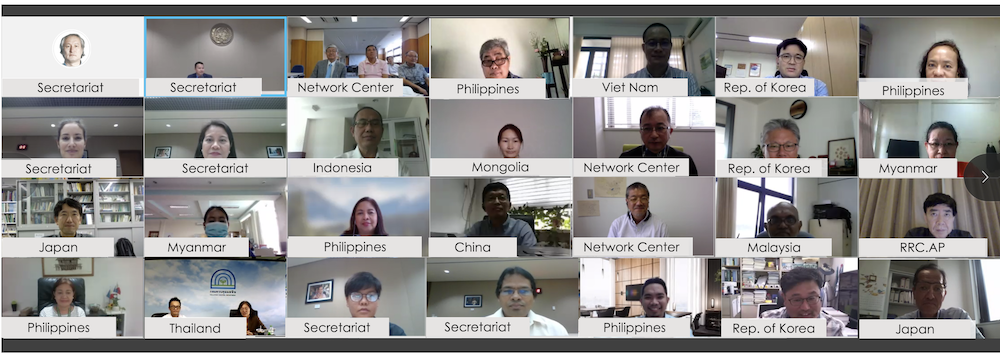
SAC20 virtual Participants

25 September 2020 – Bangkok, Thailand

The Scientific Advisory Committee (SAC) of the Acid Deposition Monitoring Network in East Asia (EANET) held its Twentieth Session of the SAC (SAC20) from 23-24 September 2020, virtually. The Session was organized by the Secretariat and the Network Center (NC) for the EANET.

Nearly 50 members of the SAC and/or their representatives from the Participating Countries of the EANET (from Cambodia, China, Indonesia, Japan, Lao PDR, Malaysia, Mongolia, Myanmar, Philippines, Republic of Korea, Russia, Thailand, Viet Nam) and from the Secretariat and the NC, participated in the two-day meeting.

.

Designing EANET’s Future Activities for 2021-2025

Main discussions, on day one, concerned the considerations by the SAC members of future activities from technical and scientific viewpoints. Outcomes of these discussions were recommendations to be presented to the 22nd Intergovernmental Meeting of EANET (IG22) and considered in finalizing the MTP for the EANET (2021-2025).

Currently, EANET’s main activities focus essentially on acid deposition monitoring and provision of data; promotion of quality assurance and quality control (QA/QC); implementation of technical support and capacity building; dispatch of technical missions; promotion of research and studies; and promotion of public awareness activities.

SAC20 members discussed the Draft MTP that includes new activities proposed by the Participating Countries. This will be further discussed next month during the Second Session of the Working Group Meeting.

.

Understanding Acid Deposition Monitoring and Data in 2019
Data Presentations from NC
Figure 1- Scientists from the EANET Network Center presented several acid deposition monitoring data reports from 2019, during the SAC20 virtual meeting, on September 24th, 2020.

.

Day two of the meeting focused essentially on the results from activities of acid deposition monitoring, compilation, evaluation, storage, and provision of data in 2019, based on data provided by the 13 EANET Participating Countries, retrieved from their national monitoring sites.

Scientists from the NC presented detailed results from the EANET Data Report 2019 data on wet deposition, dry deposition, soil and vegetation, inland aquatic environment, and catchment-scale, as well as and from the Report on the Inter-laboratory Comparison (ILC) Projects 2019, focusing on results of wet deposition, dry deposition (filter pack method), soil, and inland aquatic environment ILC Projects carried out in 2019.

An overview of the National Monitoring Plans from the EANET Participating Countries, Reports from the Chairpersons of the Task Forces of the Scientific Advisory Committee (SAC), Progress of Development of the Fourth Periodic Report on the State of Acid Deposition in East Asia (PRSAD4) and updates on other relevant scientific activities were also presented throughout the day.

EANET Data Reports can be accessed on EANET’s website and Reports for 2019 will soon be available.

.

Photo credits: All rights reserved to EANET.

EANET Research Fellowship Programme – The impacts of exposure to fine particulate matter on premature mortality in Bangkok, Thailand

EANET Fellowship 2018 featured image

1 December 2020 – Niigata, Japan

The Acid Deposition Monitoring Network in East Asia (EANET)’s fellowship program aims at funding researchers from the EANET’s participating countries to carry out research pertaining to acid deposition at the Network Center in Japan. Kessinee Unapumnuk, from Thailand, was awarded the EANET fellowship for 2018. She led her research on the impacts of exposure to fine particulate matter on premature mortality in Bangkok.

.

The impacts of fine particulate matters on human health

Fine particulate matters (PM2.5) affect human health and can lead to premature death if exposed for a long time. Chronic exposure to PM2.5 increases the risk of developing cardiovascular and respiratory diseases, as well as lung cancer. The World Health Organization (WHO) reported 4.2 million premature deaths due to cardiovascular and respiratory diseases and cancers worldwide in 2016 related to the exposure to ambient PM2.5 in both urban and rural areas.

Bangkok, Thailand’s capital, has been experiencing frequent episodes of air pollution characterized by a high concentration of PM2.5 due to combustion emissions from multiple sources and stagnant metrological conditions from January to April every year. Transportation-related sources are the major contributions to the PM2.5 levels and result in poor air quality in the city.

.

Understanding premature mortality attributable to PM2.5 in Bangkok’s districts

Unapumnuk has estimated premature mortalities caused by chronic obstructive pulmonary disease (COPD), lung cancer (LC), ischemic heart disease (IHD), and stroke attributed to long-term exposure to PM2.5 in several districts in Bangkok from 2010 to 2017.

In conclusion, the study suggests that a strict emission control of PM2.5 is needed in Bangkok to avoid significant mortality attributable to PM2.5.

.

Under the EANET Research Fellowship program 2018, this study was conducted at the Asia Center for Air Pollution (ACAP), Niigata Japan. The author acknowledged the help received from the Asia Centre for Air Pollution Research (ACAP) for performing the research as well from the Thai Pollution Control Department and the Ministry of Public Health.

.

Read the full article by Unapumnuk et al. in the EANET Science Bulletin Volume 5.

.

Photo credits: Bangkok by Nick van den Berg, free of the copyright license.

EANET Research Fellowship Programme – Study on the impacts of air pollution transport and its effects to human health in Cambodia

17 February 2021 – Niigata, Japan

The Acid Deposition Monitoring Network in East Asia (EANET)’s fellowship programme aims at funding researchers from the EANET’s Participating Countries to carry out research pertaining to acid deposition at the Network Center in Japan. Kong Savuth, from Cambodia, was awarded the EANET fellowship in 2018. Mr. Savuth’s research described human health effects of exposure to air pollutants, namely, ozone (O3) and particulate matter (PM2.5) in reference to the WHO Air quality guidelines (2005).

.

Impacts of air pollutants on human health

PM2.5 can penetrate deep inside the lungs and contribute to increasing the risk of cardiovascular and respiratory diseases including lung cancer. According to recent epidemiological studies, reducing the annual average PM2.5 concentrations of 10 μg m-3 could result in a significant reduction of premature mortality.

Ground-level O3 can cause respiratory problems leading to asthma, cough, inflammation of the respiratory tract, chronic bronchitis, and lung damage. A high-level concentration of O3 also causes premature mortality.

WHO estimates that in 2016, some 58% of outdoor air pollution-related premature deaths were due to ischaemic heart disease and strokes, while 18% of deaths were due to chronic obstructive pulmonary disease and acute lower respiratory infections respectively, and 6% of deaths were due to lung cancer.


.

Estimating premature mortality caused by PM2.5 and O3 in Cambodia

The researchers (Savuth and Yamashita) estimated premature mortality caused by the exposure to PM2.5 and O3 in Cambodia by using PM2.5 and O3 data simulated by CMAQ (Community Multiscale Air Quality – a chemical transport model) and Concentration-Response (C-R) functions.


Read the full study and its results, published in the EANET Science Bulletin, Vol 5.

.

Under the EANET Research Fellowship programme 2018, this study was conducted at the Asia Center for Air Pollution (ACAP), Niigata, Japan. The researcher, Kong Savuth, acknowledged the support and facilities provide by ACAP and by the National Institute for Environmental Studies (NIES), Japan, for performing the research.

Photo credits: Cambodia by Daniel Kirsch, free of the copyright license.

Scientific & Technological Research Papers from Participating Countries – Airborne Ammonia Concentrations in the Baikal Region

image of the Baikal lake to illustrate the research on airbone ammonia pollution in the Baikal region

1 April 2021 – Niigata, Japan

Scientific and Technological Research Papers from Participating Countries are research articles written by scientists from the EANET Participating Countries, in collaboration with the EANET Network Center, in Niigata, Japan. They are published in the EANET Science Bulletin and have required the use of EANET data.

Alisa Trifonova-Yakovleva and Sergey Gromov, from Russia, estimated airborne concentrations of ammonia (NH3) in the Baikal region by using measurements conducted at two EANET monitoring sites and compared with satellite data (Infrared Atmospheric Sounding Interferometer (IASI)).

.

Sources and Impacts of Ammonia

Ammonia (NH3) is an important air pollutant that may eventually fall back to earth by means of wet and dry acid deposition. It is emitted both naturally and from anthropogenic sources such as animal husbandry, the use of nitrogen fertilizers, and biomass burning.

Atmospheric deposition containing NH3, aside from acidification impacts through the oxidizing to nitric acids in rain waters or on wet surfaces, cause also other negative effects on ecosystems, such as eutrophication and loss of biodiversity. In addition, when NH3 reacts with other atmospheric constituents, it forms particulate matter (e.g. PM2.5) triggering harmful impacts on human health.

.

Airborne Ammonia Concentrations in the Baikal Region

For this research study, Alisa Trifonova-Yakovleva and Sergey Gromov used satellite data for better coverage and understanding of the air pollution at a wider regional level and ground-based measurements (filterpack method) at the Russian Litstvyanka and Mondy EANET stations from 2015 to 2017.

The goal of this study was to understand the constant levels of NH3 concentrations or their higher values of episodic nature in different locations within the Baikal Region, season-to-season.

More precise estimations of the regional airborne NH3 concentrations are indeed necessary to enhance the understanding of the scales and extension of detrimental impacts of air pollution and acid deposition on the environment and on human health.

.

Discover the results of the study by reading the full article in the EANET Science Bulletin, Vol 5.

.

This study was carried out in the framework of the Research Project AAAA-A20-120013190049-4 “Development of methods and technologies for monitoring of environmental pollution under the influence of transboundary pollutants transport (UNECE: EMEP, ICP IM) and acid deposition in East Asia (EANET)”.

Processing of satellite measurement data was performed as part of the research theme under the Plan of Basic Scientific Research of the State Academies of Sciences No. 0148-2019-0009, AAAA-A19-119022190173-2 “Climate changes and their consequences for the environment and the life of the population in Russia”.

.

Photo credits: Baikal ice on sunset, by Sergey Pesterev, free of the copyright license.

EANET Research Fellowship Programme – Komarovka river catchment analysis by long-term observations at the Russian EANET Primorskaya station

Komarovka river by Hiroyuki SASE

17 September – Niigata, Japan

The Acid Deposition Monitoring Network in East Asia (EANET)’s fellowship program aims at funding researchers from the EANET’s participating countries to carry out research pertaining to acid deposition at the Network Center in Japan. Ekaterina Zhigacheva, from Russia, was awarded the EANET fellowship in 2017. She led her research on the investigation of atmospheric input and runoff discharge of sulphur and nitrogen compounds as the balance components of Komarovka river catchment by long-term observations at the Russian EANET Primorskaya station (for 2005 – 2015).

.

The impact of acid deposition on rivers

Air pollution consists of significant amounts of compounds of sulphur and nitrogen. These compounds deposit on the earth’s surface through wet and dry depositions and cause detrimental impacts on the ecosystems and environment, including acidification of the water bodies, such as rivers and lakes.

Zhigacheva, in this study, analysed the components of the Komarovka river catchment at Russian EANET Primorskaya station using observations from 2005 to 2015. The goal of the study was to evaluate the effects of pollution on regional ecosystems.


The author acknowledged the help received from the EANET Primorskaya site and PCEM laboratory for data and financial support and facilities from the Asia Centre for Air Pollution Research (ACAP) for performing the research.

.

Read the full article by Zhigacheva et al. in the EANET Science Bulletin Volume 5.

.

Photo credits: Komarovka river by Hiroyuki SASE, all rights reserved.

The Twenty-First Senior Technical Managers’ Meeting (STM21)

STM21 featured image

27 August 2020 – Niigata, Japan

The Twenty-First Senior Technical Managers’ Meeting (STM21) on the Acid Deposition Monitoring Network in East Asia (EANET) was held online on 7 August 2020. The Meeting was organized by the Network Center (NC) for the EANET in collaboration with the Secretariat for the EANET. About 40 senior technical officials involved in the EANET monitoring activities from Cambodia, China, Indonesia, Japan, Lao PDR, Malaysia, Mongolia, Myanmar, Philippines, Republic of Korea, Russia, Thailand, and Viet Nam participated in the meeting.


Acid Deposition Monitoring Activities in 2019

The objectives of this annual meeting were to exchange information on the current status of the EANET monitoring activities, including the consideration of the draft Data Report 2019 and the draft Inter-laboratory Comparison Project Report 2019, as well as to discuss the EANET’s National Monitoring Plans for 2020.

During the meeting, the NC presented the preliminary draft Data Report 2019 which contains wet deposition, dry deposition (air concentration), soil and vegetation, inland aquatic environment, and catchment-scale monitoring data, as well as a summary of the monitoring data of 2019 and related information submitted by the 13 EANET Participating Countries in 2019.

The representatives of the EANET Participating Countries, later on, presented their National Monitoring Plans and current EANET activities, including monitoring capacities, technical limitations, future plans, etc. Throughout the meeting, the senior technical officials discussed implementation challenges and shared their experiences and knowledge to foster solutions in favor of future innovation.


Expanded Monitoring Sites in 2020

In 2020, the number of the EANET monitoring sites has significantly increased, with a total number of 60 wet deposition monitoring sites, 47 dry deposition monitoring sites, 21 soil and vegetation monitoring sites, 19 inland aquatic environment monitoring sites, and 2 catchment-scale monitoring sites, located in 13 countries of Asia.

Most recently, China started monitoring wet and dry deposition in two newly registered EANET monitoring sites: in Wuzhishan, Hainan Province, and Lijiang, Yunnan Province. Indonesia also introduced two new EANET monitoring sites: in Jembrana, in the province of Bali, and Lombok Barat, in West Nusa Tenggara Province.

.

Find out more about EANET’s monitoring activities on EANET’s website or contact us for more information on acid deposition monitoring and data.

Photo credits: Lijiang Shi, Yunnan Sheng, China, by Culacinno, free of copyright license.

EANET Research Fellowship Programme (2016-2018) – Comparison of Observed and Modeled Nitrogen Dioxide Accounting Meteorological Conditions and Oxides of Nitrogen Emissions in China


Fellowship_China_2016

21 July 2020 – Niigata, Japan

EANET’s fellowship program aims at funding researchers from EANET participating countries to carry out research pertaining to acid deposition at the Network Center in Japan. Cuihong Chen from China was awarded the EANET fellowship for 2016. Chen studied the comparison of observed and modeled nitrogen dioxide (NO2) from 2013 to 2015, during summer, accounting sensitivity of meteorological conditions, and oxides of nitrogen (NOx) emission constraints.

.

Identifying NOx Emission Sources to Minimize Emissions

NOx is an important trace gas in the atmosphere, emitted mainly from anthropogenic sources, such as the combustion of fossil fuels. It plays a key role in atmospheric chemistry by involving in the formation of ozone and secondary particulate matter. Over the past several years, NOx emissions in China have been increasing rapidly and are resulting in serious atmospheric pollution problems, such as acidic rain, atmospheric haze, and high ozone concentration. This in turn causing harm to human health, environment, and ecosystem. Therefore, identifying NOx emission sources and efforts to minimize the emissions are necessary. Chen’s research findings provided a good insight into the relationship between satellite observation and modeling of NO2.

.

Meteorological  and NOx Emissions’ Impacts on NO2

For the study, Chen used NASA’s satellite data and chemical transport models. She found a good correlation (slope 1.15 and a correlation coefficient of 0.79) between satellite NO2 and Modeled NO2. The study reported an increase in tropospheric NO2 by 4.26% in 2014 compared to that of 2013. The impacts of meteorological conditions and NOx emissions on the increase of tropospheric NO2 in 2014 were 2.95% and 1.31%, respectively. The meteorological fields contributed a 3.57% increase in tropospheric NO2 in 2015.

The study concluded that NOX emission increased in 2014 and decreased in 2015 during the summer, compared to the level of 2013. The reduction of NO2 in 2015 was mainly due to the decline of NOX emissions in China because of the implementation of emission reduction and control measures. The researcher suggested that uncertainty in satellite data and model simulation are needed to be reduced by the development of a non-linear relationship approach in future studies.


The authors acknowledged the Network Center for the Acid Deposition Monitoring Network in East Asia (EANET) and the Asia Center for Air Pollution Research (ACAP) for financial support and observation data.

Read the full article by Chen et al. in the EANET Science Bulletin Volume 5.

.

Photo credits: Shanghai by Derek Lee, free of copyright license.

.

Scientific Outputs by the Task Force on Soil and Vegetation Monitoring of EANET

Scientific outputs by Task Force on Soil and Vegetation Monitoring of EANET_image

9 July 2020 – Niigata, Japan

The Task Force on Soil and Vegetation Monitoring of EANET has published a review on air pollution and tree and forest decline in East Asia.


The Task Force on Soil and Vegetation Monitoring of EANET

Task Forces established under the Scientific Advisory Committee (SAC) of the EANET are leading scientific assessment and research activities on acid deposition, air pollution, and their effects. The Task Force on Soil and Vegetation Monitoring of EANET has been conducting scientific assessment and research activities based on the “Strategy Paper for Future Direction of EANET on Monitoring of Effects on Agricultural Crops, Forest and Inland Water by Acidifying Species and Related Chemical Substances”.

As one of the activities in line with the strategy paper, the regional condition of forest decline and its relationship with air pollution have been compiled as the scientific review led mainly by Task Force members from Japan, China, Russia, and Malaysia based on scientific literature published in the respective countries.


Tree and Forest Decline in East Asia

Tree and forest declines related to air pollution have been observed with industrialization in the countries of Northeast Asia and their causes have been shifting depending on the time period. Firstly, a direct effect of SO2 was the main cause, however, causes have been shifting to acidification and nitrogen deposition, and then ozone, particulate matter (PM), and the interlinkage with climate change. Haze phenomena due to forest fires have been increasing in tropical and boreal forests and emitted PM inhibits photosynthesis.

In recent years, chronically high ozone concentrations may have had adverse effects on tree physiology in conjunction with climate change. Under the changing climate, no apparent effect of air pollution on tree decline was reported recently. However, monitoring air pollution is important to identify the cause of tree decline. Further economic growth in Southeast Asia is projected. The expansion of the monitoring network in tropical and boreal forests has been proposed in the review. Also, it was pointed out that countermeasures, such as restoration of urban trees and rural forests, would be important to ensure future ecosystem services.


The review work was started as one of the activities of the Task Force on Soil and Vegetation Monitoring of the EANET. The study was also supported by JSPS KAKENHI Grant Number JP19H00955. The studies in Russia were funded by the Russian Fund Fundamental Researches, the projects numbers are 03- 04-49565, 05-04-97219, 05-05-97259, 12-04-31036, by the Russian Fund Fundamental Researches and Irkutsk Region Government, the project 14-44-04067, by the Siberian Branch of the Russian Academy of Sciences, the Integration Project 17 with using equipment of “Baikal analytical center”, Irkutsk.


Read the full scientific review: Takahashi et al. 2020. Air pollution monitoring and tree and forest decline in East Asia: A review Science of the Total Environment 742, 140288

Curious about EANET’s research activities? Find out more on the Research activities’ or Publications’ pages.

.

Photo credits: Featured image by Alberto Bigoni free of copyright license.

.

Understanding Rain and Acid Deposition Phenomenon in Indonesia

Understanding Rain and Acid Deposition Phenomenon in Indonesia Featured image

14 July 2020 – Bangkok, Thailand

The Indonesian Meteorological, Climatological, and Geophysical Agency, BMKG, in collaboration with the Ministry of Environment and Forestry Indonesia, KLHK, and the IPB University, organized a webinar on “Rain and Acid Deposition Phenomenon in Indonesia” on Tuesday, 14 July 2020. The Acid Deposition Monitoring Network in East Asia (EANET) Secretariat Coordinator and EANET’s Representatives for Indonesia joined the event online to introduce the Network and its activities in Indonesia.

.

Acid Deposition’s Impacts on the Environment in Indonesia Explained

Rain and Acid Deposition Phenomenon in Indonesia Webinar500 participants from different regions of Indonesia attended the webinar, eager to learn about the impacts on the environment of acid deposition in Indonesia.

The Webinar was opened by a Keynote Speech delivered by Ir. Herman Hermawan, Senior Policy expert, KLHK. It was followed by a presentation by Dr. Ir. Dodo Gunawan, Head of Center of Information and Climate Change, BMKG, and member of EANET’s Scientific Advisory Committee (SAC), focusing on the “Quality of Chemical Composition of Rainwater in Indonesia”.

Prof. Dr. Ir. H. Hari Sukadi Alikodra, Professor of Faculty of Forestry, IPB University, delivered a presentation on “Rain and Phenomenon of Acid Deposition in Indonesia: Potential Impact on Agriculture and Food Security”. After that, Mr. Djurit Teguh Prakoso, Head of Sub Directorate at KLHK and EANET Contact Person for Indonesia, delivered a presentation on “Policy Control on Air Pollution and Acid Deposition”.

.

Monitoring Acid Deposition Data in Indonesia with EANET

To introduce EANET and its contribution to the region, Mr. Tomi Haryadi, Coordinator, Secretariat for the EANET, delivered a presentation on “EANET: Intergovernmental Cooperation on Acid Deposition in Asia Region”. Lastly, Ms. Retno Puji Lestari, Researcher at KLHK and also EANET National QA/QC Manager for Indonesia, delivered a presentation on Acid Deposition Monitoring in Indonesia.

Interested in finding out more about acid deposition data in Indonesia? Visit EANET’s site information page to read more about EANET’s monitoring sites in Bandung, Jakarta, Kototabang, Maros, and Serpong.

.

Photo credits: Featured image of Banda Aceh by Arto Marttinen free of the copyright license. Event image: courtesy of the Ministry of Environment and Forestry of Indonesia, all rights reserved.

The EANET Working Group Meetings on Drafting the MTP (2021-2025) and Reviewing the Scope of Instrument

WG1 Group Photo 29 June 2020

7 July 2020 – Bangkok, Thailand

From June 29th to July 2nd 2020, National Focal Points or representatives of the Acid Deposition Monitoring Network in East Asia (EANET) and other international experts met virtually, simultaneously in 13 countries of East Asia, to discuss the future of the Network and reaffirm their common motivation to fight the adverse effects of acid deposition in the Region.


The Working Group Meeting on Drafting Medium Term Plan for the EANET (2021-2025), June 29-30 2020

Amid the COVID-19 pandemic, EANET’s Working Group Meeting on Drafting Medium Term Plan for the EANET (2021-2025) took place via a virtual platform (see above a collage of most participants’ webcam). During the two-day meeting, over 50 participants from Cambodia, China, Indonesia, Japan, Lao PDR, Malaysia, Mongolia, Myanmar, Republic of Korea, Russia, Thailand, Philippines, and Viet Nam joined the EANET’s Secretariat and Network Center to discuss draft versions of the Medium Term Plan for the EANET (2021-2025).

The Opening Remarks, delivered by Dr Dechen Tsering, Regional Director and Representative, United Nations Environment Programme for Asia & the Pacific, emphasized that the global pandemic “COVID-19” has allowed us to reflect and re-assess our actions toward nature and reminds us of the importance of the health of people and the planet. The Welcome Remarks, delivered by Dr Shiro Hatakeyama, Director General, Asia Center for Air Pollution Research, reasserted the importance of the Working Group Meeting to recommend the future direction of the EANET.

During these discussions, gathering mostly government officials from Asian Ministries of the Environment, the EANET considered activities and budget for the next five years. As a conclusion, and given the importance of the task, meeting attendees decided to continue discussions during the Second Session of Working Group Meeting, to be held in October 2020.


The Working Group Meeting on Reviewing the Scope of Instrument for the EANET, July 1-2 2020

The Working Group Meeting on Reviewing the Scope of Instrument for the EANET also took place via a virtual platform, regrouping a little less than 50 participants, from EANET’s Participating Countries, most of which had also participated in the two previous meeting days.

WG2 Photos 1-2 July 2020
Screenshots from the Working Group Meeting on Reviewing the Scope of Instrument for the EANET, 1-2 July 2020.

The purpose of this meeting was to discuss the objectives and scope of the EANET’s Instrument and the possibility of expanding this scope further.

In addition to the Environmental government officials, several Resource persons joined the meeting, among which a Legal Expert Resource Person, to explain in details the legal options and consequences of how to expand the current scope of Instrument.

As a conclusion, meeting attendees prepared recommendations to be submitted to the next Intergovernmental (IG) Meeting, to be held in November 2020.


Meeting Reports for both Working Group Meetings will soon be available on the Resources webpage.

Curious about EANET’s activity? Find out more about the next EANET Meeting dates on the Event’s page and discover the pictures of the Working Group Meetings on Flickr.


.