The Twenty-first Session of the Scientific Advisory Committee on the Acid Deposition Monitoring Network in East Asia

29 October 2021 – Bangkok, Thailand

The Scientific Advisory Committee (SAC) of the Acid Deposition Monitoring Network in East Asia (EANET) held its Twenty-first Session of the SAC (SAC21) Meeting from 26-28 October 2021, to discuss acid deposition monitoring data provided in 2020.

 .

Reporting on Acid Deposition Monitoring in 2020

The Session was organized virtually by the Secretariat and the Network Center (NC) for the EANET. Over 60 members of the SAC and/or their representatives from the Participating Countries of the EANET joined the meeting.

Scientists from the NC presented the results from activities of acid deposition monitoring, based on data provided by the EANET Participating Countries and retrieved from their national monitoring sites for 2020.

The Draft EANET Data Report 2020 was presented to the Session, showcasing different results and trends in the region since 2000. In addition, the Draft Report on the Inter-laboratory Comparison (ILC) Projects 2020 was also introduced, and it showed that most samples submitted by the participating laboratories met the Data Quality Objective (DQO) of EANET.

.

Scientists from the EANET Network Center presenting several acid deposition monitoring data reports

.

Discussing EANET’s Future Activities for 2021-2025

The NC presented an overview of the National Monitoring Plans of the Participating Countries for 2021, based on the submissions made during the recent Twenty-second Senior Technical Managers’ Meeting (STM22) on the EANET.

As part of the ongoing process of expansion of the scope of the EANET, as decided by the IG22, the SAC21 members were also invited to share their comments, from the scientific viewpoint, on the draft Annex to the EANET Instrument, for consideration and approval at the IG23 of EANET, in November 2021.

.

Some participants during the SAC21 virtual meeting

.

Other important administrative documents and publications such as the Summary of the 20th Anniversary of the EANET and the Draft Fourth Periodic Report on the State of Acid Deposition in East Asia (PRSAD4) were also discussed during the SAC21.

.

EANET Data Reports can be accessed on EANET’s website and 2020 data will be available soon.

.

Photo credits: All rights reserved to EANET.

The Twenty-second Senior Technical Managers’ Meeting of the Acid Deposition Monitoring Network in East Asia

3 September 2021 – Niigata, Japan

The Twenty-second Senior Technical Managers’ Meeting (STM22) of the Acid Deposition Monitoring Network in East Asia (EANET) was held online on 1 and 2 September 2021, gathering over 40 senior technical officials from the 13 EANET Participating Countries to discuss the status of the EANET monitoring activities.

.

EANET Monitoring Activities in 2020

Dr. Shiro Hatakeyama, Director General, Asia Center for Air Pollution Research (ACAP), delivered the Opening Remarks, followed by Welcome Remarks by Mr. Tomi Haryadi, Coordinator, Secretariat for the EANET.

After presenting the progress of EANET activities in 2020 since STM21, the Network Center for the EANET (NC) shared the results of various important reports on acid deposition and related substances monitoring activities. STM22 participants were invited to discuss and share important knowledge and experience to collectively review these draft publications.

.

Figure 1: Discussions and presentations during the STM22

.


Overview of the Preliminary Draft Data Report 2020 and Evaluation for the Results of the Inter-laboratory Comparison (ILC) Projects 2020

The NC presented the Preliminary Draft Data Report 2020. This report focuses on wet deposition, dry deposition (air concentration), soil and vegetation, inland aquatic environment, and catchment-scale monitoring. It includes a summary of the monitoring data in 2020 and related information submitted by the Participating Countries.

The NC also introduced the preliminary draft Report on the Inter-laboratory Comparison Projects in 2020 for wet deposition, dry deposition (filter pack method), soil, and inland aquatic environment.

.

Consideration of the National Monitoring Plans (NMPs), Current Monitoring Activities for the EANET and Overall Air Concentration Monitoring Status of the Participating Countries

In line with previous STM meetings’ process, representatives of the Participating Countries presented their National Monitoring Plans (NMPs) and current EANET activities, including monitoring capacities, technical challenges, and future plans, while focusing on the general improvement of the activities of the EANET.

Other important matters were also discussed, including the progress on the Revision of the Technical Manuals for Dry Deposition Flux Estimation and Air Concentration Monitoring.

Dr. Erdenebat Eldev-Ochir, Deputy Director General, ACAP, delivered the Closing Remarks. He expressed his great appreciation for the improvement of the data quality due to the efforts of the Participating Countries. He highlighted that, despite the COVID-19 pandemic, the EANET has been continuously strengthening the capacity of the Participating Countries through online training, research fellowship, public awareness workshops, and joint research.

.

Find out more and access EANET monitoring data.

.

Photo credits: All rights reserved to EANET.
Third Meeting of the Lead Authors and Drafting Committee Members for the Fourth Periodic Report on the State of Acid Deposition in East Asia

6 August 2021 – Niigata, Japan

The Third Meeting of the Lead Authors (LA3) and Drafting Committee Members (DC3) for the Fourth Periodic Report on the State of Acid Deposition in East Asia (PRSAD4) was held from 4-5 August 2021, virtually.

PRSADs are published every five years as comprehensive scientific assessment reports describing the outcome of EANET’s monitoring activities.

.

Participants from EANET’s Research Community

The meeting was organized online by the Network Center (NC) for the Acid Deposition Monitoring Network in East Asia (EANET), Niigata, Japan.

The Drafting Committee (DC) members of the PRSAD4, including the Lead Authors, participated in the meeting. The NC and the EANET Secretariat also joined the meeting to discuss the progress of the report.

Dr. Shiro Hatakeyama, the Director-General of the NC, delivered the Welcome remarks and Prof. Fan Meng, Chinese Research Academy of Environmental Sciences, delivered the Opening address as the Chairperson of the Drafting Committee.

.

Review of the detailed structure of the PRSAD4

The detailed structure and contents from each chapter of the Regional Assessment of the Fourth Periodic Report on the State of Acid Deposition in East Asia were presented and discussed with all meeting participants.

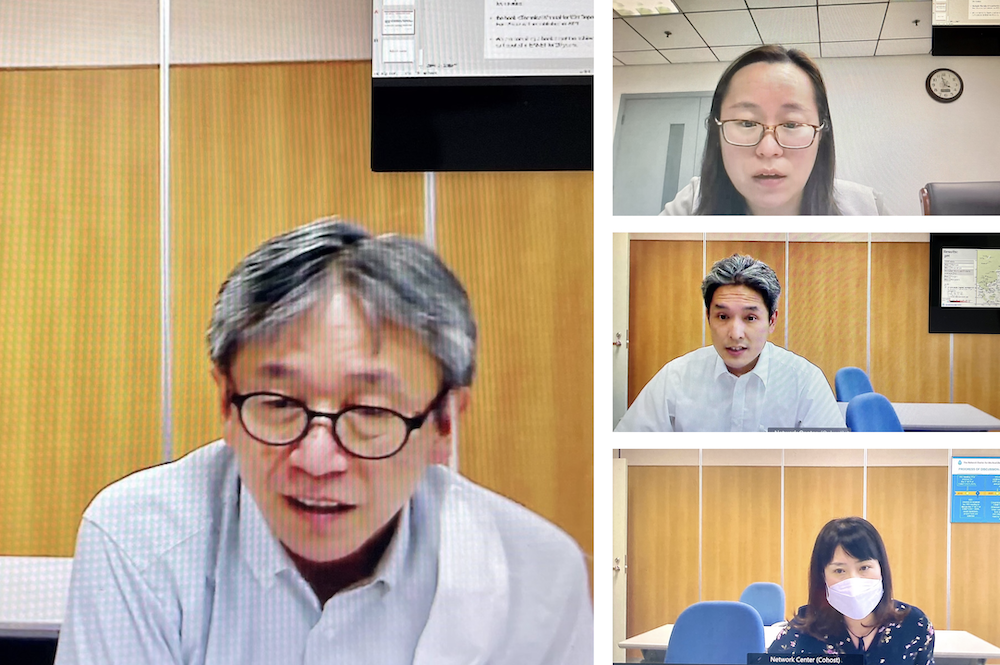
Figure 1- Screenshots from some presentations and discussions during the Third Meeting of the Lead Authors and Drafting Committee Members for the Fourth Periodic Report on the State of Acid Deposition in East Asia

.

Each chapter was presented by its lead author(s) including Dr. Erdenebat Eldev-Ochir (Mongolia) for Chapter 1, Dr. Sergey A. Gromov (Russia) for Chapter 2, Dr. Le Ngoc Cau (Viet Nam) and Prof. Kazuhide Matsuda (Japan) for Chapter 3, Dr. Park Jin-soo (Republic of Korea) and Prof. Fan Meng (China) for Chapter 4, Prof. Atsushi Kume (Japan) for Chapter 5 and Dr. Toshimasa Ohara (Japan) for Chapter 6.

Several other reports’ preparations were also discussed during the two-day meeting.

.

Next Steps Before Publication

The PRSAD4 is scheduled to be shared as a final draft with EANET Participating Countries in August 2021, before being reviewed by the Twenty-First EANET Scientific Advisory Committee (SAC21) in October 2021 and finally approved by the Twenty-Third Intergovernmental Meeting of the EANET (IG23), in November 2021.

.

Access and read the previous publications of the Periodic Report on the State of Acid Deposition in East Asia since 2006.

.

Photo credits: Beppu, Japan, by Priscilla Du Preez, free of the copyright license; all other images: all rights reserved to EANET.

Second Lead Authors’ Meeting and Second Drafting Committee Meeting for the Fourth Periodic Report on the State of Acid Deposition in East Asia

9 March 2021 – Niigata, Japan

The Second Lead Authors’ Meeting (LA2) and the Second Drafting Committee Meeting (DC2) for the Fourth Periodic Report on the State of Acid Deposition in East Asia (PRSAD4) were held on 9 March 2021, virtually.

PRSADs are published every five years as comprehensive scientific assessment reports describing the outcome of EANET’s monitoring activities.

 .

Second Lead Authors’ Meeting and Second Drafting Committee Meeting

The meeting was organized online by the Network Center (NC) for the Acid Deposition Monitoring Network in East Asia (EANET), Niigata, Japan.

Drafting Committee (DC) members from 13 participating countries of the EANET, namely, Cambodia, China, Indonesia, Japan, Lao PDR, Malaysia, Mongolia, Myanmar, Philippines, Republic of Korea, Russia, Thailand, and Viet Nam, participated in the meeting. The NC, the EANET Secretariat, resource persons, and observers also joined the meeting to discuss the PRSAD4 preparation.

Dr. Shiro Hatakeyama, the Director General of the NC, delivered the opening remarks and Prof. Fan Meng, Chinese Research Academy of Environmental Sciences, delivered the opening address as the Chairperson of the Drafting Committee.

.

Structure and Content of the Regional Assessment of the Fourth Periodic Report on the State of Acid Deposition in East Asia (PRSAD4) Review

The lead authors of the respective chapters, among which Dr. Sergey Gromov (Russia), Prof. Kazuhide Matsuda (Japan) Dr. Park Jin-soo (Republic of Korea), Dr. Keiichi Sato (Japan), Prof. Atsushi Kume (Japan) and Dr. Toshimasa Ohara (Japan) presented and discussed with participants the planned detailed structure and contents of the PRSAD4. Main discussions concerned the usage of data, calculation methods, and the process to follow to submit questions to each lead author and contributor.

.

Additional Publications Discussions

The Drafting Committee’s Secretariat presented the Consideration on Further Process of Report Preparation, as well as the draft Summary of the Twentieth Anniversary of EANET, and the session discussed their content.

The Third Lead Author’s Meeting (LA3) and The third Drafting Committee Meeting (DC3) for PRSAD4 will take place virtually on August 4th and 5th 2021.

.

Access and read the previous publications of the Periodic Report on the State of Acid Deposition in East Asia since 2006.

.

Photo credits: Niigata by Tokyo Kohaku, free of the copyright license.

Joint Projects of the EANET with Participating Countries – Development of an Emission Inventory Manual for Mongolia

31 May 2021 – Niigata, Japan

Scientists from the EANET Participating Countries and the Network Center (located in Niigata, Japan) have been promoting joint research projects related to the EANET. In response to Mongolia’s request, an Emission Inventory Manual for Mongolia was developed and published in 2018 to provide key scientific data, including estimates of emissions of air pollutants, for policymakers to develop air pollution control measures.

.

Assessing Air Pollution in Mongolia

Mongolia is facing serious air pollution problems, especially in the capital, Ulaanbaatar city, where the population density is high. Most emissions of air pollutants result from the use of coal in power plants and domestic cooking. The level of air pollutants is normally high during the winter season when coal is also used for domestic heating. Emissions of air pollutants from road traffic are also quite significant. The major air pollutants detected in Ulaanbaatar city are sulfur dioxides (SO2), particle matters (TSP, PM10, PM2.5), and nitrogen dioxide (NO2).

To assist Mongolia in tackling air pollution issues, several international donors and agencies (World Bank, Asian Development Bank, Japan International Cooperation Agency) are developing and implementing projects for air pollution mitigation in Ulaanbaatar city. Since 2016, Clean Air Asia has been working closely with the Ministry of Environment and Tourism of Mongolia (MET) and the National Agency for Meteorology and Environmental Monitoring (NAMEM) on addressing air pollution at a national level.

 .

Developing Mongolia’s National Emission Inventory

In response to Mongolia’s request, the Asia Center for Air Pollution Research (ACAP), in collaboration with SUURI-KEIKAKU Co., Ltd, has developed an Emission Inventory Manual for Mongolia, as a part of the Integrated Programme for Better Air Quality in Asia (IBAQ Programme) of Clean Air Asia (CAA).

Available in Mongolian, English, and Japanese, the Emission Inventory Manual will be used for developing Mongolia’s national emission inventory of air pollutants and further support the formulation of effective air pollution control measures.

 .

Read the summary of the Emission Inventory Manual in the EANET Science Bulletin, Vol 5.

.

The authors appreciated the cooperation and assistance received from the Ministry of Environment and Tourism of Mongolia (MET), the National Agency for Meteorology and Environmental Monitoring (NAMEM), Clean Air Asia (CAA), and the Japan International Cooperation Agency (JICA).

.

Photo credits: Nogoonnuur, Mongolia, by Lightscape, free of the copyright license.

Joint Projects of the EANET with Participating Countries – Catchment Analysis in Thailand

10 June 2021 – Niigata, Japan

Scientists from the EANET Participating Countries and the Network Center (located in Niigata, Japan) have been promoting joint research projects related to the EANET. Consequently, the Network Center, in cooperation with the Thai Royal Forest Department, and the Environmental Research and Training Centre (ERTC), Thailand, conducted a joint research project on catchment analysis in Thailand to understand atmospheric deposition and its effects from 2005 to 2015.

.

Understanding Atmospheric Acid Deposition

Air pollution consists of significant amounts of aerosols (particulate matter) and trace gases (NOx, SOx, CO, and others). These air pollutants deposit on the earth’s surface through dry depositions and wet depositions (when dissolved in water droplets in clouds).

Wet and dry depositions of air pollutants cause detrimental impacts on the ecosystems and environment, including the acidification of the water bodies, such as rivers and lakes.

 .

Analyzing Acid Deposition and its Effects in Northeastern Thailand for Nearly 10 Years

The joint research project aimed to study the atmospheric wet deposition of acidic components and other relevant pollutants including elemental carbon, as well as their influence on water chemistry, chemical properties of soil, nutrient fluxes in soil-plant system, and sulfur dynamics in forest ecosystems.

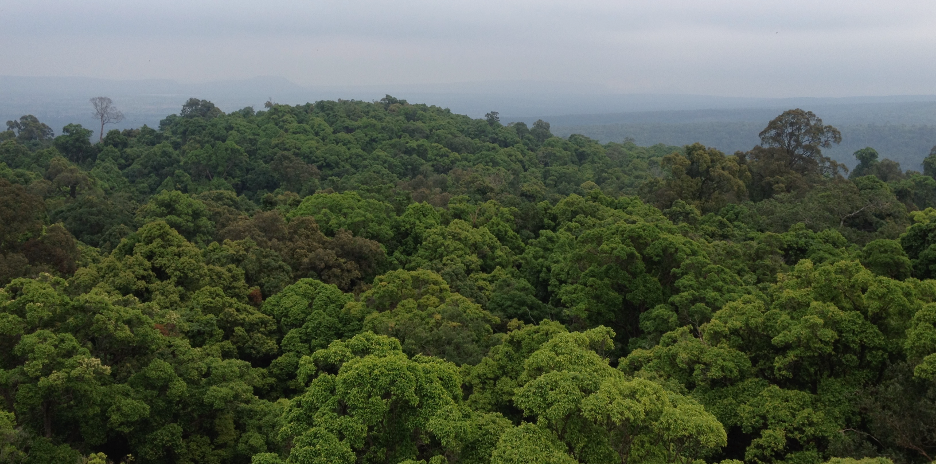
For the catchment analysis, scientists from the Network Center established a study plot in a dry evergreen forest in Sakaerat Silvicultural Research Station, Nakhon Ratchasima Province, northeastern Thailand. The surveys on-site allowed researchers to accumulate nine full years of data, from October 2005 to December 2014.

Based on these results, several scientific papers were published in international journals focusing mainly on atmospheric deposition, soil and stream water chemistry. Ultimately, these scientific outputs significantly contributed to enhancing the global understanding of atmospheric deposition and its effects on forest ecosystems in the region.

.

Read the Report of the joint research project on catchment analysis in Thailand in the EANET Science Bulletin, Vol 5.

.

The authors acknowledged Jesada Luangjame, Thiti Visaratana, and Bopit Kietvuttinon, Royal Forest Department for their great contribution to the Sakaerat project including other colleagues who were involved in the project.  The study was supported financially by the Grant-in-Aid for Scientific Research on Innovative Areas (JP20120012) from the Ministry of Education, Culture, Sports, Science, and Technology (MEXT), Japan, the Environment Research and Technology Development Fund (C-052, C-082 and B-0801) from the Ministry of the Environment of Japan, and Asia-Pacific Network for Global Change Research (APN).

.

Photo credits: Sakaerat forest by Sase H., all rights reserved.