10 June 2021 – Niigata, Japan
Scientists from the EANET Participating Countries and the Network Center (located in Niigata, Japan) have been promoting joint research projects related to the EANET. Consequently, the Network Center, in cooperation with the Thai Royal Forest Department, and the Environmental Research and Training Centre (ERTC), Thailand, conducted a joint research project on catchment analysis in Thailand to understand atmospheric deposition and its effects from 2005 to 2015.
.
Understanding Atmospheric Acid Deposition
Air pollution consists of significant amounts of aerosols (particulate matter) and trace gases (NOx, SOx, CO, and others). These air pollutants deposit on the earth’s surface through dry depositions and wet depositions (when dissolved in water droplets in clouds).
Wet and dry depositions of air pollutants cause detrimental impacts on the ecosystems and environment, including the acidification of the water bodies, such as rivers and lakes.
.
Analyzing Acid Deposition and its Effects in Northeastern Thailand for Nearly 10 Years
The joint research project aimed to study the atmospheric wet deposition of acidic components and other relevant pollutants including elemental carbon, as well as their influence on water chemistry, chemical properties of soil, nutrient fluxes in soil-plant system, and sulfur dynamics in forest ecosystems.
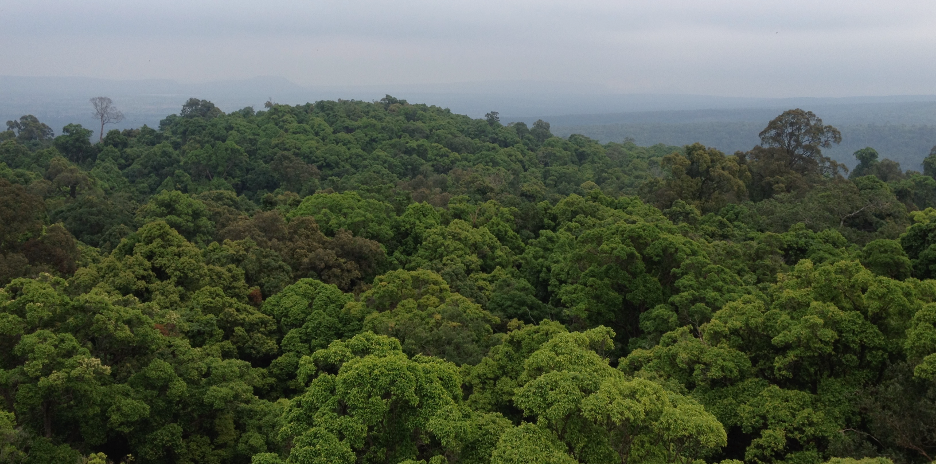
For the catchment analysis, scientists from the Network Center established a study plot in a dry evergreen forest in Sakaerat Silvicultural Research Station, Nakhon Ratchasima Province, northeastern Thailand. The surveys on-site allowed researchers to accumulate nine full years of data, from October 2005 to December 2014.
Based on these results, several scientific papers were published in international journals focusing mainly on atmospheric deposition, soil and stream water chemistry. Ultimately, these scientific outputs significantly contributed to enhancing the global understanding of atmospheric deposition and its effects on forest ecosystems in the region.
.
Read the Report of the joint research project on catchment analysis in Thailand in the EANET Science Bulletin, Vol 5.
.
The authors acknowledged Jesada Luangjame, Thiti Visaratana, and Bopit Kietvuttinon, Royal Forest Department for their great contribution to the Sakaerat project including other colleagues who were involved in the project. The study was supported financially by the Grant-in-Aid for Scientific Research on Innovative Areas (JP20120012) from the Ministry of Education, Culture, Sports, Science, and Technology (MEXT), Japan, the Environment Research and Technology Development Fund (C-052, C-082 and B-0801) from the Ministry of the Environment of Japan, and Asia-Pacific Network for Global Change Research (APN).
.
Photo credits: Sakaerat forest by Sase H., all rights reserved.
