The Twenty-second Senior Technical Managers’ Meeting of the Acid Deposition Monitoring Network in East Asia

3 September 2021 – Niigata, Japan

The Twenty-second Senior Technical Managers’ Meeting (STM22) of the Acid Deposition Monitoring Network in East Asia (EANET) was held online on 1 and 2 September 2021, gathering over 40 senior technical officials from the 13 EANET Participating Countries to discuss the status of the EANET monitoring activities.

.

EANET Monitoring Activities in 2020

Dr. Shiro Hatakeyama, Director General, Asia Center for Air Pollution Research (ACAP), delivered the Opening Remarks, followed by Welcome Remarks by Mr. Tomi Haryadi, Coordinator, Secretariat for the EANET.

After presenting the progress of EANET activities in 2020 since STM21, the Network Center for the EANET (NC) shared the results of various important reports on acid deposition and related substances monitoring activities. STM22 participants were invited to discuss and share important knowledge and experience to collectively review these draft publications.

.
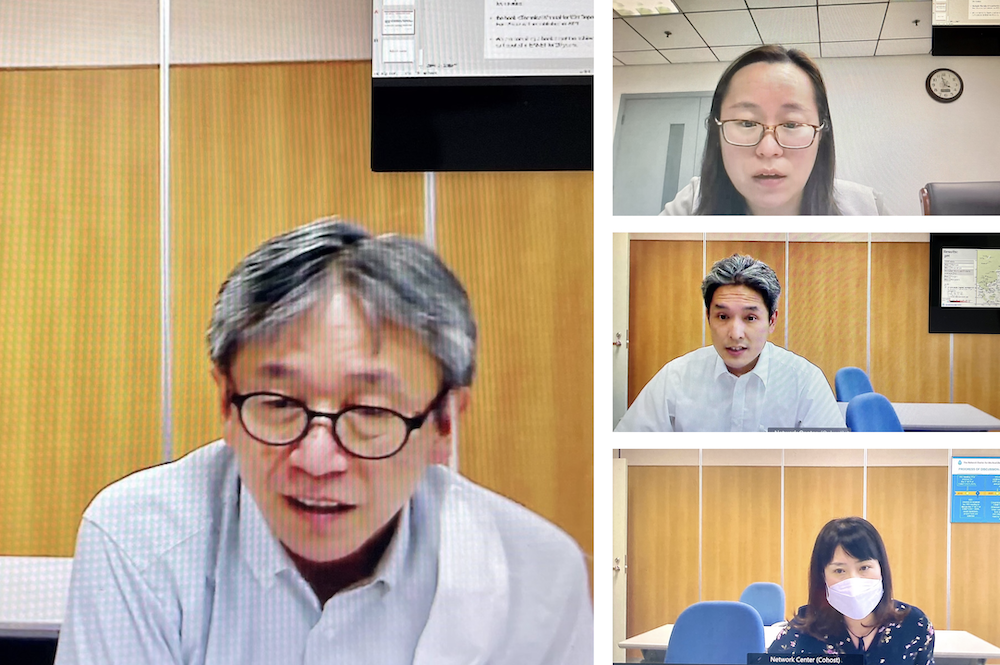
Figure 1: Discussions and presentations during the STM22

.


Overview of the Preliminary Draft Data Report 2020 and Evaluation for the Results of the Inter-laboratory Comparison (ILC) Projects 2020

The NC presented the Preliminary Draft Data Report 2020. This report focuses on wet deposition, dry deposition (air concentration), soil and vegetation, inland aquatic environment, and catchment-scale monitoring. It includes a summary of the monitoring data in 2020 and related information submitted by the Participating Countries.

The NC also introduced the preliminary draft Report on the Inter-laboratory Comparison Projects in 2020 for wet deposition, dry deposition (filter pack method), soil, and inland aquatic environment.

.

Consideration of the National Monitoring Plans (NMPs), Current Monitoring Activities for the EANET and Overall Air Concentration Monitoring Status of the Participating Countries

In line with previous STM meetings’ process, representatives of the Participating Countries presented their National Monitoring Plans (NMPs) and current EANET activities, including monitoring capacities, technical challenges, and future plans, while focusing on the general improvement of the activities of the EANET.

Other important matters were also discussed, including the progress on the Revision of the Technical Manuals for Dry Deposition Flux Estimation and Air Concentration Monitoring.

Dr. Erdenebat Eldev-Ochir, Deputy Director General, ACAP, delivered the Closing Remarks. He expressed his great appreciation for the improvement of the data quality due to the efforts of the Participating Countries. He highlighted that, despite the COVID-19 pandemic, the EANET has been continuously strengthening the capacity of the Participating Countries through online training, research fellowship, public awareness workshops, and joint research.

.

Find out more and access EANET monitoring data.

.

Photo credits: All rights reserved to EANET.

Scientific & Technological Research Papers from Participating Countries – Airborne Ammonia Concentrations in the Baikal Region

image of the Baikal lake to illustrate the research on airbone ammonia pollution in the Baikal region

1 April 2021 – Niigata, Japan

Scientific and Technological Research Papers from Participating Countries are research articles written by scientists from the EANET Participating Countries, in collaboration with the EANET Network Center, in Niigata, Japan. They are published in the EANET Science Bulletin and have required the use of EANET data.

Alisa Trifonova-Yakovleva and Sergey Gromov, from Russia, estimated airborne concentrations of ammonia (NH3) in the Baikal region by using measurements conducted at two EANET monitoring sites and compared with satellite data (Infrared Atmospheric Sounding Interferometer (IASI)).

.

Sources and Impacts of Ammonia

Ammonia (NH3) is an important air pollutant that may eventually fall back to earth by means of wet and dry acid deposition. It is emitted both naturally and from anthropogenic sources such as animal husbandry, the use of nitrogen fertilizers, and biomass burning.

Atmospheric deposition containing NH3, aside from acidification impacts through the oxidizing to nitric acids in rain waters or on wet surfaces, cause also other negative effects on ecosystems, such as eutrophication and loss of biodiversity. In addition, when NH3 reacts with other atmospheric constituents, it forms particulate matter (e.g. PM2.5) triggering harmful impacts on human health.

.

Airborne Ammonia Concentrations in the Baikal Region

For this research study, Alisa Trifonova-Yakovleva and Sergey Gromov used satellite data for better coverage and understanding of the air pollution at a wider regional level and ground-based measurements (filterpack method) at the Russian Litstvyanka and Mondy EANET stations from 2015 to 2017.

The goal of this study was to understand the constant levels of NH3 concentrations or their higher values of episodic nature in different locations within the Baikal Region, season-to-season.

More precise estimations of the regional airborne NH3 concentrations are indeed necessary to enhance the understanding of the scales and extension of detrimental impacts of air pollution and acid deposition on the environment and on human health.

.

Discover the results of the study by reading the full article in the EANET Science Bulletin, Vol 5.

.

This study was carried out in the framework of the Research Project AAAA-A20-120013190049-4 “Development of methods and technologies for monitoring of environmental pollution under the influence of transboundary pollutants transport (UNECE: EMEP, ICP IM) and acid deposition in East Asia (EANET)”.

Processing of satellite measurement data was performed as part of the research theme under the Plan of Basic Scientific Research of the State Academies of Sciences No. 0148-2019-0009, AAAA-A19-119022190173-2 “Climate changes and their consequences for the environment and the life of the population in Russia”.

.

Photo credits: Baikal ice on sunset, by Sergey Pesterev, free of the copyright license.