The Twenty-sixth Session of the Scientific Advisory Committee on the EANET
30 October 2026
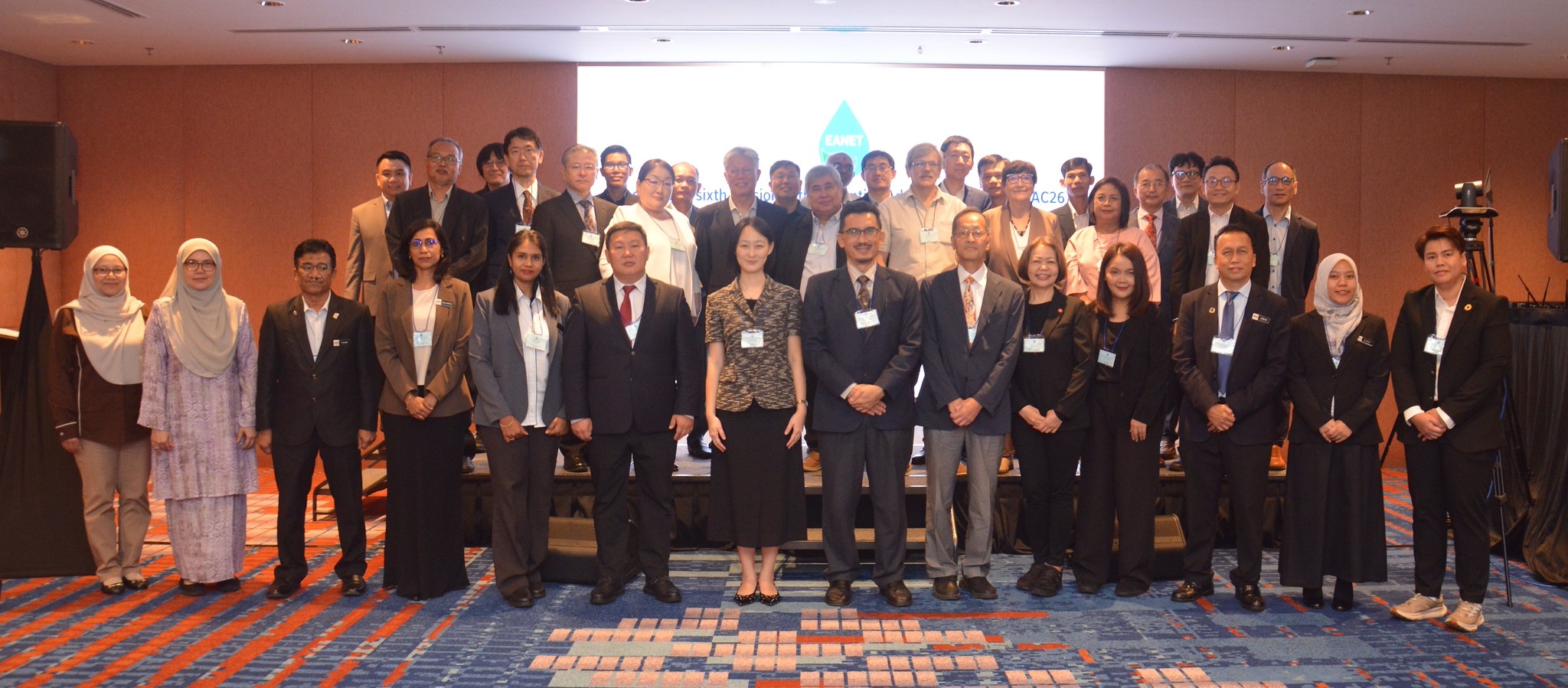
The Twenty-sixth Session of the Scientific Advisory Committee (SAC26) on the EANET was held in Kuala Lumpur, Malaysia, from 20 to 22 October 2026, bringing together representatives from EANET Participating Countries, the Secretariat and the Network Center. The Session reviewed the progress of EANET’s scientific and technical activities, considered key regional research and monitoring initiatives, and provided scientific recommendations on the proposed 2027 Work Programme and Budget and Project Plans for further consideration by the upcoming Twenty-eighth Session of the Intergovernmental Meeting (IG28).
.
Adoption of the Fifth Periodic Report on the State of Atmospheric Environment in East Asia
A major highlight of SAC26 was the consideration and adoption of the Fifth Periodic Report on the State of Atmospheric Environment in East Asia (PRSAE5), EANET’s flagship report published every five years. Prepared through the work of the PRSAE5 Drafting Committee, this fifth edition is the first to address the atmospheric environment in alignment with the Medium-Term Plan (MTP) 2026–2030, reflecting EANET’s evolving priorities and broader approach to regional atmospheric environmental issues. The SAC26 reviewed the report’s findings and discussed how scientific evidence could be translated into clear, policy-relevant messages for decision-makers.
The PRSAE5 will be further submitted to the 28th Intergovernmental Meeting (IG28) on the EANET, to be held from 22 to 24 November in Niigata, Japan, following revisions to address comments from SAC members.
.
Strengthening Technical Guidance for VOC Monitoring
The SAC26 also adopted the Technical Training Guidance for Ambient VOCs Monitoring under EANET marking an important step towards strengthening regional capacity and harmonizing technical practices for volatile organic compounds (VOCs) monitoring. The guidance was developed through a Drafting Committee Meeting held in August 2026 in Niigata, Japan, bringing together experts from seven EANET Participating Countries. Once endorsed by IG28, it will aim to support in applying consistent VOC monitoring methodologies and strengthening the quality and reliability of monitoring data across the region.
.
Reviewing EANET Monitoring Reports and Task Force Strategies
SAC26 adopted the Data Report 2025 and the Report of the Inter-laboratory Comparison Projects 2025, as well as two strategy papers developed by EANET Task Forces. These included the Strategy Paper on the Future Direction of Monitoring and Data Evaluation for Air Pollutants and Atmospheric Deposition in East Asia (2027–2032), developed by the Task Force on Monitoring and Assessment of Atmospheric Environment (TFAE), and the Strategy Paper for Future Direction of EANET on Monitoring of Effects on Agricultural Crops, Forest and Inland Water by Acidifying Species and Related Chemical Substances, updated by the Task Force on Monitoring and Assessment of Environmental Effects (TFEE) for the Medium-Term Plan 2026–2030.
The SAC also acknowledged the activities of the Task Forces and the ongoing development of a new strategy paper by the Task Force on Atmospheric Environment Quality Management (TFAEM), which will address the integrated management of atmospheric environmental quality in East Asia, including the links between air pollution and climate change in a co-benefit approach.
.
Advancing EANET’s Scientific and Technical Activities
The SAC reviewed the Draft Work Programme and Budget for EANET Core Activities in 2027, which is aligned with the MTP 2026–2030. The proposed activities are organized around three key outcomes: strengthening monitoring to improve understanding of air pollution and atmospheric deposition; increasing decision-makers’ access to evidence-based, policy-relevant information; and enhancing regional cooperation on priority air pollution issues.
The SAC also reviewed ten proposed EANET Project Plans for 2027, covering a range of priority areas, including ammonia monitoring and sustainable nitrogen management, satellite observation, urban ozone and ambient VOCs, capacity building and technical training, artificial intelligence applications, and innovative financing for air pollution prevention and control. The continued project on PM₂.₅ source identification and capacity enhancement, with an emphasis on Southeast Asia, was also presented.
The SAC highlighted the importance of maintaining a balanced portfolio of projects that responds to the needs of Participating Countries and supports the implementation of EANET’s three Task Forces. The proposed Work Programme and Budget and Project Plans will be submitted to IG28 for consideration and adoption.
.
Next Steps
The SAC26 reaffirmed the importance of sustained regional monitoring, scientific collaboration and capacity building to address atmospheric environmental challenges in East Asia. Its adopted reports, technical guidance and strategy papers, together with the proposed activities for 2027, will be presented at the Twenty-eighth Session of the Intergovernmental Meeting (IG28) for consideration by EANET Participating Countries.
.
Read the SAC26 Report of the Session.
Photo credits: all rights reserver to EANET.